China’s Beloved Beef Noodles Are Getting a Rebrand
China’s signature local specialty Lanzhou lamian, or Lanzhou pulled noodles — named after the capital city of the northwestern Gansu province — are undergoing a rebranding. At many noodle shops across the country, the dish will now be known as “Qinghai lamian,” as the northwestern Qinghai province strives to build its own regional brand.
More than 1,000 noodle shops nationwide have made the shift, state broadcaster CCTV reported on Saturday. In June, 72 noodle shops in the northern port city of Tianjin first changed their names to bear the words “Qinghai lamian,” followed by hundreds of shops in several other provinces in the months since.
Composed of hand-pulled noodles in a clear broth, sliced beef and radish, and chili oil, the dish traces its history back to the turn of the 19th century in the central Henan province. After being brought west, they took on the name of Gansu’s capital, a stop on the old Silk Road — where the halal noodles first became a hit in part owing to its significant Muslim Hui population. They were further popularized as a local specialty by Hui noodle maker Ma Baozi in the 1910s.
Later, as China opened up in the 1980s, entrepreneurs from poverty-stricken counties in Qinghai, such as Hualong, began capitalizing on the noodles’ popularity, opening small, mom-and-pop restaurants across the country.
“There was little brand awareness back then, and hardly anyone had heard of Hualong, Qinghai. However, Lanzhou is close by, so (noodle shop owners) thought they’d just call them ‘Lanzhou noodles,’ because everyone knows Lanzhou,” Ma Liping, president of the Qinghai Noodles Industry Association, told local media.
The shops have become a familiar sight nationwide. As of the end of February 2026, there were 31,000 noodle restaurants operated by owners from Qinghai in more than 330 cities across China, generating more than 24 billion yuan ($3.5 billion) in annual revenue, according to data from the Qinghai Noodle Industry Association.
But tensions over the use of the dish’s name have grown among Lanzhou and Qinghai residents, as people from Lanzhou call it “Lanzhou niurou mian” — Lanzhou beef noodles — while people from Qinghai call it “Lanzhou lamian,” or “Lanzhou pulled noodles.”
The dish has also evolved two differing preparation methods among Gansu and Qinghai restaurant owners, fueling debate. Lanzhou noodle makers have made efforts to preserve its traditional flavors, while Qinghai shop owners have adapted to local tastes — for instance by using less oil and salt in Guangdong, or adding more pepper in the southwestern Sichuan province.
To distinguish their wares from the noodles sold by people from Qinghai, local authorities in Lanzhou registered a trademark featuring a bull’s head for “Lanzhou Beef Noodles” in 2007, marking the city’s first step toward building a formal regional brand.
The recent rebrandings are part of Qinghai’s broader effort to build a provincial brand. About one-fifth of the rebranded shops have adopted a “three-in-one” model, adding in-restaurant sales of local specialties such as yak jerky and highland barley products, as well as tourism promotion, as new revenue streams.
Online, users voiced their support for the change. “After all, the two noodle dishes differ significantly in taste and texture, so distinguishing them clearly will help consumers make informed choices,” one user wrote on microblogging platform Weibo.
In a commentary, state-backed Haibao news wrote that “the rebranding reflects the growing push to standardize China’s grassroots food industry.”
The push is evidenced by multiple regions recently moving to standardize the production of local dishes. Gansu began regulating Lanzhou lamian in 2023, while a vocational college in the southern Guangxi Zhuang Autonomous Region launched a course dedicated to standardizing and promoting its river snail rice noodles in 2020. In July, the catering industry association of the eastern Zhejiang province also introduced a standard for preparing duck heads, a Quzhou city specialty.
Editor: Marianne Gunnarsson.
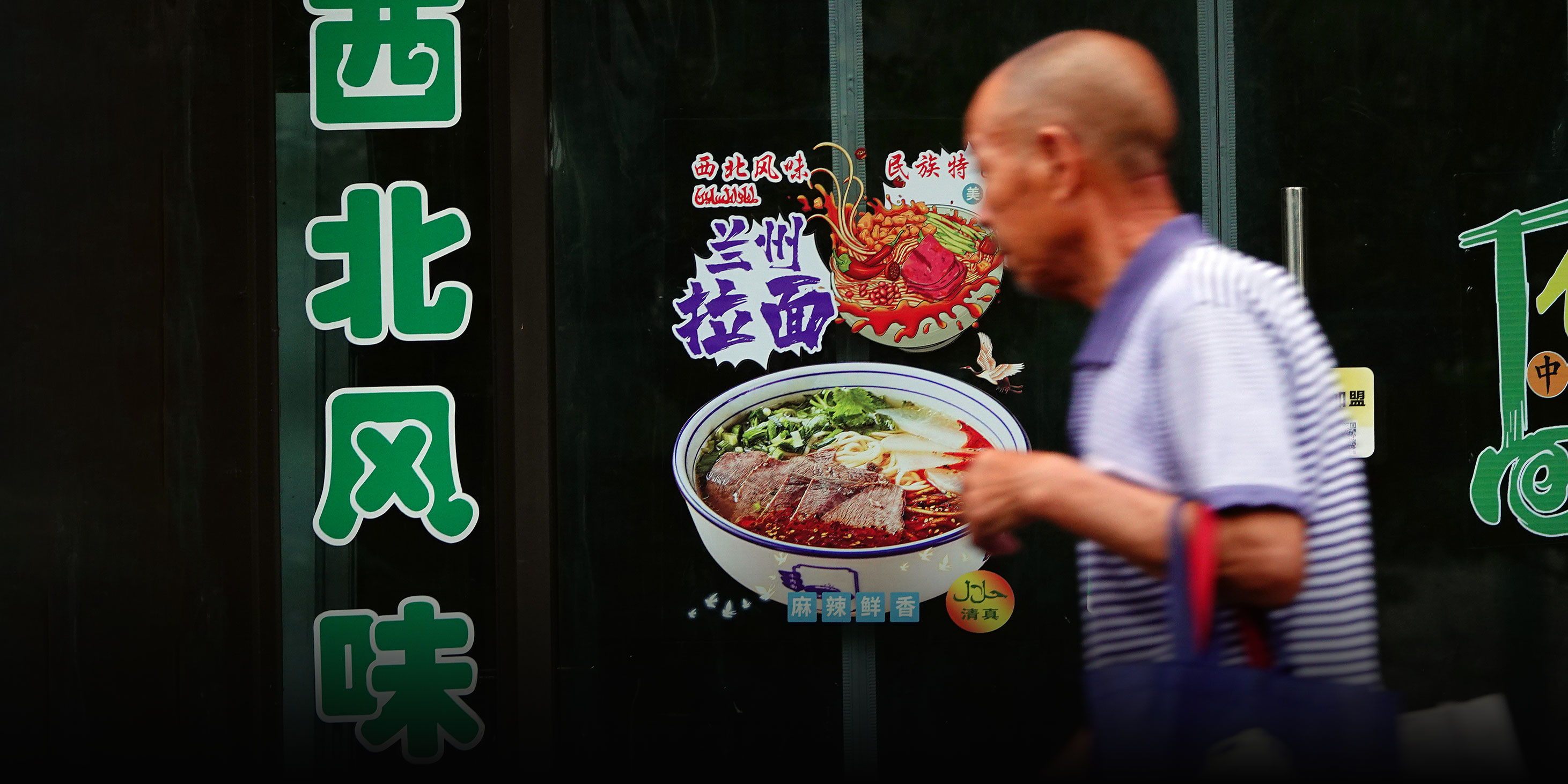
(Header image: A Lanzhou lamian shop in Yichang, Hubei province, Aug. 11, 2026. VCG)