The Ups and Downs of Shanghai’s ‘Saint of Songs’
In early 20th-century Shanghai, jazz was made by composers, performers, and bandleaders from across Asia and beyond. This is the last article in a four-part series tracing how that sound took shape, and who made it matter. Read Part 1, Part 2, and Part 3.
With a little luck, visitors to Shanghai’s Ciro’s Ballroom in the 1940s could catch two of Asia’s biggest stars on the same night: the young Chinese singer Yao Li and the Filipino bandleader Lobing Samson, known locally as the “king of bands” and “saint of songs.”
Shanghai’s thriving port and vibrant nightlife drew musicians from across the world, including White Russians, Jews, and Hungarians, but Filipino bandleaders were the mainstay of the city’s cabarets. When Li Jinhui assembled China’s first jazz band, he intentionally recruited tall musicians from the north to distinguish his act from the mostly Filipino bands playing across the city.
The relationship between Shanghai’s Filipino musicians and their Chinese counterparts was far from antagonistic, however. While Americans like Buck Clayton largely played for expatriate audiences at high-end venues, Filipino musicians built deeper connections with local artists and crowds — helping shape modern Chinese popular music, then spreading those tunes as they hopped between clubs across Asia.
Phillip Guingona, an assistant professor at Nazareth University, New York, notes that Filipino musicians began migrating to Shanghai as early as the late 19th century. The city’s proximity to the Philippines — and the lower fees Filipino musicians charged compared with Europeans — led the Shanghai Municipal Orchestra to begin recruiting players from the islands in 1878. By the mid-1920s, the majority of its players were Filipino.
That longstanding connection paved the way for the rise of Filipino jazz bands in 1920s Shanghai. “Many musicians who started with the Shanghai Municipal Orchestra ended up retiring to the jazz scene later in their careers,” Guingona tells me. Others arrived as members of bands and variety acts that routinely toured Asian megacities like Hong Kong, Tokyo, Harbin, Singapore, and Surabaya.
These musicians found a warm welcome in Shanghai, where dance halls were often divided by class and race. In one China Press listing of Shanghai’s most popular bands, Filipino bandleader Don José’s act was ranked ahead of Whitey Smith’s American band as the city’s top draw.
Little is known about Lobing Samson’s early career, but his name began appearing in the Chinese press in the late 1930s. Starting out as a member of Don José’s band, he formed his own group and began headlining at Ciro’s, one of Shanghai’s top dance halls. A 1939 article in the local biweekly Spring Breeze praised the young bandleader: “He takes his work seriously and never performs perfunctorily, and this is the most important reason for his present standing.” The article described Samson as having a fine singing voice and the ability to play three instruments: flute, clarinet, and saxophone.
At Ciro’s, Samson found his musical match in Yao Li, the “silver voice.” Here, he would also train the next generation of local musicians, including Jimmy King. The jazz-loving son of a wealthy Shanghai family, King studied under Samson before forming his own all-Chinese jazz band, which performed at the rival Paramount Ballroom. Both bandleaders were known for their musical talent. “When Jimmy King performs at the Paramount, part of the crowd comes specifically to listen to the music — just as they did when Samson played at Ciro’s,” reads one contemporary account.
Shanghai’s nightclubs closed after 1949, but Samson’s story didn’t end there. In the 1950s, he joined the wave of former Shanghai jazz musicians who moved to Hong Kong, where he helped lay the foundations of the city’s famed Cantopop scene.
When Samson arrived, Cantonese opera still dominated, but the influx of jazz and pop music artists quickly shook up the local music market. Influenced by Shanghai’s shidaiqu, or “songs of the times,” Cantonese music soon began to shift toward shorter forms, more natural vocal styles, and everyday lyrics. Record companies in Hong Kong promoted this as “Cantonese shidaiqu.”
The late James Wong Jim, an influential Hong Kong lyricist, later recalled that in the 1950s, the city’s music education was weak, and genuinely skilled local musicians were scarce. In this context, the newly arrived Filipino musicians were in high demand. While the Shanghai songwriters who brought shidaiqu to Hong Kong could write captivating melodies, they often lacked the ability to arrange their songs — a niche that Filipino musicians eagerly filled. Many of the era’s most popular shidaiqu arrangements were crafted by Filipinos such as Vic Cristobal.
“Filipino musicians had exceptional sight-reading ability, and their style drew on both American and Spanish music,” Wong wrote. “When performing popular music, they were often more uninhibited than conservatory-trained players, which gave them an edge … Most were quick studies: a full score for a medium-sized orchestra with more than a dozen instruments could be completed in just two or three hours — perfectly suited to Hong Kong’s production environment.”
After arriving in Hong Kong, Samson returned to bandleading. He earned a new nickname — “king of the clarinet” — and continued to work with Chinese musicians, including Yao Li’s brother Yao Min, by then a composer for film and record companies in the city.
Today, little of Samson’s work survives. His daughter Christine later recalled that he loved to compose, but “did not keep (the songs) for some reason.” The video footage and recordings that remain reveal a versatile artist with mastery not only of jazz but also of the musical flavors of southern China.
Christine left her own mark on Chinese music. With her sisters, she formed the band D’Topnotes, one of Hong Kong’s most influential youth groups in the 1960s.
As for Samson, his legacy found its way back to Shanghai. In the 1990s, after the city loosened its restrictions on nightclubs and Western music, the Peace Hotel recruited the double bass player Zheng Deren to join its new “Old Jazz Band.” The hire was intentional: Zheng began his career as a jazz musician at the Paramount under Samson’s old student, Jimmy King, in 1947.
Half a century later, the stage had changed, but the music hadn’t.
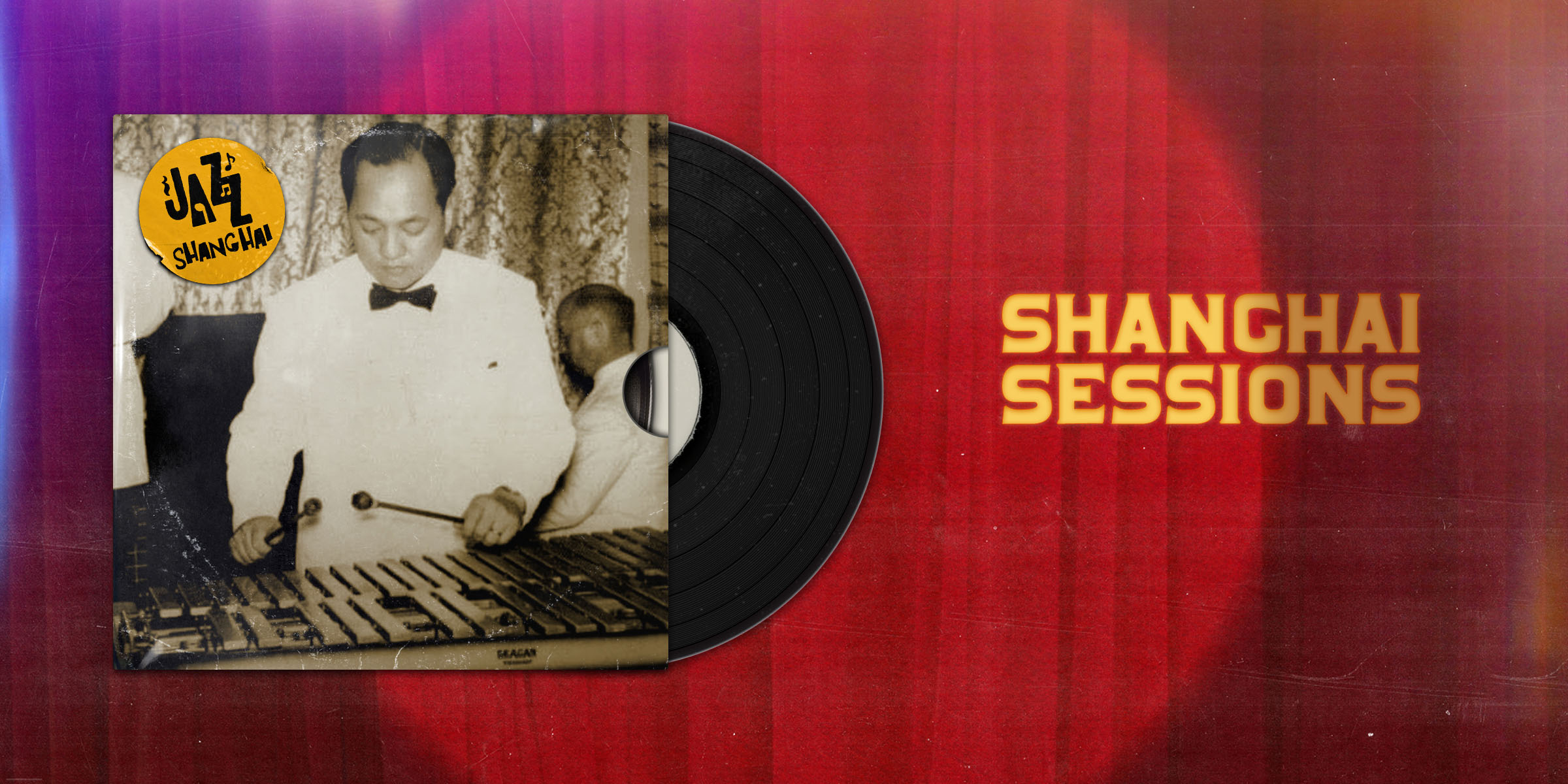
(Header image: Portrait of Lobing Samson. From the public domain, reedited by Sixth Tone)