Street Angels: Meet the Women Who Became China’s First Pop Stars
In early 20th-century Shanghai, jazz was made by composers, performers, and bandleaders from across Asia and beyond. This is the third article in a four-part series tracing how that sound took shape, and who made it matter. Read Part 1 and Part 2.
In 1922, a teenage girl stepped onto a Shanghai stage — short hair, short skirt, and barefoot. Her name was Li Minghui, and while audiences then didn’t know it, she would go on to become China’s first pop star.
History remembers her father, Li Jinhui, as the “godfather” of that new sound. But it was his daughter — and the women who followed her — who gave his music life. They didn’t just sing his songs; they defined what it meant to be a modern performer, mastering new styles, new technologies, and a new kind of stardom.
A century ago, nothing suggested Chinese audiences were ready for female idols. Even in the 1920s, women were barred from opera troupes, and performing in public was taboo. Yet Li Jinhui, who saw popular music as a way to challenge China’s cultural and gender boundaries, refused to accept those limits. Casting his teenage daughter was an act of artistic rebellion — one that shocked audiences and even his fellow reformers, who denounced the performances as indecent.
But listeners were fascinated. Soon, women were being recruited into new song-and-dance troupes across China. The most famous of them all was Li’s own Bright Moon Song and Dance Troupe, which would produce some of the most celebrated female stars of the Republic of China era (1912–1949).
The first was Li Minghui herself. After moving on from children’s musicals, her carefully crafted public image helped define the emerging archetype of the “new woman.” But it was her voice that made her famous. Her breakout hit, “Drizzle,” was also China’s first pop song — a fusion of Chinese folk melodies and jazz written by her father. To perform it, Li Minghui had to learn an entirely new singing style. In his memoir, Li Jinhui described it as “closer to spoken language, with a clearer expression of feeling … prioritizing innocence and liveliness.”
Though rooted in the folk tunes and street ballads of everyday China, the father-daughter pair gave the song a tone that was sharp, direct, and instantly affecting. The resulting sound was an immediate sensation, with the influential Shanghai newspaper Shun Pao describing audiences as clamoring for encores.
Writer Eileen Chang, who came of age at the height of Li Minghui’s fame, thought the song captured the spirit of modern urban life: “Its simple power is close to folk song, yet it is not folk song — for a city dweller to sing a folk song is unnatural, not right. The song creates a special atmosphere; the falling rain, the love found in Shanghai’s lanes, gray cement alley houses and small glass windows, the faint scent of odds and ends.” Chang loved the song so much that she even translated it into English.
Not everyone was charmed. Writer Lu Xun dismissed the song with characteristic bluntness. “It is like listening to a cat being strangled,” he wrote.
He may have had a point. As Wang Yong, a scholar of early Chinese pop, notes, the song’s shrill tone reflected the limits of early recording technology rather than Li Minghui’s voice and ability. Early equipment captured high frequencies better than mid- or low-ranges, making old records sound thin. And because Li Minghui often sang on large outdoor stages, she favored a higher pitch that carried farther. Her generation pioneered a more direct, emotionally expressive style, though it would be a stretch to call her one of China’s great singers.
Listeners didn’t have to wait long for an heir. In the 1930s, the rise of sound film drove a growing demand for female singer-actors, drawing many performers from song-and-dance troupes into cinema — none more successfully than Zhou Xuan.
An orphan with a turbulent childhood, Zhou began in Li’s Bright Moon troupe. After it dissolved in early 1932, she drifted through several jobs, but remained devoted to Shanghai’s music scene.
Practicing tirelessly — she once said her love for singing was “even greater than my love for my own life” — she finally caught her big break in 1937, starring as Xiao Hong in director Yuan Muzhi’s leftist masterpiece, “Street Angel.” She proved a natural actor, but, like Li, it was her voice that made her a household name: her renditions of “Song of the Four Seasons” and “The Wandering Songstress” became instant classics.
By the late 1930s, recording and broadcast technology had improved. Microphones could capture the softest inflections, and the intimacy of close-mic singing was reshaping popular taste. Compared with 1920s idols like Li Minghui, Zhou could bring greater nuance to her performances.
Her voice was soft, fluid, and breathy — qualities impossible to record even a decade earlier. That style required her to sing close to the microphone, forcing her to carefully control her breathing to prevent it from being picked up. Over time, this discipline refined her exceptional mastery of microphone technique.
Zhou’s singing style mirrored the emerging shift in Chinese literature and film away from didacticism and toward emotional subtlety. Yet the idea — still held in some corners — that Zhou only sang in a girlish, delicate tone is wrong.
Her son, Zhou Wei, recalled in an interview that she studied Western bel canto with an American teacher: “Those little ditties like ‘The Wandering Songstress’ were only about 30% of her repertoire. She also sang many art songs — for instance, in ‘Rainbow Song’ she displayed coloratura soprano technique. I’ve checked the pitch — at the end she goes beyond a high C.” Later recordings suggest a clear evolution from her early style, as she incorporated more Western operatic techniques into her repertoire.
An even more dramatic transformation in Chinese music began with one of Zhou Xuan’s biggest fans: Shanghai’s Yao Li. As a child, she taught herself to sing by imitating Zhou, but by the 1940s, she had developed a sound entirely her own.
In 1947’s “Singing with Tears,” composed by her brother Yao Min, Yao’s voice is full and deep. “Early Yao Li had a higher pitch, still like humming little folk tunes, with lots of falsettos,” jazz singer Jasmine Chen, who performed several Shanghai-style pop songs for “Crazy Rich Asians,” told me. “By ‘Singing with Tears,’ her range is closer to everyday speech, the delivery more natural, and the song has a distinctly modern flavor.”
Yao’s evolution reflected a broader change in the female voice of the era, as singers broke free from the high, delicate “little sister” tones that had dominated the 1920s and early 1930s. Bai Guang, one of Yao’s contemporaries, embodied this shift. “Her singing was unique,” Chen explained. “She sang in a low contralto register with a languid style that helped define early popular music. She used chest resonance, not falsetto.”
Together, this new generation — Bai, Yao, and their peers — expanded the emotional and tonal palette available to female singers, paving the way for more complex portrayals of women in music. Yao Li and her brother later moved to Hong Kong, becoming two of the city’s most influential singers and composers. They carried Shanghai-style pop music with them, helping to lay the foundation for Cantopop.
Ultimately, Li Minghui, Zhou Xuan, and Yao Li may have worked with songwriters, but they were anything but puppets. Confronting the twin constraints of technology and gender, they taught themselves new ways of singing — and in doing so, showed listeners, many of them women newly emerging from the shadow of feudalism, how to give voice to their own emotions. It was this transformation — from innocent, meek “little sisters” to mature, complex modern women — that sparked a revolution.
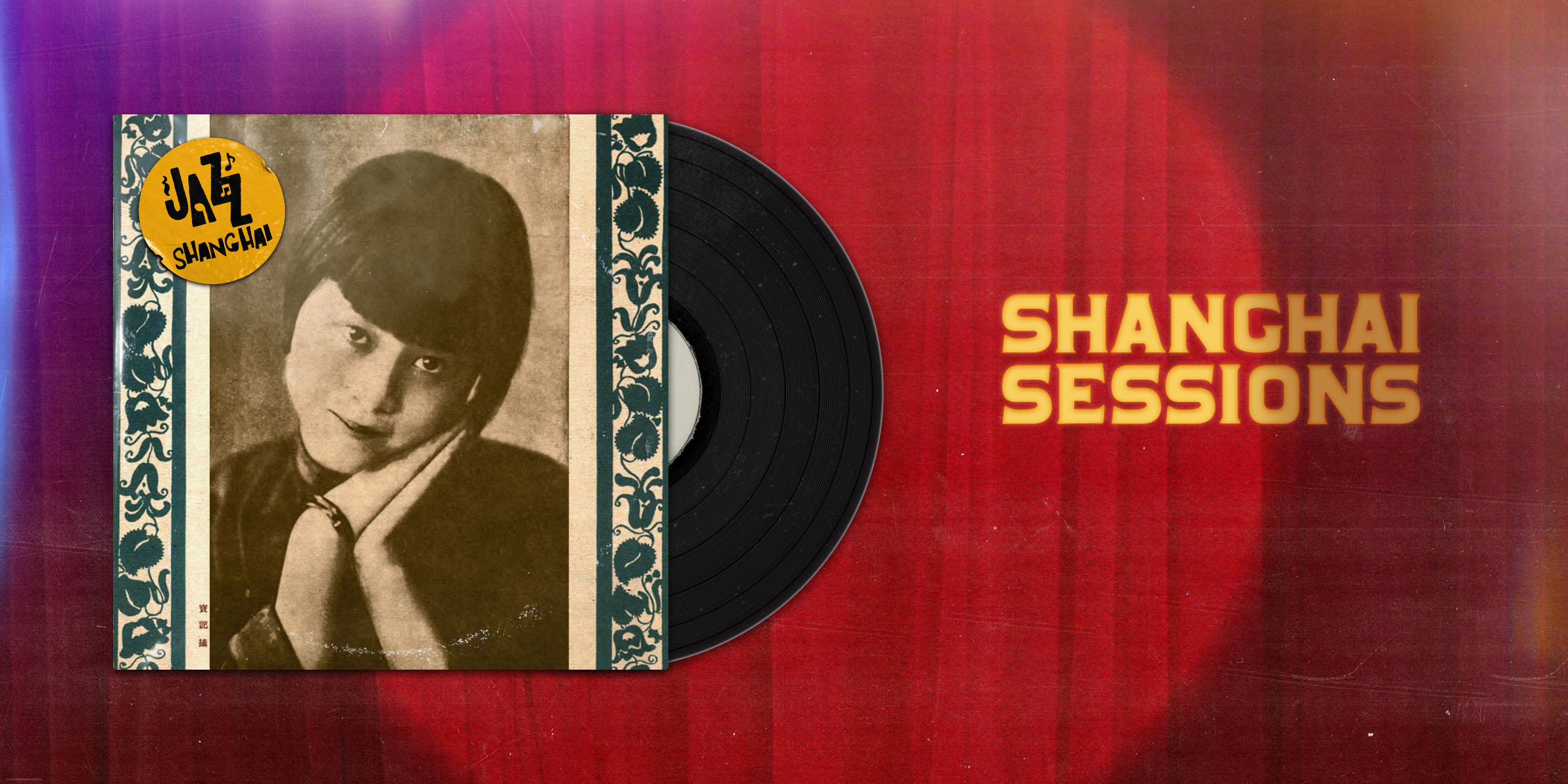
(Header image: Li Minghui on the cover of The Young Companion, April 1926. Courtesy of Hao Yucong; reedited by Sixth Tone)