Ticket to Shanghai: How an American Trumpeter Rocked China’s Jazz Scene
In early 20th-century Shanghai, jazz was made by composers, performers, and bandleaders from across Asia and beyond. This is the second article in a four-part series tracing how that sound took shape, and who made it matter. Read Part 1.
In 1958, photographer Art Kane took a career-defining image. Known as “A Great Day in Harlem,” the group photo — perhaps the most iconic in jazz history — captured 58 legendary musicians, from early pioneers like Count Basie to modern stars like Charles Mingus and Thelonius Monk, all posed on a stoop on New York City’s East 126th Street.
Near the top of the stairs stands another giant: trumpeter Buck Clayton, famous for his work with Count Basie’s band. But Chinese audiences may know him better for a very different reason: his role in shaping Shanghai’s jazz age.
Clayton was among several African-American jazz musicians who spent extended periods in Shanghai during the 1920s and ’30s. One of his key connections was Teddy Weatherford — a pianist so popular that when poet Langston Hughes toured Asia, he recalled people rising to applaud whenever Weatherford entered a room.
Weatherford’s chance encounter with Clayton in Los Angeles in 1933 would change both their paths. The pianist had returned to the U.S. to recruit talent for Shanghai’s famed Canidrome Ballroom. In better times, Clayton might have blanched at relocating halfway around the world. But the Great Depression had gutted America’s music industry. In his memoir, Clayton remembered being so desperate for gigs that his band once offered to play at a hot dog stand, only to be turned away by the owner.
So when Weatherford promised a contract — steady work in a booming city — Clayton accepted.
Any doubts Clayton had about crossing the Pacific vanished on arrival. By the early 1930s, jazz was a global phenomenon, driven by records and Hollywood movies, and the welcome he received was eye-opening.
“My life seemed to begin in Shanghai,” he wrote. For the first time, as a Black musician, he was treated with respect and prestige unimaginable back home. It likely helped that the Canidrome Ballroom, where Clayton played nightly, was one of the city’s most luxurious venues. “We were recognized for a change and treated with so much respect,” Clayton recalled.
Hughes made similar observations during his stay in Shanghai: “(Shanghai) seemed to have a weakness for American Negro performers. Bob Hill’s band, Jack Carter’s band, and Buck Clayton’s trumpet thrilled the International Settlement.”
Nor were Black performers the only ones drawing crowds. Clayton encountered Filipino, Russian, East Indian, and Chinese bands, each with their own instruments and playing styles.
Still, colonial hierarchies and racism persisted. American musicians performed in the most prestigious clubs, while Filipino and Chinese bands were relegated to lesser venues. And even here, Black musicians couldn’t escape the racism of home. One night at the Canidrome, a white American marine picked a fight with Clayton. Though a wealthy Chinese woman testified in Clayton’s defense, the Canidrome received bomb threats, and Clayton’s band was dismissed.
Clayton might have left Shanghai there and then. Instead, the incident drew him deeper into the local music scene. After being forced out of the Canidrome, he and part of his band moved to the Casa Nova Ballroom, a more local venue. There, they were expected to play Chinese music, and soon, he began mastering some of the country’s biggest hits.
These “popular Chinese songs,” as Clayton later called them, were very likely the work of Li Jinhui, the godfather of Chinese pop, and Clayton’s time in the city coincided with the peak of Li’s popularity. Clayton himself noted that the music they were playing “wasn’t too much different from our own music,” further suggesting that they were not folk tunes, but early Chinese pop.
While it’s difficult to say whether or how Shanghai influenced Clayton’s later sound, there’s no doubt that the experience marked a turning point. In 1935, as Japan’s aggression grew and war loomed in the Pacific, Clayton returned to America with renewed confidence — soon joining Count Basie’s band as a featured trumpeter before forming his own group.
Clayton’s journey offers a reminder that jazz was never just an American export, but a global phenomenon, shaped and influenced by unlikely and often forgotten interactions around the world. As Chinese media scholar Andrew F. Jones notes, early musicians recognized jazz’s international character — even if sometimes forgotten in U.S.-centric narratives.
In its own way, “A Great Day in Harlem” speaks to this truth. For every Monk or Mingus in the frame, there are a dozen lesser-known players who helped build the jazz sound. And then there are those like Weatherford, who never made it back for the picture. He died in Calcutta in 1945, aged just 41 — a tragic end for a man who did as much as anyone to popularize jazz around the world.
Sadly, no recordings from Clayton’s Shanghai sojourn have survived. But the year he spent in the city points to an alternate history of jazz, one unbounded by geography — where Harlem was one of many scenes in conversation, not competition, with each other.
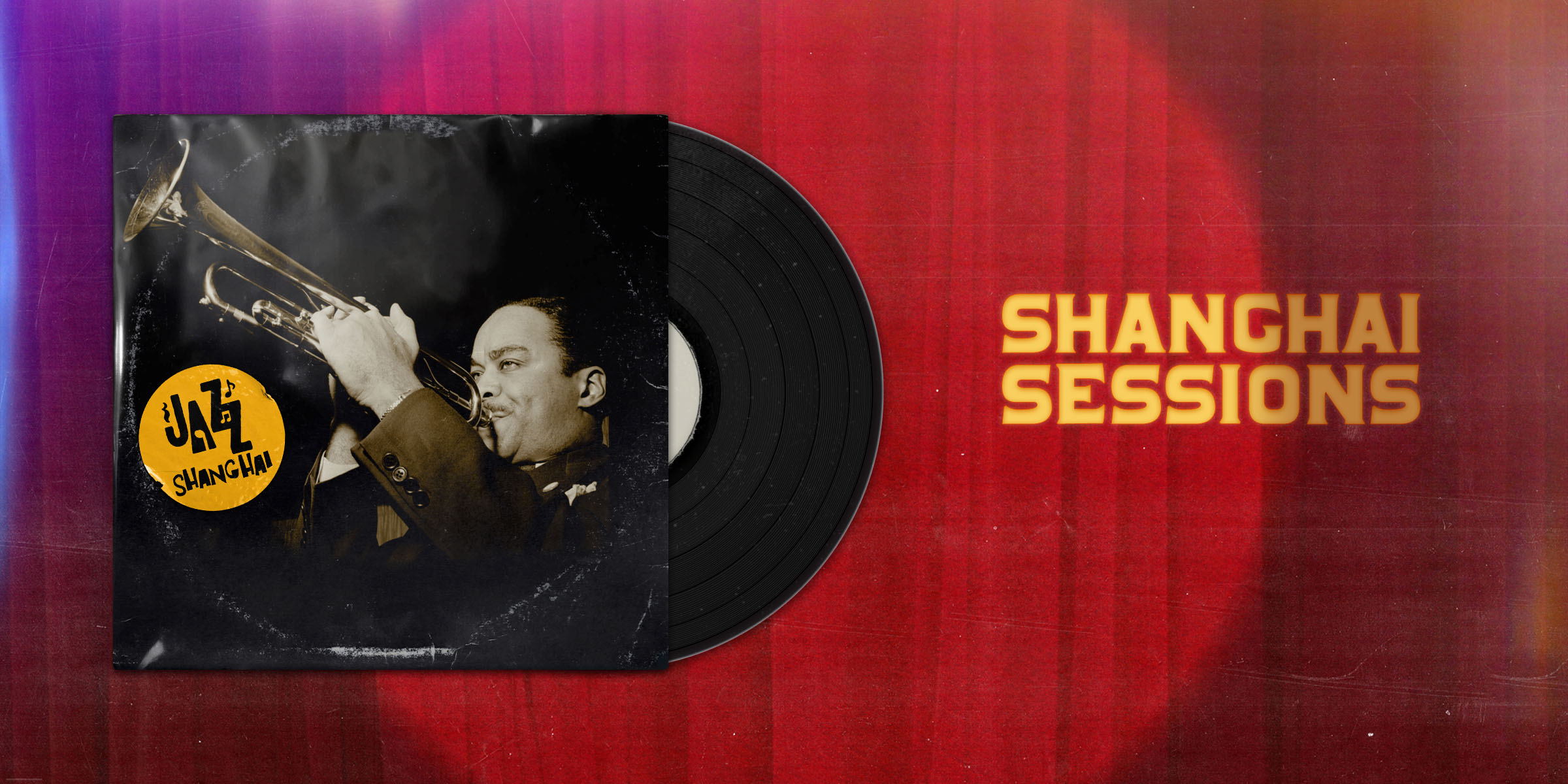
(Header image: Portrait of Buck Clayton. Visuals from Heritage Art/Heritage Images via Getty Images/VCG, reedited by Sixth Tone)