Why China’s Latest Blockbuster Game Had a Change of Heart
One of the wildest boss fights in China’s latest hack-and-slash blockbuster game begins with a calligraphy brush. Soul, the protagonist of Phantom Blade Zero, released late last month, dots the eyes of a lion-dance head, performing a traditional Chinese ritual believed to awaken the eponymous beast.
Cue the violence. Two performers animate the lion, lunging at Soul with blades spinning on its head and flames pouring from its mouth. The fight then spills onto elevated wooden poles, where Soul and the lion-dance master leap from perch to perch, trading blows to pounding Chinese drums and screaming electric guitar.
In the game its creator originally envisioned, Soul had just 66 lives to survive this fight and every other. Use them up, and hours of progress across the campaign would be gone for good.
The restriction was meant to mirror the game’s story: Soul has just 66 days to find a replacement for his damaged heart. But Beijing-based developer S-Game eventually abandoned the compulsory death limit, introducing three difficulty settings and making the original challenge optional.
S-Game founder Liang Qiwei called the compromise “one of the countless difficult decisions we made in developing Phantom Blade Zero.” His studio spent four years and a reported 300 million to 400 million yuan ($45 million to $60 million) creating a game it hoped would introduce wuxia — Chinese martial arts fantasy — to audiences around the world.
To bring its combat to life, S-Game recruited Hong Kong action star Donnie Yen, enlisted martial arts experts, and brought traditional performers into motion-capture studios. The finished game features more than 50 bosses and 55 weapons, each offering different ways to fight.
The scale of the undertaking drew inevitable comparisons with Black Myth: Wukong, China’s breakout global gaming hit of 2024. Chinese gamers even dubbed Phantom Blade Zero “the village’s second college student,” hoping the conditions for success would align twice.
So far, it has. Video game rating site IGN gave Phantom Blade Zero a 9 out of 10, praising its “memorable boss fights, compelling combat, and limitless swagger.” Its PC version scored 88 on review aggregator Metacritic, surpassing the 81 Black Myth: Wukong received.
Released on Oct. 29, with a standard edition priced at 268 yuan ($40) and a deluxe edition at 328 yuan, the game sold more than 4 million copies in its first 72 hours, topping Steam’s bestseller chart and generating an estimated 1 billion yuan in gross sales.
Unlike Wukong, which drew on the beloved Chinese classic “Journey to the West,” Phantom Blade Zero had to win over players with a far less familiar fictional universe, one Liang had spent two decades developing.
Punk fiction
In 2006, while studying architecture at Beijing’s Tsinghua University, Liang began developing Rain Blood, an independent role-playing game inspired by Taiwanese wuxia novelist Gu Long. Built using software intended for amateur game developers, it introduced Soul, an assassin serving the Order, a secretive organization of martial artists.
Over the following years, Liang, who later earned a master’s degree in architecture from Yale University, expanded the fictional universe through a series of PC and mobile games, retaining its characters, history, and storytelling conventions. In 2017, he began developing concepts for Phantom Blade Zero.
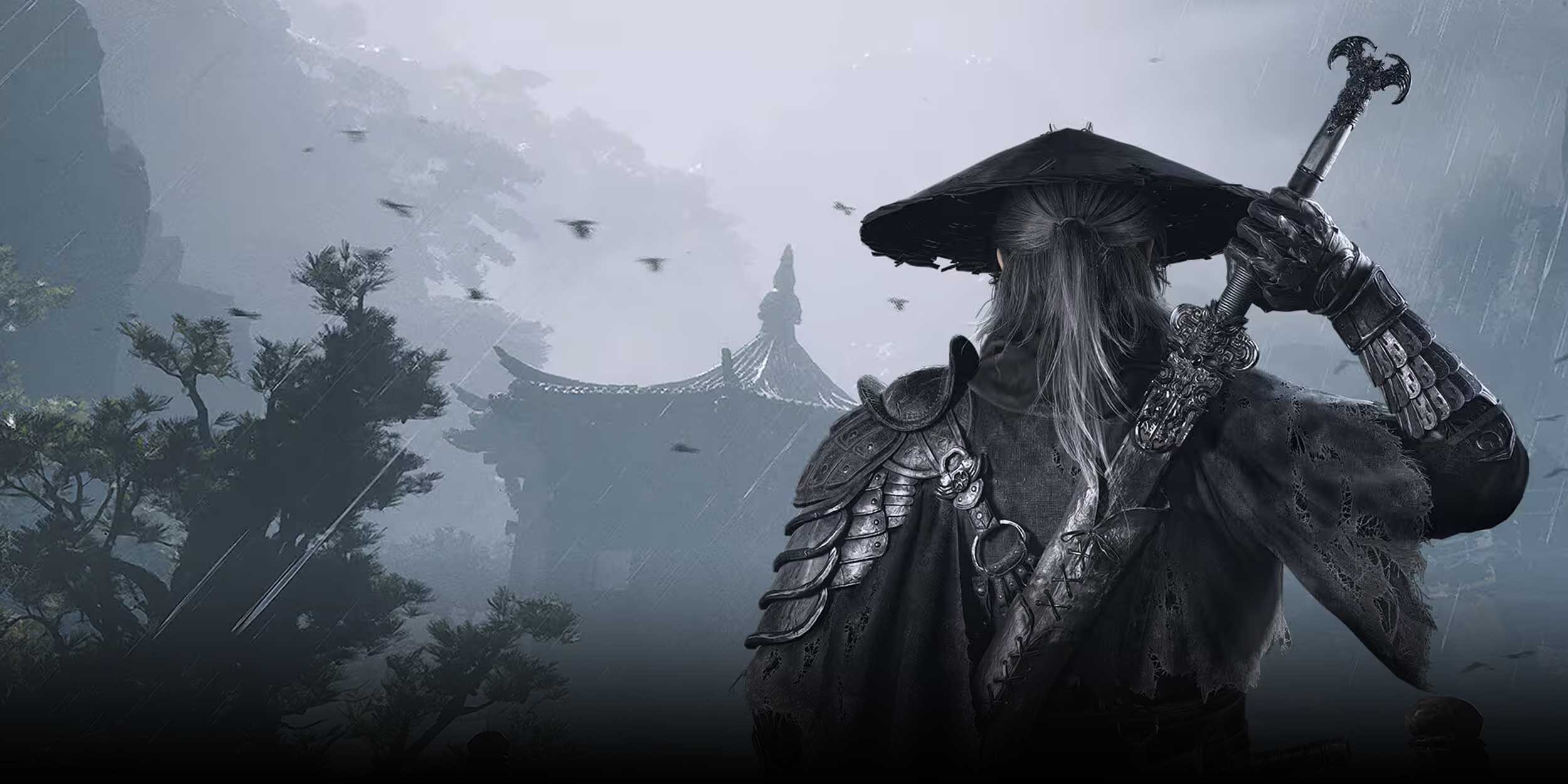
This time, Soul is fighting for his own survival. Framed for the murder of the Order’s leader and gravely wounded, he is kept alive by a venom-infused replacement heart that will last just 66 days. He must uncover the conspiracy, clear his name, and find a way to survive.
His search takes him through a bleak, rain-soaked world where ancient Chinese temples house enormous machinery, and traditional martial arts coexist with mechanical prosthetics. Liang calls the distinctive blend of wuxia and industrial technology “kungfupunk.”
Geng Youzimin, a researcher at Peking University’s Video Game and Art Research Center who has followed the series for years, recognized much of the old Rain Blood universe in the new game, from its character names and dialogue to its cold, gray atmosphere.
While many Chinese wuxia games emphasize storytelling over action, Geng was particularly impressed by Phantom Blade Zero’s side quests and the portrayal of jianghu — the loosely governed world of wandering martial artists, rival factions, and secret societies familiar to readers of wuxia fiction.
“The jianghu often represents a world in which an existing power structure governing a region has collapsed, while a new one has yet to emerge,” he said.
In one such quest, a Shadow Warden sent to capture Soul instead seeks his help to escape the organization he serves. He even discards the numerical identity assigned by his masters and chooses a name for himself. Though he ultimately fails to break free, he secretly helps Soul defeat his enemies, even at the cost of his own life.
Yet not all of the older series’ conventions have been as warmly received. Some players mocked the game’s grandiose names as adolescent melodrama, including “Dark Demon Castle,” where Soul fights a boss portrayed by Donnie Yen. Others found its dialogue overly straightforward.
Geng, who welcomed those familiar touches as a longtime fan, said the pushback underscores how tastes have shifted since the franchise’s indie beginnings. “When this IP first emerged, these elements were popular,” he said, adding that today, the same stylistic quirks have become “baggage” that risks alienating a wider audience.
For Cao Yuan, a game content creator in his 30s who had never played S-Game’s earlier titles, the moral ambiguity of its world struck a chord. “The game incorporates many such blurred boundaries between good and evil,” he said.
Cao also found Soul’s struggle more relatable. “I have no weapons, no resources, nothing at all, but I still have to fight my way into the jianghu,” he said. “That experience feels very close to real life.”
The fire-breathing lion that confronts Soul took shape in a Shanghai motion-capture studio, where a troupe from China’s southern Guangdong province performed a traditional lion-dance routine. Combat director Yang Liu and his team used the recordings to develop the fight, exaggerating the performers’ head tosses and tail swings into attacks.
Even the vegetables suspended above the arena draw on cai qing, or “plucking the greens,” a southern Chinese lion-dance ritual in which the lion retrieves greenery symbolizing prosperity and spits it out to spread good fortune.
In the game, Soul can collect the vegetables to boost his power; later, when the lion-dance master finally breaks free of the force controlling him, he offers Soul the greens.
The music, helmed by Bo Caisheng, a composer who’s worked on animated productions and video games, draws on the same traditions, beginning with drums performed live before introducing percussion evocative of the northern Shanxi province and electric guitar. Bo described his approach as “using Chinese music as the skeleton and Western music as the flesh.”
Tang Zhi, 35, grew up in central China’s Hunan province, where he was familiar with lion dancing from neighboring Guangdong. A Beijing-based developer relations executive, he’s followed Phantom Blade Zero since its early trailers.
“When you jump around on the plum blossom poles and fight the boss, it immediately reminds you of the martial arts performances you watched as a child,” he said.
Game theory
For all the intricate martial arts choreography onscreen, pulling off spectacular moves in Phantom Blade Zero requires surprisingly few commands.
In a fight against a wooden puppet, flashes of blue signal an attack the player can block, while red warns of one that must be dodged. Each response takes a button press, though timing is crucial: dodge at precisely the right moment, and Soul executes “ghoststep,” instantly slipping behind his opponent.
Another button unleashes an elaborate finishing sequence, launching the puppet into the air before Soul slashes its neck as it lands.
Liang wanted to make such combat accessible to newcomers while giving experienced players room to test their skills and explore its depth. Those less interested in mastering the fighting system could concentrate on the story or simply enjoy the cinematic choreography.
“And in the era of livestreaming and short videos, the gameplay itself will become content for a wider audience,” Liang wrote on social media.
Players can combine 30 primary weapons and 25 secondary weapons, including broadswords and twin daggers, each with their own moves and finishing animations. A sha qi, or “killing intent” meter, replenished by well-timed blocks and weapon switches, encourages fast, aggressive combat.
For Zhang Yingshen, 35, a game content creator who works in public relations for a foreign gaming company, the combat was exhilarating without the frustration he associated with learning other action games.
“It’s a game where positive feedback practically spills out of the screen,” he told Sixth Tone.
But Zhang admitted that he eventually wanted more of a challenge. “About halfway through the game, I felt it was a little easy, so I switched to the highest difficulty setting. But even that wasn’t challenging enough,” he said.
Players can switch between three difficulty settings as they progress, but the toughest challenge is reserved for those who complete the main story. Only then can they unlock “66 Days,” a separate mode that limits them to 66 lives — the restriction Liang originally intended for every player.
But Zhang’s experience at a Phantom Blade Zero playtest in Beijing left him with reservations about the combat system’s staying power. “We (and other uploaders) were worried that players might feel exhausted after 10 to 20 hours of gameplay,” he said.
Yet he found that the game’s more than 50 bosses and interconnected, three-dimensional maps gave players plenty to explore across Liang’s sprawling jianghu world.
“Throughout the game, you constantly feel like you’re discovering something new around every corner, and you always maintain a sense of freshness about the world,” Zhang said.
He Wei, a professor at Beijing Normal University’s School of Arts and Communication, sees Phantom Blade Zero’s fusion of wuxia and industrial machinery as an attempt to create a distinctive style that international audiences can readily embrace.
But he argued that incorporating Chinese traditions was only part of the challenge. “Gameplay is the vessel, while culture is the soul. Only when the two are integrated can a game spread culture far and wide,” he said.
He nevertheless considers Black Myth: Wukong stronger in artistic vision and cultural depth, particularly in its character designs. “From the character concept art to the finished designs, the illustrated portraits of characters are more sophisticated and demonstrate greater depth,” he said.
Geng, from Peking University, cautioned against expecting other Chinese developers to reproduce Wukong’s extraordinary cultural impact. “Black Myth: Wukong was a phenomenon. The cultural discourse it carried, or the cultural responsibilities it took on, were things that neither the game itself nor its development team could ever have fully anticipated,” he said.
Nor did the commercial success of Wukong and Phantom Blade Zero resolve Geng’s doubts about the sustainability of AAA development. Such games demand enormous investment and large-scale production, and require high returns to justify their costs.
“AAA games will always represent the ultimate ideal for many game developers, the crown jewel of their ambitions. But commercially, they are increasingly more like luxury goods,” he said.
For Liang, bringing a fictional world he had spent two decades developing to a mass audience meant balancing his desire for creative expression with his responsibilities to paying players. After a playtest in Beijing, he described himself as “a service provider” who had to give players more than their money’s worth.
“Making games is a process of dissolving one’s own ego and sinking it into the earth,” he wrote on social media, “where it can grow into a flourishing tree nourished by the soil.”
Editor: Apurva.
(Header image: A scene from the video game “Phantom Blade Zero.” From @影之刃零 on Weibo)