Think Wuxia Is Past Its Prime? Think Again.
The wounded swordsman holds out his weapon, hand trembling, ready to face death, when a strong wave of qi sweeps toward him, a flash of white, swift as a flying serpent, sending his assailants tumbling back. As if drawn by some invisible force, the white silken sash coils toward a jade-like hand belonging to a slender figure reclining in the crook of a nearby tree’s topmost branches. Graceful, feminine, carefree.
This iconic scene from “Who Rules the World” is but one of many series from Chinese wuxia and xianxia — martial-arts adventure and its more cosmological, supernatural cousin — to capture the hearts of audiences worldwide in recent years. Other hits include “The Untamed,” “Word of Honor,” and “Love Between Fairy and Devil,” broadcast widely — and connecting with viewers around the world, as evidenced by their enthusiasm on social media.
More remarkable than the popularity, however, is how all of these series are based on works of female web novelists, who make up a significant portion of wuxia writers — roughly 60%, according to a 2011 study. For a genre like wuxia, this is unprecedented. Most point to male masters like Jin Yong, Gu Long, and Liang Yusheng, whose writing in the mid- to late-20th century was often full of idealized longing for China’s culture and heritage. Today’s novels take a different tone, one that reflects a confidence in China’s place on the global stage and the greater opportunities for writing in the digital age. Since the mid-2000s, amid the emergence of the New Mainland Wuxia movement, female authors have been pioneering China’s burgeoning internet literature platforms, which have removed many traditional barriers to authorship.
The changing writership in the nearly half-century since the masters has helped the genre’s stories to evolve. Gone are the stereotypical lovelorn waifs, the marooned ice maidens, and the hysterical hags that pepper the works of old-school authors. Now, rather than the stereotypical white-robed phantom, there is a woman in red with the strength and skills to equal her male counterparts. Fans need look no further than the slave-girl-turned-warrior queen Fuyao or the epic heroine Zhou Fei — two of my favorites in the new style — to see character development typically reserved for male protagonists.
And it’s not just powerful martial artists being written with nuance and psychological insight. Newer wuxia is finding female characters whose strengths lie elsewhere — be they scholars and healers like Xue Ziye in “Seven Nights of Snow,” diplomats like Princess Hua Chunran in “Who Rules the World,” or detectives like Mo Yan in “Heart of Loyalty.” These female characters reflect real rather than ideal character traits. They are not always patient, gentle, and nurturing; in fact, they may have strong desires and ambitions, and can sometimes be bad-tempered, angry, and, yes, difficult. As an author who grew up reading classic wuxia novels, it’s wonderfully cathartic to see all of this not just on the page but also on the screen.
Remarkably, the portrayal of male characters has also transformed in today’s wuxia and xianxia. Gone are the inherent chauvinism and casual misogyny in novels such as “Demigods and Semi-Devils” and “The Sentimental Swordsman.” Instead, we have caring and supportive fathers like She Tianlin in “Love in the Clouds” and masters like Shao Yanping in “Whispers of Fate,” while rigid princes and arrogant court physicians come to learn, as the stories progress, that they must change their ways to engage with the women in the story. In light of today’s dismantling of traditional masculine and feminine norms, not only are such stories on the screen affirming for women, but they are also educational and enlightening for male audiences.
These characters are a window into current interpretations of xia — those that embody the concept of heroism and duty considered core to the genre. Interestingly, though the paths of character development have diverged from the martial, the works actually adhere to one of the earliest definitions of xia by the Grand Historian Sima Qian. Documenting the lives of real contractors during the Warring States (475 – 221 BC), Sima saw heroes as those who used their skills, whatever they might be, to keep their word and help others in need. The male and female characters in modern wuxia, such as “Legend of Fei” and “Follow Your Heart,” amply illustrate that martial prowess is just one way to protect others and fight for justice, and that they also fulfill other roles in society.
At its core, anyone can become xia — which is distilled and brought to the forefront in the politics female wuxia writings often advocate. These writers depart from hegemony and move toward coexistence and peace, making space for voices from different ethnicities and giving proactive roles to characters with disabilities, neurodivergent tendencies, or non-heteronormative presentations. Now there are characters like Jiang Xinbai, a detective with prosopagnosia; Li Lianhua, a frail, mild-mannered sleuth who loves cleaning and gardening; and Ting Nu, the learned merman in a wheelchair. The internet has also allowed more writers to set aside gender expectations, bringing genderfluid characters and queer-coded or homosocial relationships into their works. Though wuxia appears to be a genre ensconced in history, it’s these highly relevant, contemporary traits that have appealed to audiences around the world.
Of course, it would be remiss to suggest that these winning traits were all the remit of female writers, but they certainly seem to have tilled the soil. Male creators such as Xiao Lou and Tangjia Sanshao have also created relevant, inclusive worlds with nuanced characters.
And yet, the prevailing view among academia and “old-school purists” outside China, ranging from the media to authors to fans, is that “proper” wuxia ended with Jin Yong’s generation. Remnants of patriarchal thought and attitudes that the New Mainland Wuxia pioneers struggled against still rear their ugly heads in contemporary works, such as the stereotypical portrayal of Li Hanyi in “Blood of Youth” as the powerful, stoic swordswoman who falls apart for a love interest.
At a time of backlash against effeminate masculinity in Chinese media, I’ve been glad to see some danmei and fantasy fiction being published in English, even though translated works rarely receive the thoughtful textual approach and “major title” marketing that Asia-inspired fantasy fiction written in the Anglophone world does.
Wuxia is far from over: it’s never stopped evolving since it began as a genre in the early 20th century, and has undergone some amazing transformations that deserve greater appreciation. So far, my efforts to get female-written wuxia published have been met with caution and doubt among Anglophone publishers. Still, I will keep singing the praises of this literary tradition’s culture to bridge the gap not just between East and West, but also between old and new, and to give voice to the continued resonance of this genre with global fantasy storytelling. Just as the male and female xia in wuxia novels strive for a better world, we must strive for better understanding between nations and wider literary horizons.
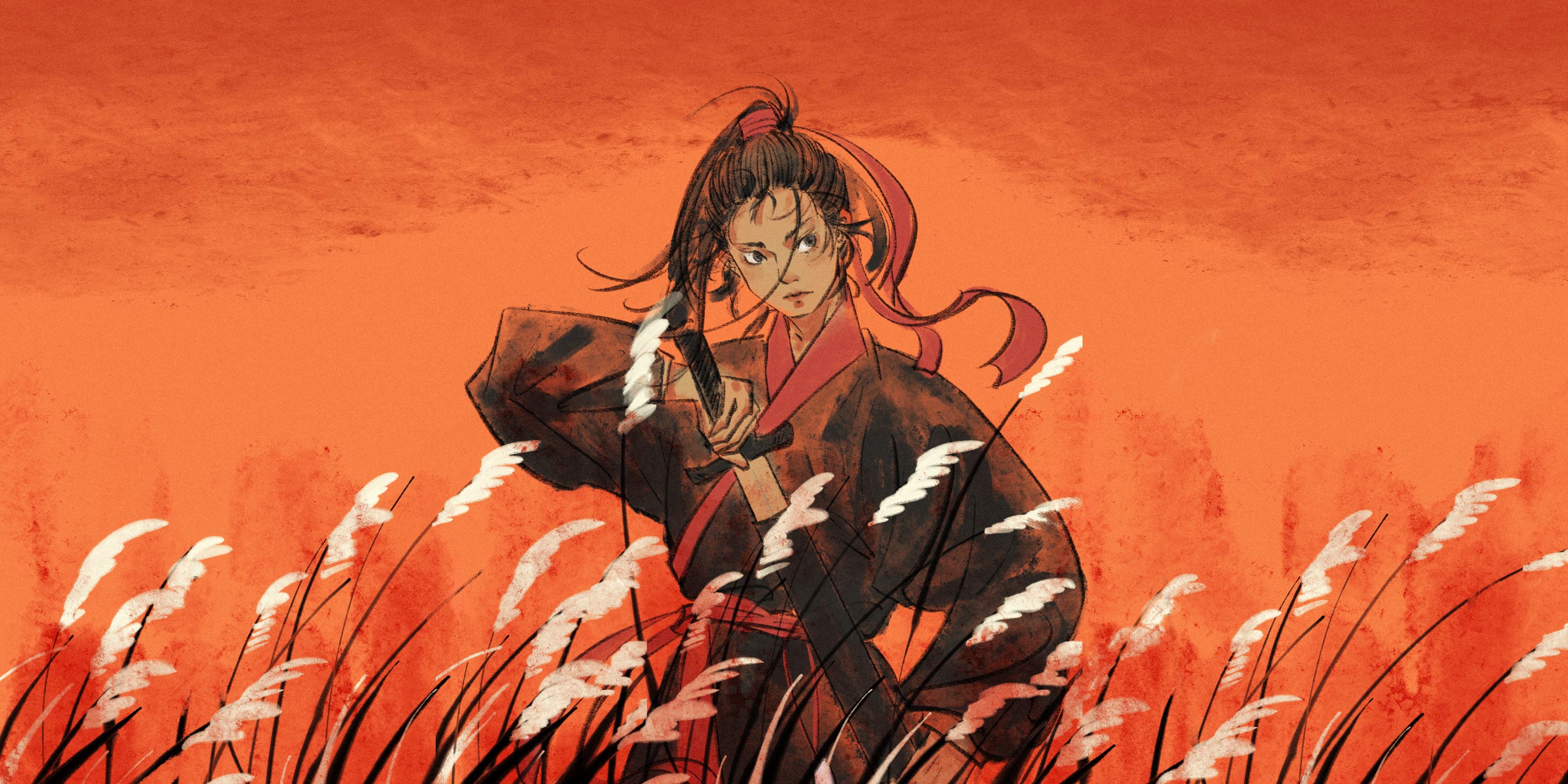
(Header image: Visuals from Shijue/VCG, reedited by Sixth Tone)