Three Sisters Cross China to See What Keeps Their Family Apart
YUNNAN, Southwest China – Growing up in a remote mountain village in Yunnan province near China’s southwestern border with Vietnam, Zhou Lifang had only ever seen clouds from below. In late July, on her first flight, the 16-year-old saw them from above.
“I thought clouds were transparent because (my) textbook said clouds are made of water vapor,” she tells Sixth Tone. “But I didn’t expect them to be like a white wall. The clouds you see from the ground are in pieces, but from the sky they are one big mass.”
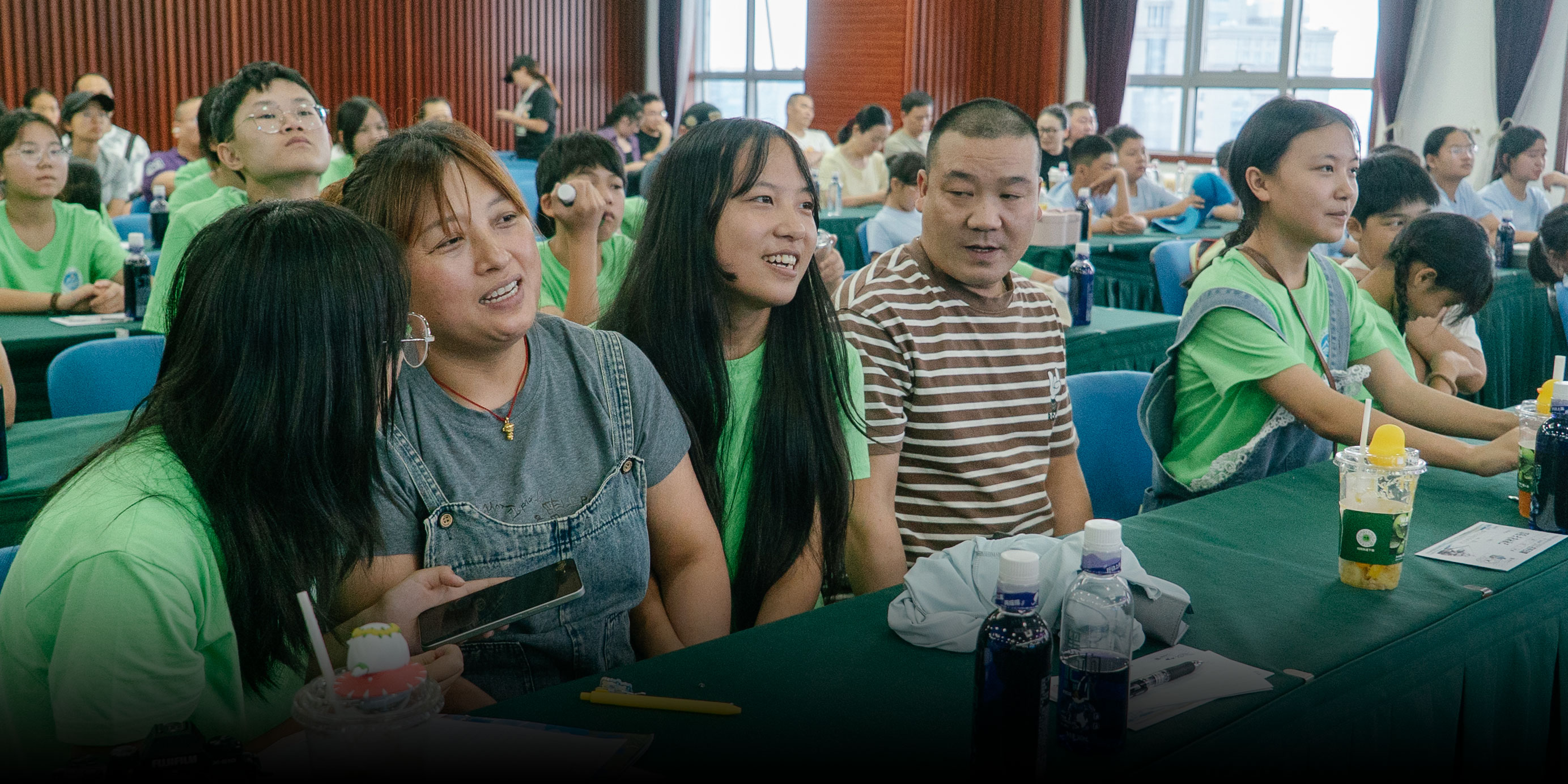
Lifang and her 14-year-old twin sisters, Zhou Lixin and Zhou Liyi, were among 145 students from Yunnan taking part in “Mountain-Sea Bond,” a four-day program in Shanghai that included reunions with parents working in the city.
The sisters are among China’s “left-behind children,” who remain in their home communities while their parents migrate for work, often placed in the care of grandparents or other relatives. China had 9 million such children in 2022, according to the 2023 Rural Education Development Report.
Born in Kunming, Yunnan’s provincial capital, the sisters have lived for more than a decade with their grandparents in a village in Malipo, a county in the Wenshan Zhuang and Miao Autonomous Prefecture roughly 400 kilometers away by road. Their parents, Zhou Yuneng and Zhang Shunfen, now work in Shanghai, where Zhou drives for a ride-hailing service and Zhang sorts groceries at a supermarket warehouse.
Smartphones have long allowed Zhou and Zhang to remain involved in their daughters’ lives from afar. They check in, offer advice, and try to mediate fights between the sisters. But they can see and hear only what the girls choose to share, and cannot always persuade them to talk.
Asked how well she knows her daughters now, the mother says they all like drawing, then pauses. “Close to zero,” she admits. “I don’t really know what they like anymore.”
After more than a decade of parenting largely by phone, Zhou and Zhang would spend two weeks sharing a 20-square-meter room in Shanghai with their daughters, their longest stretch together since the girls went to live with their grandparents.
On her own
Before the sisters left early that morning, their grandmother, Kuang Tianzhen, 64, tucked 50 yuan ($7) into each girl’s pocket, twice their usual weekly allowance. Rumors of scams in their border village had made her uneasy about the journey.
“Where will you stay in Wenshan?” she asks, the prefecture’s seat. “This is all reliable, right?”
After the neighbor’s car carrying them disappeared from view, their grandfather, Zhou Shucheng, 72, sat brooding outside the house for at least half an hour, staring down the rain-soaked road and gently petting the tabby cat his granddaughters had adopted.
Four hours later, the sisters arrived at a hotel in Wenshan for a predeparture meeting with participants from surrounding villages and counties. They would spend the night there, then continue to Kunming the next day for the flight to Shanghai.
“Are you Zhou Lifang’s parents? Have your three children arrived yet?” a trip organizer asks over the phone.
“I am Zhou Lifang,” she replies. “We’re already here in the lobby.”
Lifang was the only child in the tour’s WeChat group; everyone else was a parent. She had followed instructions about when and where to meet and confirmed the arrangements for all three sisters.
Inside the hotel’s meeting hall, grandparents sit beside children waiting to register while organizers address the crowd from the stage.
Elders are heard asking “Where should I sign?” and “Do I fill this part in?” At the line marked “guardian,” some pause, unsure whether to write their own names or those of the children’s parents in Shanghai.
One grandmother checks her granddaughter’s schoolbag, rebraids her hair, and films her on her phone. When organizers ask the adults to leave, she goes downstairs, then turns back and slips inside again.
Lifang sat quietly on one side of a wide pillar, her twin sisters on the other. Unlike many of the children around them, the sisters had arrived without a grandparent.
The sisters began attending boarding school around age 6. When home, they helped with farm work and tended the family’s wood-burning stove. Before they had smartphones of their own, they called their parents using their grandmother’s phone or a public telephone at school.
At 12, Lifang went alone to a hospital near her school for a tuberculosis screening while her mother guided her through the process over a video call.
“Sometimes I felt pretty helpless,” she says. “I would ask adults passing by for help and follow their directions.” On other visits, her mother advised her to follow a classmate who knew the hospital better.
When the village prepared to allocate plots of collectively owned farmland, Lifang took the call and passed the information to her grandmother. During school vacations, she tidied the twins’ room and called her mother when she needed money or help handling her sisters.
Her grandfather divides farm work and allowances equally among the three girls. But when they argue, he tells Lifang, “You’re the older sister. You’re the eldest. You should give way to them.”
The twins usually side with each other against Lifang, and a stray remark can set off a fierce argument. From Shanghai, Zhang tells her, “If someone hits you, whether it’s your sisters or your schoolmates, you should hit them back.”
Lifang sometimes goes into a room and locks the door instead. “Then they can’t come in,” she says. “They’ll play a game, and after that, everything will be fine.”
She has repeatedly asked her parents for a room of her own. When she wants to be alone, she sometimes sits on a swing her father built on the rooftop. On a nearby window, smiling faces the sisters traced with their fingers years ago remain visible beneath layers of dust.
“Sometimes I wish I could be the younger sister, not the older one,” Lifang says.
Close to zero
When the twins moved to the village at 3, they sometimes cried for their mother. Their grandmother would carry one of them outside and point toward Kunming, along the road winding over the mountain.
“I’d hold her for a while and tell her that her mother was there,” Kuang recalls. “Then she’d stop crying. They’re good girls, easy to coax.”
Their father had tried to leave the twins in the village a year earlier. He drove them there when they were 2, but couldn’t bear to leave them and took them back to Kunming.
By 2015, private kindergarten in Kunming cost 1,800 yuan ($250) per child per month, meaning fees for all three would have consumed 5,400 yuan of the couple’s roughly 6,000-yuan monthly income.
The family was also hundreds of thousands of yuan in debt after rebuilding the village house and paying hospital bills for the grandfather and one of the twins, who had spent several weeks in neonatal intensive care with meningitis. Because the girls lacked local household registration, or hukou, enrolling them in Kunming’s public schools was difficult.
For the next decade, their parents remained in Kunming, making the six-hour drive to the village every month or two for a weekend or holiday.
Years of installing wood floors damaged both of Zhou’s knees. The work required him to squat and sometimes kneel. “After every shift, I would get off my scooter and walk stiff-legged,” he says. In 2025, chronic arthritis forced him out of construction, and the couple moved to Shanghai, approximately 2,500 kilometers away.
When the sisters missed their parents, Lifang says, they video-called them. “Mom and Dad would always say they only had a few more days of work and would be back to see us soon.”
Over time, however, the girls stopped asking when their parents would return for good. “They used to say, ‘Mom, I miss you,’” Zhang says. “Since I moved to Shanghai, I hardly ever hear that anymore.”
In 2023, the couple installed a camera at the gate of the village house, primarily for safety. It lets them check on the grandfather and see when the girls return from school. They chose not to install one in the girls’ bedroom.
“I just feel that girls, after all, need some privacy,” Zhang says.
The mother also bought her daughters smartphones with large screens to make video calls easier and placed few restrictions on how they used them.
“Kids today are different from us back then,” she says. “Digital devices aren’t just for studying anymore. They have access to so many things on their phones. I don’t restrict them too much.”
The twins often decline their parents’ calls or hang up after a few sentences. Sometimes, one answers while playing on the computer, points the phone’s camera at the ceiling, and keeps playing.
Asked why, one of the twins says, “Just because I don’t have the patience.”
Every time this happens, Zhang just smiles and rarely lets her temper show.
“I feel that if I push too hard, I lose the right to speak,” she says. “I’m afraid they’ll think, ‘You didn’t raise me. You weren’t there when I was small, and now you want to tell me what to do.’ So sometimes I can’t be too direct. I have to be careful how I put it.”
When Lifang and the twins argue, the parents try to settle their disputes by phone, usually scolding both sides. Each girl comes away believing that she alone has been blamed.
“That’s because of the distance and what a phone call can’t do,” the mother says. “If it were face to face, a few sentences would clear it up.”
Unlike the twins, Lifang video calls Zhang almost every day and has her saved in her phone as “Dear Mom.” But she seldom calls Zhou. “Dad is quite busy driving day and night, so I rarely call him,” Lifang says. “I’m afraid of interrupting his work. I feel like I’m not close to him because he’s too strict.”
Even with Zhang, much of Lifang’s life remains outside their conversations. At school, some classmates seek her out for tarot readings, calling her “Master Zhou.” Others mock the way she speaks, comparing it to barking, and give her insulting nicknames.
Lifang spends nearly every break between classes drawing. She draws when she feels happy, angry, or embarrassed, and says it helps her relax. She keeps one sketchbook, which she rarely shows others, for times when she feels low.
One drawing shows a figure with its arms crossed and an X over its mouth. In the background, Lifang has written, “What if speaking is also a fault?”
“All I can do is draw them as ugly monsters,” Lifang says.
She closes the sketchbook.
“There are some words I cannot show,” she says. “Cannot.”
In another sketchbook, Lifang has created Yumeng, a cheerful girl from the sea who grows increasingly troubled as she tries to save a city from destruction. “Why should I, who am already living such a miserable life, have to save others?” the character asks.
Lifang also has a circle of friends her parents know little about. She met them through a nonviolent multiplayer game she describes as “healing.” Unlike the competitive games her sisters prefer, it lets players explore different settings, build homes and farms together, and talk.
“Besides my best friend at school, they are the most important friends in my life,” Lifang says.
Before boarding the flight to Shanghai, Lifang sent them an update: “I’m boarding now, so I can’t reply to your messages. I’ll send you some amazing pictures later.”
Under one roof
Two days after reuniting privately with their parents, all three sisters stepped onto a stage in matching pale green T-shirts and brand-new canvas shoes their mother had prepared before their arrival. “Mountain-Sea Bond” organizers had chosen the family for a letter reading at the Aug. 1 reunion ceremony.
Standing between the twins, Lifang began reading, with Zhang beside her daughters and Zhou watching from the audience.
“Before, I never understood why you were always away and could not be with us,” she reads. “Only on this trip, after coming to Shanghai where you live and work, did I truly understand how hard you work and how much you have given.”
When Lifang finishes, the audience applauds, and Zhou begins to sob. As the sisters come down from the stage, he pulls the twins close and continues crying until his face turns red. The twins’ eyes fill with tears.
“You don’t see your children often,” he says after regaining his composure. “And then suddenly you realize they have grown up all at once.”
After the ceremony, the family go to Jing’an Joy City, a Shanghai mall the sisters had long wanted to visit for its anime shops. Lifang taught herself to draw manga and now takes commissions through an app from clients across China, earning several dozen yuan per drawing. She hopes to attend one of China’s leading art academies, though she usually tells adults she wants to become a civil servant like her older cousin.
The program ended that day, but the sisters remained in Shanghai for the rest of their two-week stay. All five shared a one-room, 20-square-meter unit with a private bathroom and an induction cooker in one corner.
Zhou and Zhang had moved there at the beginning of the year, hoping the girls might eventually join them in Shanghai. Before the trip, Lifang had assumed the move had made her parents’ lives easier.
“Now that Mom and Dad work in Shanghai, the conditions are better, and the work is a little easier,” she says.
Zhou no longer installs floors, but his ride-hailing shifts often last at least 12 hours. “If you work less, you can’t make enough,” he says. “You drive for 11 or 12 hours, come back, charge the car, make something to eat, then sleep. The next day, you get up and repeat it. That’s the job.”
Zhang works similar hours sorting groceries at a supermarket warehouse and has no regular weekends. Sometimes they go an entire day without seeing each other awake; one leaves breakfast behind before the other gets up.
During the visit, Zhou took another week off from driving, while Zhang continued working. The parents would not allow the girls to go out alone in an unfamiliar city.
Before leaving Yunnan, Lifang says, “I want to help my mom sort groceries at the supermarket warehouse.” In Shanghai, she often accompanied Zhang to work, while the twins remained in the apartment.
One night, Zhang returned late from work and began tidying the room. One of the twins ran over and hugged her.
“Mom, I feel like you’ve worked so hard,” Zhang recalls her saying. The girl then began to cry.
“I feel like she’s really growing up,” Zhang says.
Despite all five sharing one room, the sisters argued less during the visit. Disputes that had been difficult to settle over the phone rarely became as heated in person, Zhang says.
Even before his daughters arrived, Zhou had been considering returning to Yunnan after another year in Shanghai.
“Whatever happens, I should go back and do whatever work I can, as long as we are by their side,” he says.
But Zhou has taken no steps toward moving and cannot say what work he might find near the village. Its karst terrain leaves little room to expand farmland, and 796 of its 2,172 residents work elsewhere, according to a village official.
Zhou and Zhang each earn about 8,000 yuan ($1,120) a month in Shanghai, though Zhou can make more by taking fewer days off. Returning would mean giving up the income that had drawn them farther from their daughters.
During their stay in Shanghai, the sisters called their grandmother about once a week. One day at a café, a blue parrot perched on Lifang’s shoulder. She has long wanted one like it, and blue is her favorite color. Lifang immediately called Kuang on video.
“Grandma, look what’s on my shoulder,” Lifang says. “Isn’t it impressive?”
“Behave yourself,” Kuang replies. “Where are the twins?”
“They went with Mom to work.”
“When will you come back?” Kuang asks. “How are you getting home?”
“Dad says he’ll drive us back next weekend,” Lifang says. “My school starts early.”
Editor: Apurva.
(Header image: Zhou Lifang (left) and her 14-year-old twin sisters, Zhou Lixin (middle) and Zhou Liyi (right), attend the “Mountain-Sea Bond” reunion ceremony in Shanghai, Aug. 1, 2026. The Shanghai Small and Medium-sized Enterprises Technology Talent Introduction Service Center has organized six such reunions since 2024. Wu Huiyuan/Sixth Tone)