China Tests Pausing Countdowns for Delivery Riders at Red Lights
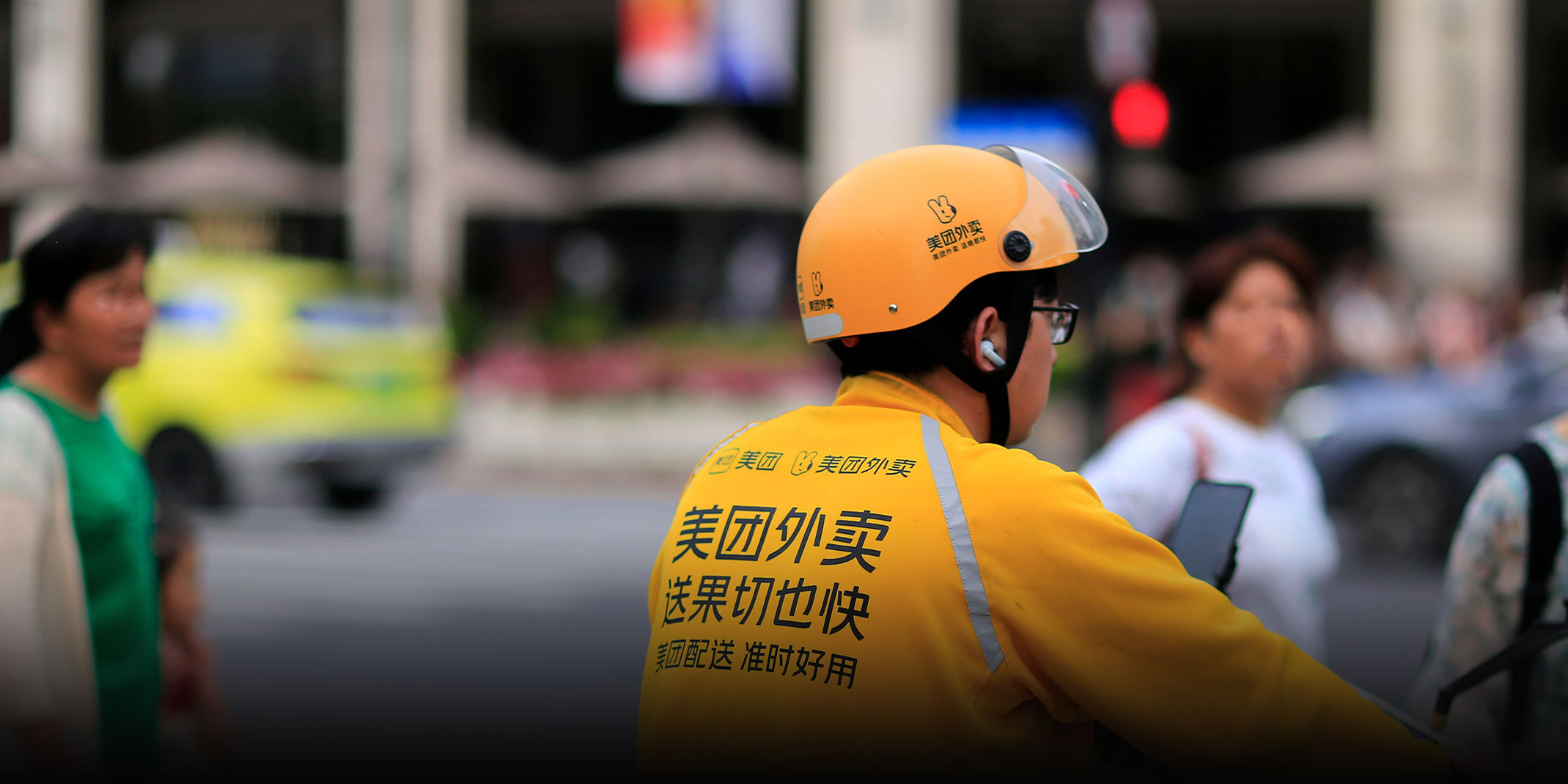
Multiple Chinese cities are implementing a new timer system for delivery riders that factors in the time spent stopped at red lights, easing how long they have to get items to customers.
The system was announced on Aug. 13 by delivery platforms Taobao Flash, JD Food Delivery, and Meituan at a meeting in Beijing with authorities from both Beijing and Shanghai, as well as experts and lawmakers to discuss changes to existing delivery rules.
The same day, Meituan announced the pilot of the system in Beijing, which went into effect in Beijing’s Chaoyang and Tongzhou districts and the Beijing Economic-Technological Development Area, in the city’s suburb of Yizhuang. Suzhou in the eastern Jiangsu province also began a pilot of the system on both Meituan and Taobao Flash on July 31.
Delivery of food, goods, and special packages in China is a race against the clock, with riders granted little time to complete each order. When a customer places an order via a delivery app, it is transferred to riders, who then choose whether or not to accept it. Platforms require orders to be delivered within a certain time; otherwise, riders incur a penalty.
Before implementing the new system, delivery apps calculated the entire time from order acceptance to a package’s successful delivery, not factoring in the time riders spent stopped at traffic lights. This led to a culture of delivery riders running red lights to make their deliveries on time.
According to a video Meituan released the same day as the announcement, when riders stop at a red light, the app’s delivery page will display a countdown timer for when the light will turn green. A pop-up message from its AI safety assistant then informs them, “Stop at the red light. We’re recording the waiting time. The delivery time for this order will be extended when it ends.”
Once the delivery is completed, the app displays the order number, cumulative time spent at red lights, and a recalculated permissible delivery time based on that figure.
Meituan told Sixth Tone on Monday that it previously estimated time riders spent at red lights based on offline data and algorithmic prediction — a less precise method for e-bikes. With the new system, however, the platform calculates time spent at red lights by accessing real-time traffic light data from traffic management departments, combined with the rider’s location, direction of travel, and delivery route — information provided by the Meituan app.
The new rules will also change how other factors affect delivery time. For example, platforms will extend delivery times if an order is transferred between riders or if adverse weather and difficult road conditions occur. Orders that are delayed at the point of preparation will not influence a rider’s service score.
The estimated time shown to customers will also be adjusted in real time to reduce pressure on riders, using an average speed of no more than 15 kilometers per hour to calculate arrival time.
Li Yipeng, a food-delivery rider in Suzhou, told domestic media, “Now we can clearly see how long we waited at the red light and how much extra time we were given. As riders, we don’t need to worry anymore, and we definitely won’t have to run red lights anymore.”
On Aug. 17, Meituan announced that the system would immediately go into effect in the city of Wuxi in Jiangsu province. The same day, Taobao Flash also told Sixth Tone that the system went into effect today in the eastern city of Qingdao.
Meituan also told domestic media that it is currently reviewing more than 20 other cities as possible extensions of the policy’s scope, and expects it to cover more than 1 million riders by the end of the year.
Editor: Marianne Gunnarsson.
(Header image: VCG)