Hainan to Ban Sales of Gas-Powered Vehicles From 2030
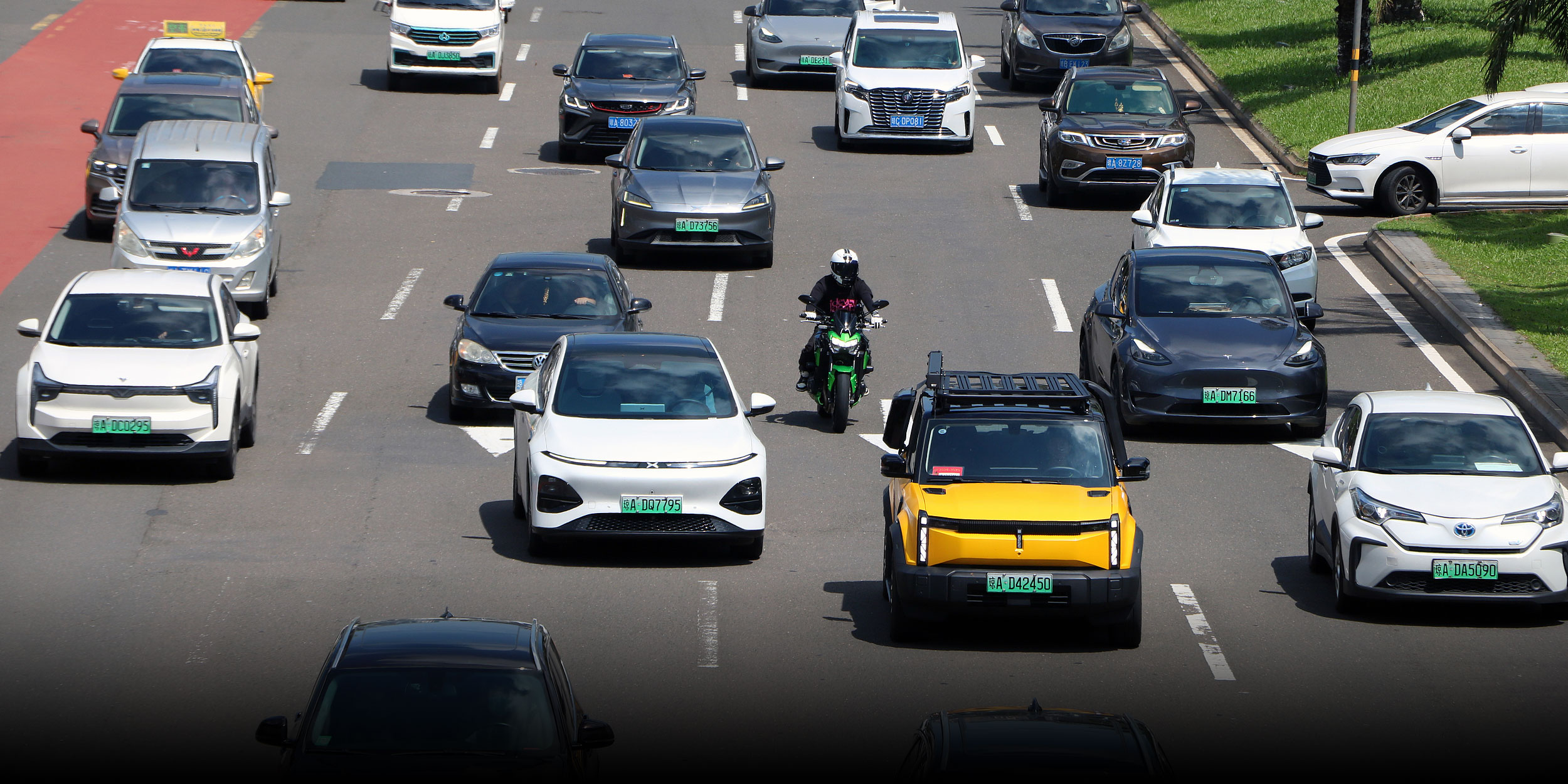
China’s southern island province of Hainan will become the country’s first to ban the sale of gasoline-powered vehicles by 2030, domestic media reported this week.
A plan released by the provincial government on July 3 requires that all new vehicles in both the private and public sectors — including buses, taxis, and rental vehicles — be EVs by 2030, with the exception of “special purpose” vehicles. The province also aims to maintain a ratio of one charging pile for every 2.5 EVs.
Existing gasoline-powered vehicles will still be allowed on the road after the ban takes effect, and hybrid vehicles will continue to be sold. The province will also increase the share of new energy vehicles on its roads to almost half, up from under a quarter in 2025.
The province, known for its beaches and resorts, first proposed banning the sale of gasoline-powered vehicles by 2030 in 2019 and has since issued a series of policies outlining a roadmap toward that goal.
The province has also consistently led China in EV adoption. This April, EVs accounted for nearly three-quarters of all new vehicle sales in Hainan, the highest share nationwide.
Experts told domestic media that Hainan’s geographic advantages as a small island have helped accelerate the transition. Many of China’s latest EV models can complete the province’s popular 600-kilometer coastal highway on a single charge, while its warm climate largely mitigates cold-weather battery performance issues.
Gasoline in Hainan has long cost more than 1 yuan ($0.14) per liter above prices in most other provinces, Zhang Xiang, an auto industry analyst, told domestic media.
Since 1994, Hainan has bundled road maintenance fees and tolls into a fuel surcharge, making it the only province in China without highway toll stations.
While the surcharge encouraged the shift toward EVs, the shrinking number of gasoline-powered vehicles has also decreased road maintenance funds. To address this challenge, Hainan last year proposed a system — yet to be implemented — that would charge drivers based on vehicle mileage.
With the maturation of China’s EV industry in recent years, vehicle reliability and driving range have improved significantly. The share of EVs among new vehicle sales nationwide rose from under 6% in 2020 to over half in 2025. The Ministry of Industry and Information Technology said in 2019 that it would support pilot programs to phase out gasoline-powered vehicles in regions “with suitable conditions.”
EV-driven reductions in oil consumption have become a key driver of cleaner air in China, according to a report released by the Helsinki-based Centre for Research on Energy and Clean Air (CREA) on July 14.
The report estimates that EVs displaced 33.7 million tonnes of oil equivalent in the first half of 2026, roughly equal to 6% of China’s crude oil imports in 2025.
“That said, those gains could quickly taper off as China’s PM2.5 improvement curve flattens, meaning further progress will depend on more of these kinds of structural changes: cutting coal-related emissions on one side and reducing petrol and diesel combustion on the other,” Qi Qin, a China analyst at CREA, said.
Editor: Marianne Gunnarsson.
(Header image: VCG)