The Chinese Story Behind Chaoshan’s Big Screen Moment
This is the first article in a series on China's southern Chaoshan region, exploring the history, culture, and identities behind its recent resurgence in the spotlight.
In China’s film market this year, the seemingly inconspicuous Teochew-dialect film “Dear You” pulled off a box-office miracle. By mid-June, the low-budget production, made with an investment of just 14 million yuan ($1.93 million), had surpassed 1.7 billion yuan ($234 million) in box office revenue.
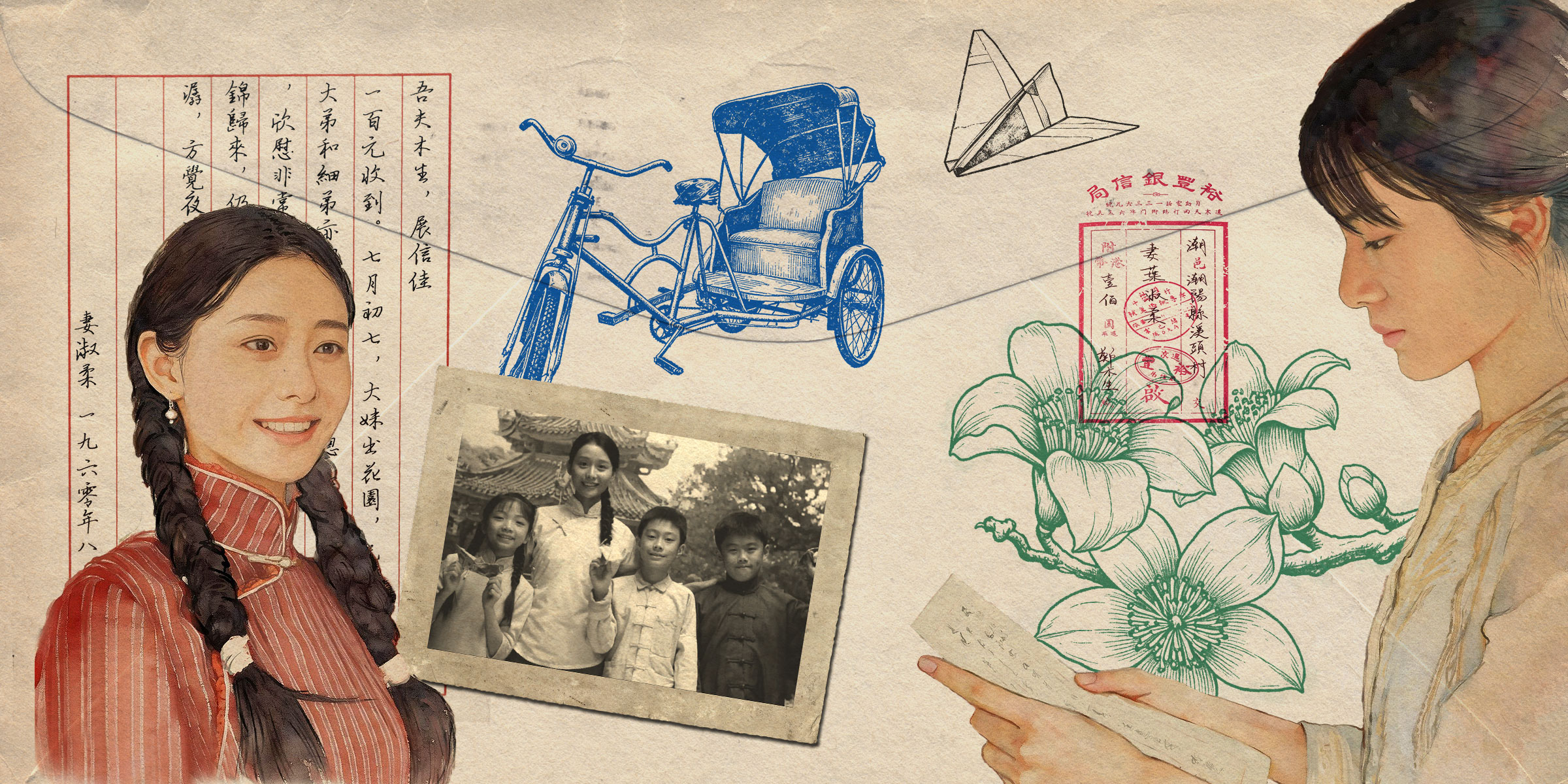
The film tells the story of Ye Shurou, a grandmother from the Chaoshan region in southern China’s Guangdong province, who spends a lifetime waiting for her husband, Zheng Musheng, after he leaves for Thailand to find work. For decades, their family survives — and their bond endures — through the qiaopi (letters accompanied by remittances) that he sends home. But when their grandson travels to Thailand in search of his grandfather, he discovers a startling truth: The person who had been sending the letters and money all those years was not Zheng, but a woman named Xie Nanzhi. The revelation unfolds into a story of Chinese migrants in Nanyang, the historical Chinese term for Southeast Asia, tracing the sacrifices of those who ventured there in hopes of earning enough to support the families they had left behind in impoverished hometowns.
Beyond the stark contrast between its production budget and box-office earnings, the film’s nationwide resonance was unexpected. Not only is the movie in the Teochew dialect, which is largely incomprehensible to most Chinese audiences, but it also explores a society unfamiliar to many viewers: the history of migration to Nanyang. Beginning in the Ming and Qing dynasties, the mass migration peaked in the early 20th century, during the late Qing and early Republic of China period, when millions of people, primarily from Fujian in the east and Guangdong in the south, crossed the seas to seek livelihoods in Thailand, Indonesia, Malaysia, and elsewhere in Southeast Asia.
For a long time, Chaoshan culture occupied a marginal place in China’s popular imagination. So why did such a strongly localized movie touch such a wide audience? How did Chaoshan culture move from the margins to the mainstream, prompting people to rediscover and reinterpret it?
In the history of Chinese cinema, filmmakers from Chaoshan were important pioneers. The first Chinese film to win an international award, “Song of the Fisherman,” was directed by Cai Chusheng, a native of the region and one of the most influential figures in early Chinese cinema. Director and screenwriter Zheng Zhengqiu, widely regarded as the father of Chinese cinema, also hailed from Chaoshan.
But by the time Chinese popular culture flourished, particularly in the 1990s, Chaoshan people had begun to appear in a very different light in the hugely popular Cantonese-language films of Hong Kong. At that time, many migrants from the Chaoshan region lived in Hong Kong. Although they frequently appeared in films and television dramas, they were often associated with gangs and organized crime. They were portrayed as a distinct group, speaking the Teochew dialect and declaring things like, “I’m from Chaoshan” or “We’re our own people.” In Hong Kong society, they were known for their solidarity and work ethic, but that hard work was often portrayed as taking place in legal gray areas. They were presented as outsiders in a city dominated by Cantonese culture.
At the same time, as Hong Kong prospered in the 1980s and 1990s and the Chinese mainland embraced “reform and opening-up,” Cantonese gained prestige thanks to the region’s economic success. By contrast, because the Chaoshan region remained relatively underdeveloped, the Teochew dialect was often stereotyped as rustic or unsophisticated. For example, in the 1989 film “Eight Taels of Gold,” Teochew is heard when the protagonist, Monkey, returns home in a sharp suit and confronts the backwardness of his rural hometown.
During this period of rapid economic growth, economic status became closely tied to cultural and linguistic status. Popular portrayals of Chaoshan people, the Teochew dialect, and Chaoshan culture reflected society’s tendency to equate economic development with modernity. In the Hong Kong movies and TV shows distributed on the Chinese mainland, especially in Guangdong, Chaoshan characters often functioned as supporting figures within a broader Cantonese cultural world. By contrast, films and television produced in Chaoshan or in Southeast Asian countries with large Chaoshan communities did tell stories in the Teochew dialect and of the Chaoshan people. Still, their audiences remained largely local, limiting their broader influence.
In recent years, however, that narrative has changed. Chaoshan’s clan traditions, folk customs, and distinctive cuisine have become popular tourist attractions, frequently sparking discussions on Chinese social media. Experiences such as spending Chinese New Year in Chaoshan or watching Yingge Dance, a traditional folk performance combining opera, dance, and martial arts, have become especially popular. By the time “Dear You” swept across the country, Chaoshan culture was no longer seen as marginal or looked down upon.
On the one hand, after decades of economic change, the relative advantages once enjoyed by Cantonese-speaking regions have weakened. The once-dominant Cantonese pop culture industry, including music, film, and television, has also declined. Cantonese gradually lost its status as a marker of economic prosperity and came to be viewed simply as one of China’s many regional dialects. As that shift occurred, the stereotypical image of Chaoshan people that had once featured prominently in Cantonese popular culture also faded. The Teochew dialect and Chaoshan culture returned to being seen primarily as expressions of regional identity.
On the other hand, this shift also reflects broader changes in Chinese society over the past three decades. Public interest in Chaoshan culture today is driven in part by its preservation of traditions that many people feel have disappeared elsewhere. Historical anthropologists such as Chen Chunsheng and Liu Zhiwei argue that from the Song (960–1279) through the Ming (1368–1644) dynasties, successive imperial governments expanded their influence into southern China, where clan organizations became important institutions for securing state resources, political legitimacy, and local interests. In northern provinces such as Hebei and Henan, traditions centered on Confucian family structures were repeatedly disrupted by war, political upheaval, and economic crises. By comparison, many southern regions have retained vibrant clan-based folk traditions.
As China’s rapid urbanization has weakened traditional communities and local rituals, many people have become increasingly nostalgic for local identity and a sense of belonging rooted in community. Young people searching for the “true feeling” of Chinese New Year or for traditions they believe have been lost increasingly turn to places such as Chaoshan. “Dear You” presents a world of extensive clan networks, self-organized guilds, rich folk customs, and distinctive food culture. Its popularity speaks to a broader longing for what many viewers imagine as a more traditional China.
At the same time, as more Chinese travelers have shifted toward domestic tourism in recent years, local governments have increasingly promoted cultural tourism. The viral success of attractions such as Zibo barbecue, Harbin’s winter tourism, and Guizhou’s Village Super League has demonstrated the economic potential of local culture. The promotion of traditions such as Yingge Dance in Chaoshan follows the same pattern.
Over the past three decades, growing population mobility has led millions of Chinese people to leave their hometowns to work elsewhere in China or overseas. Against that backdrop, the stories of Zheng Musheng and other Chaoshan migrants resonate deeply. In today’s fast-paced and increasingly atomized society, audiences are drawn to depictions of communities that maintain warmth and solidarity across generations. Through scenes of Teochew speakers helping one another in Bangkok’s Chinatown, the film celebrates the Chaoshan community’s mutual support. It tells the story of an ordinary migrant who struggles abroad while remaining devoted to family back home and building bonds with fellow townspeople overseas, embodying what Chinese culture describes as zhongyi, a traditional ideal of loyalty, mutual obligation, and righteousness.
Yet beneath that warmth and emotional resonance lie more complicated realities. For example, the film largely avoids confronting entrenched gender inequality and the pressures applied by clan structures on women in the Chaoshan culture. Likewise, class conflict within the Thai Chinese community, explored in Thai Chinese literary works such as the collaborative novel “Storms Over Yaowarat,” receives little attention. Instead, the film focuses more on tensions between Chinese migrants and other groups, including Indians and the Thai state.
The changing representation of Chaoshan culture in popular culture reflects broader shifts in Chinese society over the past few decades. Although the film remains controversial within Chaoshan because many residents believe it presents a distorted picture of local reality, it has nevertheless sparked broader interest in the region’s culture, clan traditions, and complex history. That renewed attention may encourage more people to explore the diversity and historical realities behind the story, and perhaps the traditions of their own communities as well.
With contributions from Cai Yiwen.
Translator: Matt Turner; portrait artist: Zhou Zhen.
(Header image: Visuals from VCG and @电影给阿嬷的情书 on Weibo, edited by Fu Xiaofan/Sixth Tone)