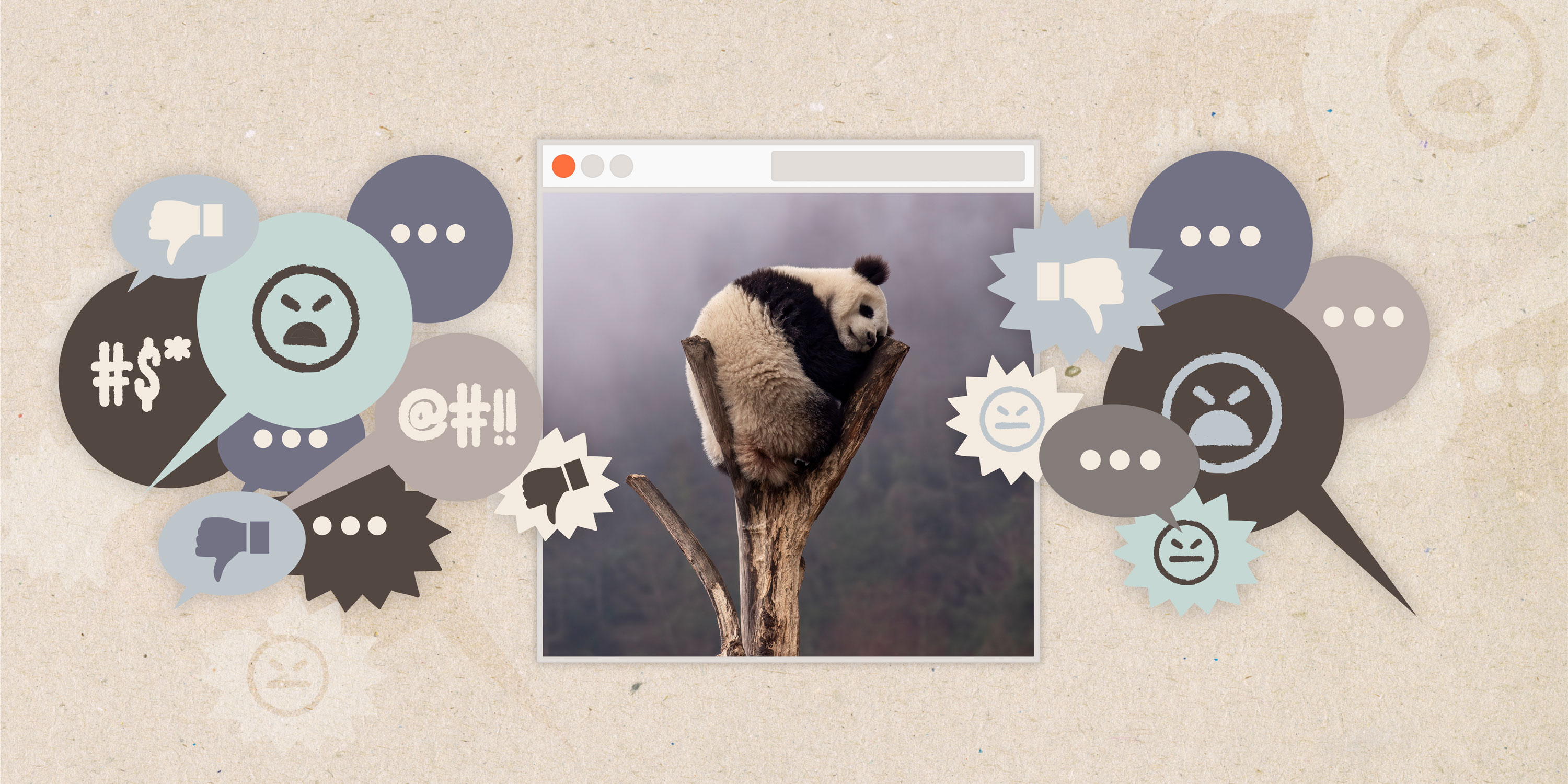
How a Panda Rumor Became a Model Defamation Case in China
A case involving the online defamation of a panda conservation center has been included in the guiding and reference case database of China’s highest court, making it a reference for judges who handle similar future cases.
Announced by the Supreme People’s Court on Tuesday, the lawsuit’s inclusion brings the database to 5,226 reference cases. To ensure consistent rulings, judges are required to consult the database, a resource launched in February 2024 to “standardize the use of guiding cases and improve their consistency, timeliness, and accessibility.”
The case was originally sentenced in June last year. According to the judgment, between March 2023 and May 2024, a couple surnamed Bai and Xu spread false claims that staff at the Chengdu Research Base of Giant Panda Breeding, in the southwestern Sichuan province, abused giant pandas and exploited them for financial gain.
According to previous media reports, the two alleged that the major giant panda conservation and research center used electric shocks to stimulate pandas for semen collection, and also extracted bone marrow, drew blood, and harvested brain tissue from live animals for research.
The couple subjected staff to online abuse and fabricated claims that they were being investigated or punished for disciplinary and legal violations, while inciting others online to file complaints. According to a previous report, the couple reportedly operated more than 10 online fan groups across platforms including messaging app WeChat, short video platform Kuaishou, and Douyin, China’s version of TikTok.
The research base responded in May 2024 that it uses electrical stimulation to collect semen from giant pandas that are unable to mate naturally — widely used in panda conservation. However, it said the procedure uses low-voltage electrical stimulation of 2 to 6 volts, a safer, improved technique in place since the late 1990s.
The court found that the pair’s actions disrupted staff members’ lives and caused an international scientific cooperation project on captive panda breeding to be suspended.
In the last few years, Chinese public affection for giant pandas has given rise to devoted fan communities that closely document the animals’ daily lives, at times negatively impacting the management of panda research and breeding centers. Staff have reportedly been followed and even fired due to online complaints, and breeding center vehicles have also been obstructed by fans.
Court records showed that Bai and Xu conducted more than 180 livestreams and posted over 90 short videos, garnering more than 545,000 views and over 46,000 likes. The two also earned more than 170,000 yuan ($25,000) from livestreaming and follower donations.
Last June, the Dujiangyan People’s Court in Sichuan sentenced them for “the crime of picking quarrels and provoking trouble,” or xunxinzishizui, a crime under Chinese law. Bai received one year and six months in prison, while Xu received one year and two months.
In its guiding opinion, the Supreme People’s Court held that the defendants’ conduct had “caused serious disruption to public order.” It stated that such determinations should be made by comprehensively considering the content of the false information, the scope of dissemination, and its impact on the public.
Editor: Marianne Gunnarsson.
(Header image: Visuals from VCG, reedited by Sixth Tone)