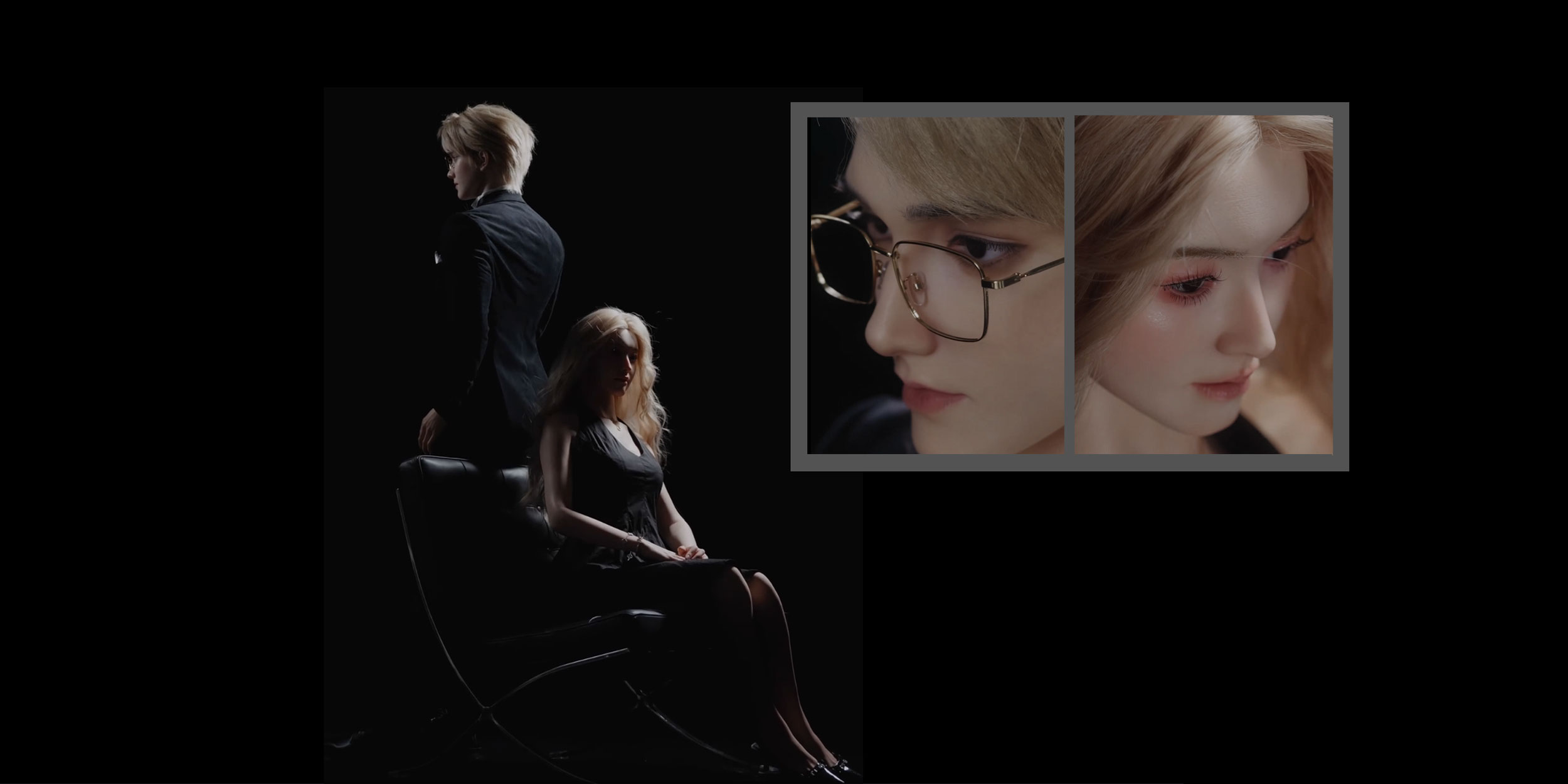
China’s Lifelike Emotional Companion Bots Go on Sale
Chinese robotics company UBTech has begun presales for what it calls the world’s “first full-size, ultra-bionic” humanoid robot designed for emotional companionship. Around 3,000 units have been sold so far.
Announced June 2, presales of the robot model, called the “U1,” will run through July 15 and require customers to put down a refundable deposit of 3,000 yuan ($440). The official online release is scheduled for June 30. The company has not yet disclosed the full retail price.
The U1 comes in two models: a male version standing 183 centimeters tall and weighing 42 kilograms, and a female version 168 centimeters tall and weighing 35.2 kilograms. Both support customization and are available only to adult buyers.
The U1 is equipped with 88 “highly mobile” joints, encrypted memory storage, and affective AI. They support Wi-Fi connectivity and charging, with a battery life of two to four hours per charge.
China is the world leader in humanoid robotics, with annual sales of domestically produced models expected to more than double to around 28,000 units this year — exceeding any other economy, according to Morgan Stanley. Of the 13,000 to 16,000 humanoid robots shipped globally last year, about 90% were made by Chinese manufacturers. Most international competitors remain at the prototype stage.
“I think that in 10 or 20 years, the next generation may fall in love with humanoid robots,” Zhou Jian, UBTech’s founder and CEO, told domestic business outlet LatePost.
However, he added that UBTech does not want to “simply make a sex robot,” but rather a companion that “won’t tell you that you’re annoying,” will “stay with users whatever they are doing,” and “play games and watch TV dramas with you.”
Other companies have also gained attention for their lifelike robots. Since 2023, EX Robots, based in northeastern Liaoning province, has made headlines for its humanoid androids modeled on figures such as the Tang-dynasty poet Li Bai and Albert Einstein. According to domestic media, the robots are mainly used in science museums and tourist attractions.
In May, Beijing-based Noetix Robotics unveiled its latest humanoid robot in the form of a woman’s bust, priced at 99,900 yuan. Marketing materials for the robot outline its conversational and emotional abilities.
At this year’s Spring Festival Gala, China’s most-watched television program, four Chinese robotics companies showcased their humanoid robot technologies through martial arts performances, comedy sketches, dances, and household tasks. In April, a Chinese robot broke the men’s half-marathon world record in Beijing.
Experts say the next stage of development is expected to focus on practical applications in factories and homes.
Humanoid robot prices have fallen from several million yuan per unit a few years ago to between ten thousand and several hundred thousand yuan per unit today. UBTech’s Walker series, released in 2018 and mainly designed for industrial applications, costs around 6 million yuan per unit, while Noetix Robotics’ Bumi and Unitree’s R1 Air, both aimed at entry-level consumers and released last year, are priced at 9,998 yuan and 29,900 yuan, respectively.
Editor: Marianne Gunnarsson.
(Header image: Screenshots from the promotional video for UBTech's U1 robot. From Weibo)