Song Dynasty: Ancient Poets Find New Fans on China’s Music Apps
From the Tang dynasty’s Li Bai (701–762) to the Song dynasty’s Su Shi (1037–1101), China’s ancient poets are staging an unlikely comeback — as pop stars.
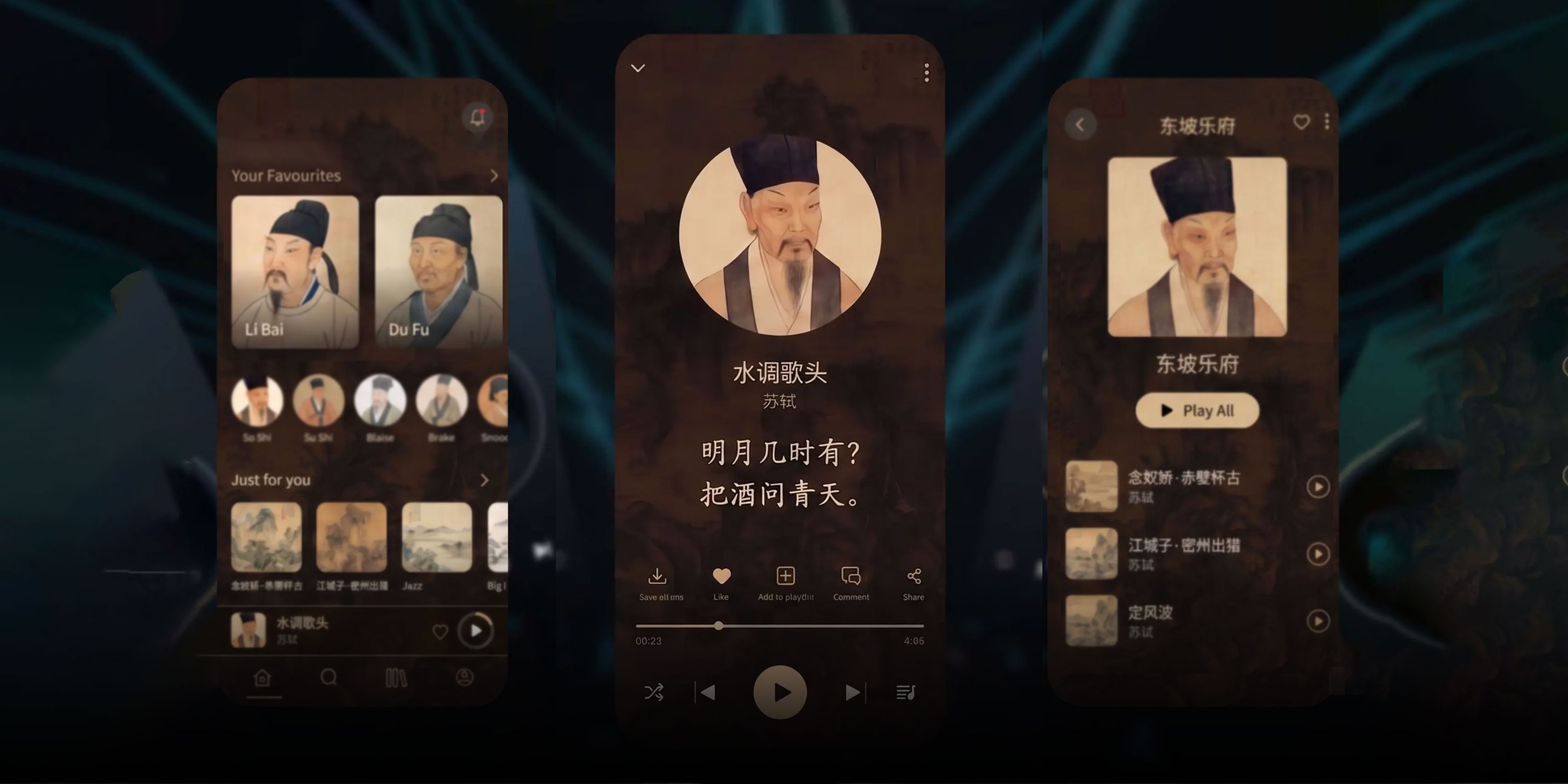
Famous poets are increasingly listed as artists on domestic music platforms such as NetEase Music and Tencent Music, complete with profile pages resembling those of modern musicians. And like their contemporaries, they have attracted thousands of followers.
The phenomenon went viral this week on Chinese social media after users noticed that digital music platforms had begun crediting the original authors of lyrics used in modern song adaptations, creating the illusion that they are active digital personas and prolific songwriters.
Take Su Shi, one of the most widely read Song-dynasty poets. His poem “Prelude to Water Melody: When Will the Moon Be Clear and Bright?” is considered a classic ode to missing loved ones, especially in the days leading up to the Mid-Autumn Festival, when families traditionally reunite. The poem — more specifically, a ci, featuring fixed rhyme and tonal patterns designed to be sung — has been adapted into numerous renditions, most famously “Wishing We Last Forever,” performed by bestselling singer-songwriter Faye Wong.
Ci poetry’s original melodies, popularized during Su’s time, have largely been lost, but their lyrics endure. Many fans therefore consider today’s adaptations as reuniting ancient texts with their musical roots.
“Su Shi would never have imagined that a thousand years after his death he would have his own (song artist) account,” read one highly upvoted comment on the poet’s NetEase Music page.
“Maybe he really did crawl back from the Song dynasty along a network cable to register his account in the middle of the night. After all, he was contemplating the ‘net’ in Hainan,” wrote another, riffing on the poet’s famous anecdote about drying fishing nets, written while he was exiled in the southern island province.
In the past few years, Su Shi has emerged as especially popular among younger Chinese readers for his ability to find joy in everyday moments — waking a friend for a late-night walk; taking interest in things like astrology and zodiac signs — despite political strife.
The trend also encompasses poets from other eras, such as the celebrated Tang-dynasty (618–907) poets Li Bai and Bai Juyi. That era is widely regarded as the golden age of Chinese poetry; its poems are highly structured, concise, and image-driven, exploring the themes of nature, friendship, ambition, and life’s impermanence.
On social media, young Chinese compose their own lyrics in classical Chinese in homage to bygone writers, treating them like active celebrities with online identities. For instance, each poet’s account on Tencent Music has a “love confession wall” where users can post messages to them.
“I am a devoted admirer of your poetry from a thousand years in the future,” writes one commenter on Tang-dynasty poet Bai Juyi’s love confession wall. “Your talent astonishes me — many of your works have survived for centuries and are still studied today.”
Editor: Marianne Gunnarsson.
(Header image: Visuals from Douyin and Weibo, reedited by Sixth Tone)