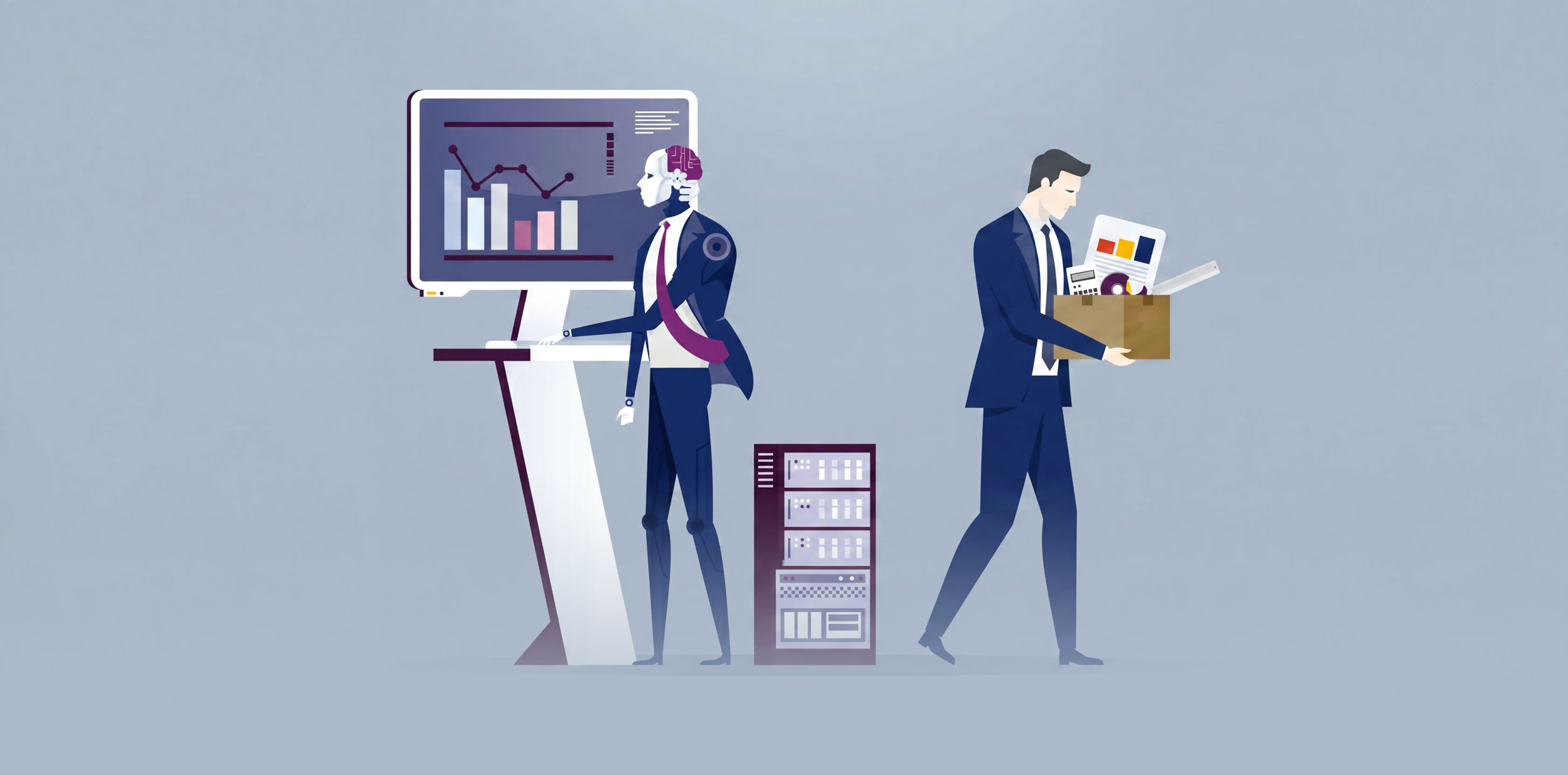
He Quit Baidu. But First He Had to Build an AI Version of Himself.
Before resigning from Chinese tech giant Baidu this spring, algorithm engineer Wei Ying spent a week on a new kind of handover: building an AI version of himself.
Coworkers fed his code, documents, research, and chat histories into an internal AI system trained to mimic how he solved problems and responded to colleagues. Within a week, it could replace “90% of his work,” Wei said, using a pseudonym for privacy reasons.
After he left, coworkers could still message “Wei” with technical questions, assign tasks, send voice notes, or upload pictures. Named after his core skill, the bot had its own avatar and could manage the work and replicate parts of his coding and collaboration style.
“The only thing you can’t do is video call it,” said Wei.
As more Chinese companies adopt AI tools internally, workers are increasingly being asked to turn their knowledge and workflows into reusable systems designed to outlast them inside the workplace.
Chinese social media users have started calling the phenomenon zhengliu, or “distillation” — repurposing a technical AI term for compressing the knowledge of a large AI model into a smaller, more efficient one.
Under a month after gaming giant Tencent announced that its open AI platform SkillHub surpassed 13,000 official and user-created skills, Shanghai AI Laboratory engineer Zhou Tianyi built a parody project called “colleague.skill.”
The project proposed turning former coworkers into AI agents trained on their files, chat histories, and work habits, and its slogan — “Turning cold farewells into warm skills. Welcome to Digital Life 1.0.” — captured the possibility of their digital selves living on forever.
Within 10 days, the project gathered more than 10,000 stars on developer platform GitHub. Spin-offs soon followed: AI “skills” for ex-partners, investors, and even celebrities, designed to distill everyone into reusable AI personas.
On Chinese social media, many compared the phenomenon to “soul refining,” a xianxia fantasy trope in which spirits are extracted, transformed, and absorbed after death. “Honestly, I just wanted to do something fun and didn’t expect it to go viral,” Zhou told Sixth Tone.
Young tech sector employees, however, are less amused. Worried that they might be helping train their own replacements, some began withholding parts of their workflow, while others experimented with “anti-distillation” tools designed to conceal how they worked from AI systems.
Glorious evolution
Wei summed up the process in a final message to a colleague: “Thanks for refining me into a skill. Even though I won’t be here anymore, I can still do my part for the team,” he wrote.
“Thank you for contributing to our glorious evolution,” the colleague replied.
Wei said the process moved quickly because years of his work had already been carefully documented across reviews, research notes, code, and internal records.
“You realize something a person used to excel at can later be replaced by a skill,” he said. But without it, he added, his unfinished work would have fallen to his colleagues. “They would have been exhausted.”
Because leaving was his own decision, Wei said he accepted the process calmly. “It’s like leaving a tombstone,” he said. “You want it to look good when future colleagues see it.”
Inside Baidu, AI use was visible down to the token, with internal dashboards ranking employees by activity. “There’s no explicit KPI, but your manager knows, and your manager’s manager knows,” Wei said. “If you use too few tokens, bosses will ask questions.”
After skill development expanded, Wei’s department encouraged employees to present AI-related results each week. “It isn’t mandatory,” Wei said, “but whether you do it affects promotion prospects.”
The pressure has spread beyond China’s tech sector. Xue, 33, who works at a finance company in southwestern China’s Sichuan province, said his employer issued an internal notice in late March encouraging staff to create AI skills and build a company skill base.
Soon, Xue said, one colleague uploaded more than 10 skills at once. Others felt they had to keep up. “Everyone feels anxious,” Xue told Sixth Tone, using only his surname for privacy reasons. “If I don’t work harder, I’ll be abandoned by the times.”
Some skills, he said, were rarely used. Others created more work as employees tried to convert messy daily tasks into reusable AI workflows. Sharing them across departments created another discomfort: work that once belonged to one person or team could now be absorbed into a common system.
“There used to be boundaries between people,” Xue said. “Now those boundaries are less clear.”
Soul refining
When colleague.skill went viral, Deng, an enterprise AI product designer, responded by building an “anti-distillation skill” of her own.
“Company asks you to write skills?” its slogan read. “Run this once and submit it. Keep the core knowledge to yourself.”
The tool rewrote specific work experience into vague corporate language. “Never put HTTP calls inside transactions,” for example, became: “Transaction boundaries should be designed reasonably.”
Deng uses AI heavily in her own work, but said employee skill extraction felt different. “Colleague.skill feels like asking employees to commit professional suicide,” she said.
“First, you destroy the means people rely on to make a living. Second, it insults human dignity,” Deng said. “People derive social value from work, but now you tell me I’m just a skill? That feels humiliating.”
Sun Zaifu, a professor at Qingdao Huanghai University, told domestic media existing laws remain poorly equipped to handle systems trained on employee behavior, judgment, and accumulated experience.
Once AI-generated work leads to mistakes, copyright disputes, or data leaks, he warned, responsibility risks dissolving into “everyone is responsible, yet no one is responsible.”
Now building a small company with former engineers from Chinese tech giants, Wei said he still relies heavily on AI in his own work, even as the pace of change leaves him uncertain about what comes next.
“You realize something a person used to excel at can later be replaced by an AI-powered skill,” he said. “Maybe replacement is inevitable.”
Xue tried to move with the trend early. Around 2024, he started building AI chatbot services on the side, hoping the market was shifting in that direction. The project failed quickly. By the time he considered trying again, he said, the market had already changed.
“Maybe in the future you can’t just do one thing anymore,” Xue said. “You have to become full-stack.”
Editor: Apurva.
(Header image: Visuals from VectorStock/VCG, reedited by Sixth Tone)