2026’s Two Sessions Takeaways: PE, Labor Rights, and Domestic Violence
Physical education and labor rights have emerged as some of the most discussed topics at this year’s Two Sessions.
The annual Two Sessions, or lianghui, bring together the nation’s top legislative and political advisory bodies — the National People’s Congress (NPC) and the Chinese People’s Political Consultative Conference (CPPCC) — to outline the country’s economic, social, and political priorities for the year.
At this year’s event, which lasts from March 4 to 12, officials have raised 226 motions and 5,865 proposals.
Two Sessions proposals attract close attention because they highlight urgent social and economic issues. Though not all become law, they shape government priorities, spark public debate, and guide future policy.
Here are some key takeaways from this year’s agenda.
Physical education
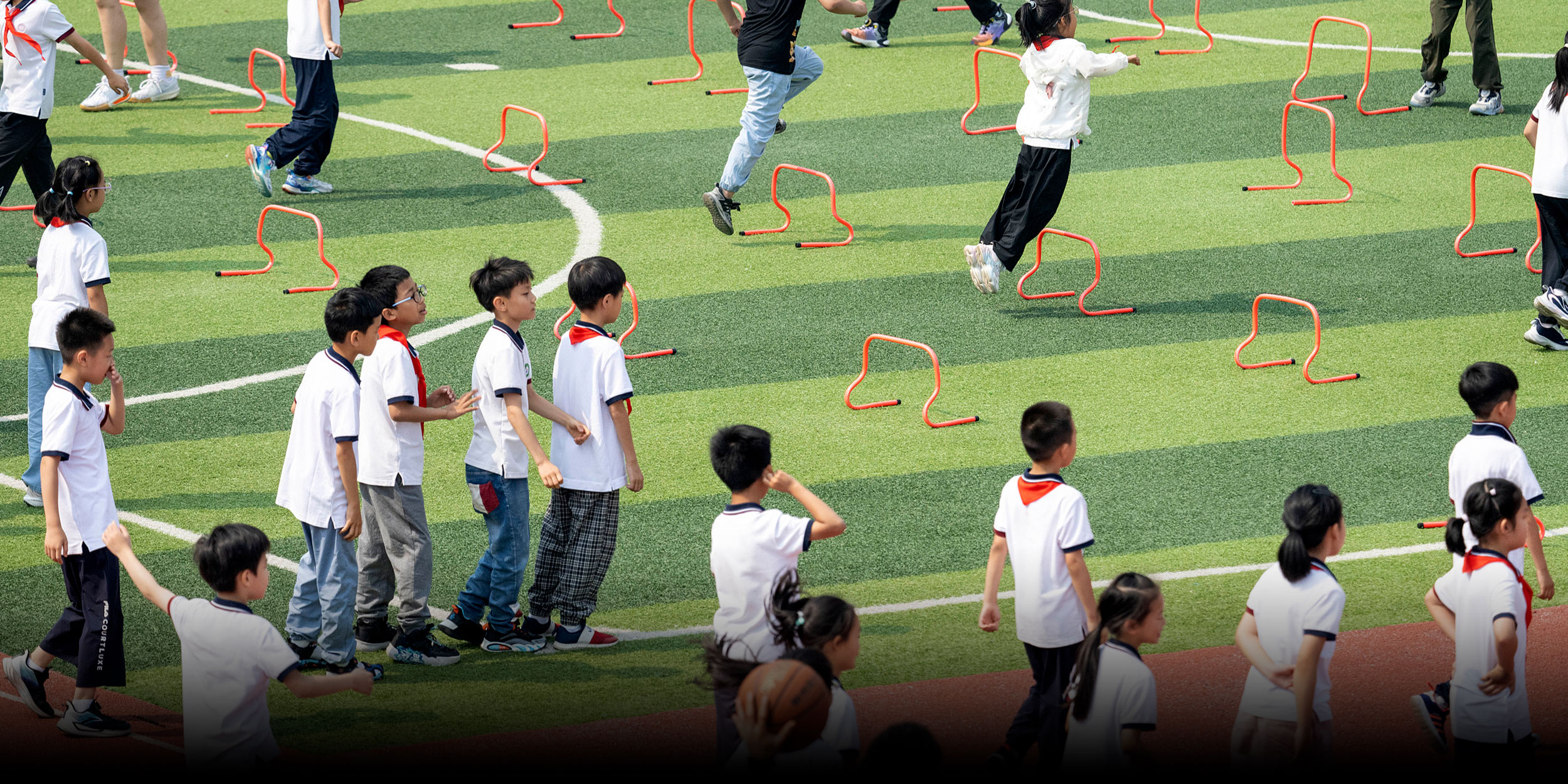
Former basketball player and NPC deputy Yao Ming proposed measures to address the shortage of physical education teachers at schools and curb youth internet addiction.
Yao pointed out that demand for physical education in primary and secondary schools is quickly rising as China tries to ease student stress and improve health, while teachers are facing mounting pressures due to increased workloads. He told local media that many PE teachers hold more than 16 classes each week.
Yao called for better organization and policies to support PE teachers. “PE teachers are the key to connecting sports and education, and retired athletes are a great option to help fill these roles,” he said.
At last year’s Two Sessions, Yao encouraged minors to choose one day every year to go 24 hours without screens and instead spend time on sports, nature, and face-to-face interaction.
Building on that proposal, he suggested that China also create more public spaces where young people can socialize offline.
Labor rights
Zhou Shihong, a CPPCC member and lawyer, called for the abolition of China’s labor dispatch system, saying it has “drifted from the original purpose of covering only temporary, auxiliary, and substitute jobs.”
Emerging in the 1980s, the labor dispatch employment model sees workers hired by a dispatch agency rather than by the company where they work. The agency handles payroll, contracts, and social insurance, while the workers themselves are assigned to a host company supervising their day-to-day tasks. The company pays fees to the agency, which in turn pays the worker. The number of workers employed through labor dispatch in China exceeded 30 million by early 2025, involving more than 180,000 companies.
The system was originally designed to meet flexible staffing needs for foreign institutions operating in China, but has increasingly been used as a way for companies to cut costs at the expense of workers. Common issues propagated by the system include unequal pay and unpaid social insurance.
Zhou proposed that companies should instead sign labor contracts directly with employees to better protect workers’ legal rights, support their personal development, and reduce labor disputes. He suggested that companies with genuine temporary staffing needs could instead use third-party staffing services.
Domestic violence
Fang Yan, an NPC deputy and lawyer, proposed launching programs that would let domestic violence cases bypass the 30-day “cooling-off” period, a policy launched in 2021 that requires divorcing couples to wait at least a month before proceedings can be finalized, giving either spouse a chance to withdraw.
But because the policy requires mutual consent to proceed, domestic violence victims often lack a way to fully escape their situation.
To address this, Fang suggested establishing clear standards for domestic violence exemptions, including the types of evidence required and the verification process and timeline.
Editor: Marianne Gunnarsson.
(Header image: VCG)