China’s First National Ecological and Environmental Code, Explained
China’s National People’s Congress approved the nation’s first Ecological and Environmental Code on Thursday, the final day of the annual Two Sessions political meetings in Beijing.
The code, which will take effect on Aug. 15, replaces 10 existing environmental laws and establishes a legal framework for areas previously lacking dedicated legislation, including climate change, carbon neutrality, and the green transition, addressing tensions between economic development and environmental protection.
The goal of building a “climate-resilient society” is now enshrined in national law for the first time, as climate disasters have prompted stronger early-warning systems and improved disaster response.
After adopting its first comprehensive code on civil affairs in 2020, China began drafting a second code on ecological and environmental protection in 2023. According to legal analysts, the code’s real impact will depend on coordination among government agencies and how supporting regulations evolve.
Here are some of the highlights.
New pollutants
China’s existing regulations primarily target traditional pollutants. The new code adds provisions targeting “persistent organic pollutants,” such as perfluoroalkyl and polyfluoroalkyl substances (PFAS), a group of hard-to-degrade chemicals known as “forever chemicals” that once polluted tap water in cities along the Yangtze River.
The code also says national authorities will curb rising light pollution by setting brightness limits for products such as outdoor displays and traffic lighting.
Farm fires
Experts have for years debated whether to relax China’s longstanding ban on burning crop stalks. The burning helps clear pests and improve soil fertility, but also causes air pollution, and the ban has placed heavy pressure on local officials.
In response, the new code loosens the ban, limiting it to populated areas, transportation hubs, and other designated zones and timeframes.
“One of the code’s key contributions is providing a stable, clear, and predictable legal framework for grassroots governance,” Yuan Fangcheng, a professor at the School of Government at Shenzhen University, told Sixth Tone. Areas where burning remains prohibited, he said, require “more supporting policies to build a chain for utilizing crop stalks, including storage and transport systems, market-based consumption channels, and fiscal subsidies.”
Yuan added that the drafting of supporting local policies should take into account different crop structures and climate conditions, and introduce education measures for farmers who commit minor violations.
New balance
After decades of wildlife protection efforts, recovering animal populations have in recent years increasingly wandered into villages, onto high-speed rail tracks, and even into milk tea shops across China. Such incidents have led authorities to revise the list of protected species, deploy wild boar hunters, and set up food banks for elephants to lure them away from crops.
The new code now seeks to balance the protection of human life and property with biodiversity conservation, legally requiring local authorities for the first time to consider the “reasonable survival and breeding needs of wildlife” when setting livestock capacity limits on grasslands.
It also incorporates a 2023 revision to the Wildlife Protection Law, exempting people who harm protected wildlife “in emergencies that threaten personal safety” from legal repercussions.
Carbon market
The new code highlights standalone sections on “pollution control,” “ecological conservation,” and “green and low-carbon development,” with legal analysts emphasizing that the former two goals are not mutually exclusive, but rather, can work together to support future development.
The green and low-carbon development section establishes overarching provisions for areas that previously lacked dedicated laws, such as climate change, the green transition, and carbon markets, where companies buy and sell carbon emission permits.
“This marks a substantive leap in China’s carbon market, shifting it toward law-based governance,” Hu Min, director and co-founder of the Institute for Global Decarbonization Progress, told Sixth Tone.
The code emphasizes that “the goals of carbon peaking and carbon neutrality should be fully integrated into national development planning” as part of efforts to mitigate climate change.
China aims to peak its carbon emissions before 2030 and achieve carbon neutrality by 2060. The code highlights the role of both the mandatory national carbon market and voluntary greenhouse gas market in achieving its objectives.
The carbon trading market was launched in 2021, targeting the power sector, and expanded in 2025 to include the steel, cement, and aluminum industries, increasing emissions coverage from about 40% to more than 60%. Meanwhile, the voluntary greenhouse gas emission trading market, in which companies can use credits to fulfill their own carbon-neutrality commitments or sell them to companies in the compliance market, began operating in 2024.
The green transition
China is the world’s largest solar power market, with a total installed solar power capacity of 1.2 billion kilowatts. Most solar panels have a lifespan of only about 30 years, and by 2050, around 20 million tons of panel waste is anticipated to have accumulated in the country.
The country’s booming EV industry faces a similar challenge. By 2027, retired EV battery waste is projected to exceed 1 million tons, while unauthorized dismantling of e-bike batteries has caused deadly explosions that have shocked the country.
The new code calls for stronger pollution controls on retired solar panels, power batteries, and decommissioned wind turbine blades, requiring safe dismantling and disposal.
A series of tokamak clean-energy projects has also made headlines in recent years. These “artificial sun” reactors replicate the nuclear fusion reactions that power the sun and are designed to advance China’s long-term green ambitions.
The code also calls for a radioactive pollution control system for such nuclear fusion facilities.
“Ecological and environmental rights”
Experts have also highlighted that the code entitles citizens to “ecological and environmental rights” in its first article.
Gao Lihong, a law professor at Zhongnan University of Economics and Law and vice chair of the Chinese Society of Environmental and Resources Law, explained that these include the right to clean air, safe drinking water, and a healthy environment; the right to information, participation, and supervision on environmental matters; and the right to seek remedies for environmental damage.
Toward integration
Finally, the code’s name — which places “ecological” before “environmental” — reflects a shift in China’s governance philosophy, according to legal experts.
“By emphasizing ‘ecology’ rather than simply ‘environment,’ the legislation has moved from regulating natural elements separately to a more systemic and coordinated model of protection,” Gao told Sixth Tone.
China’s environmental legal framework was previously structured around individual natural elements, such as the ocean and the atmosphere, as well as specific regions, including the Yellow River and the Qinghai-Tibet Plateau, resulting in inconsistent penalties for comparable violations.
Yuan, the Shenzhen professor, added that the code also addresses longstanding governance challenges in rural areas, such as unreliable monitoring data and gaps in enforcement. One key change is that county-level environmental authorities are now formally granted enforcement powers, which may help to improve regulatory efficiency.
Gao also noted that the code “leaves room for sector-specific laws and local legislation to evolve and respond to changing environmental conditions”; once it takes effect, existing environmental laws can be repealed or revised, while new legislation for emerging areas will be developed.
“The code is not the final step in China’s environmental legislation, but the beginning of building an environmental legal system,” she said. “It is a summary of the past, and the start of a new chapter.”
Editor: Marianne Gunnarsson.
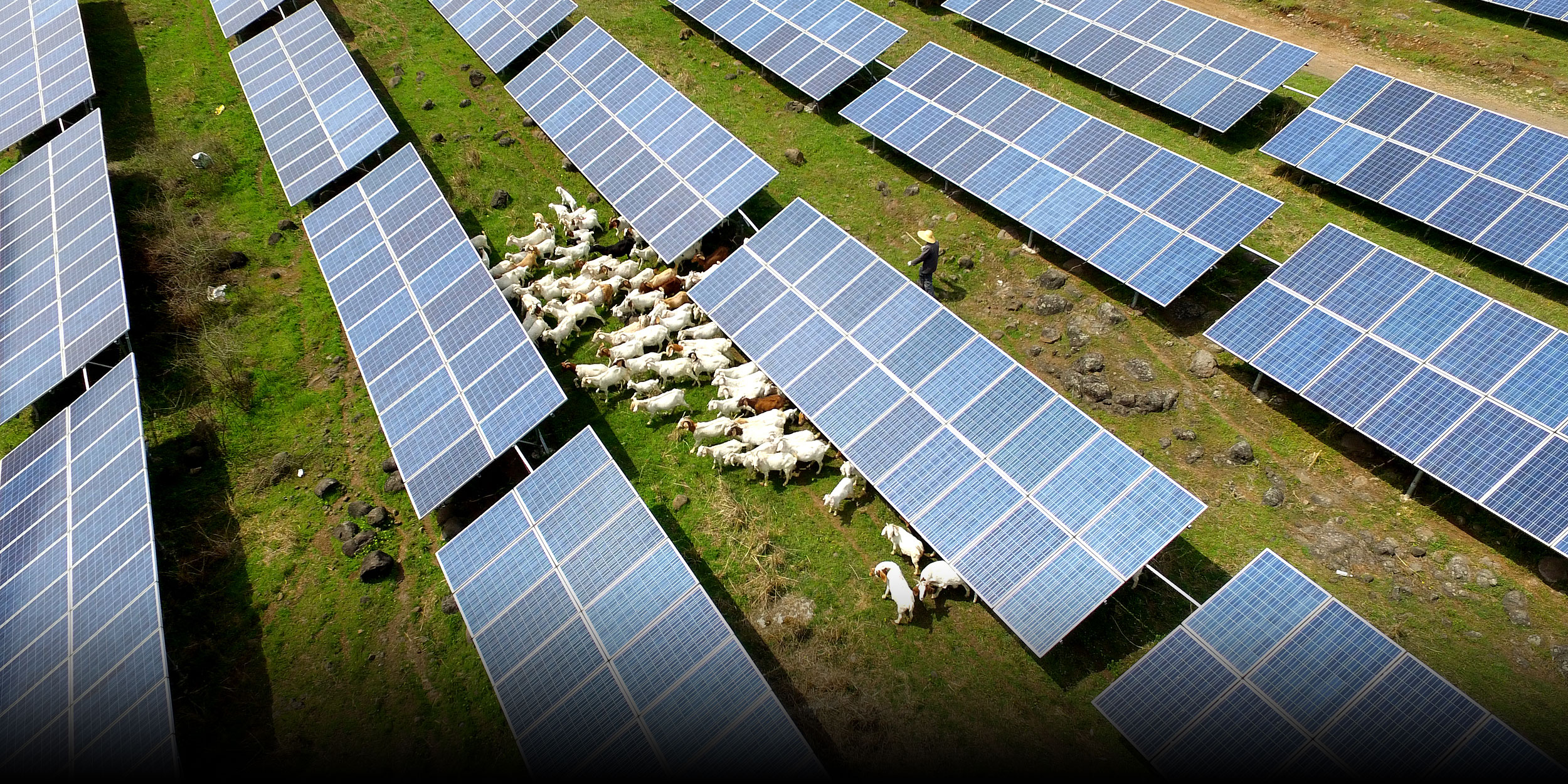
(Header image: Villagers herd sheep at a solar farm in Xuyi County, Jiangsu Province, March 28, 2017. VCG)