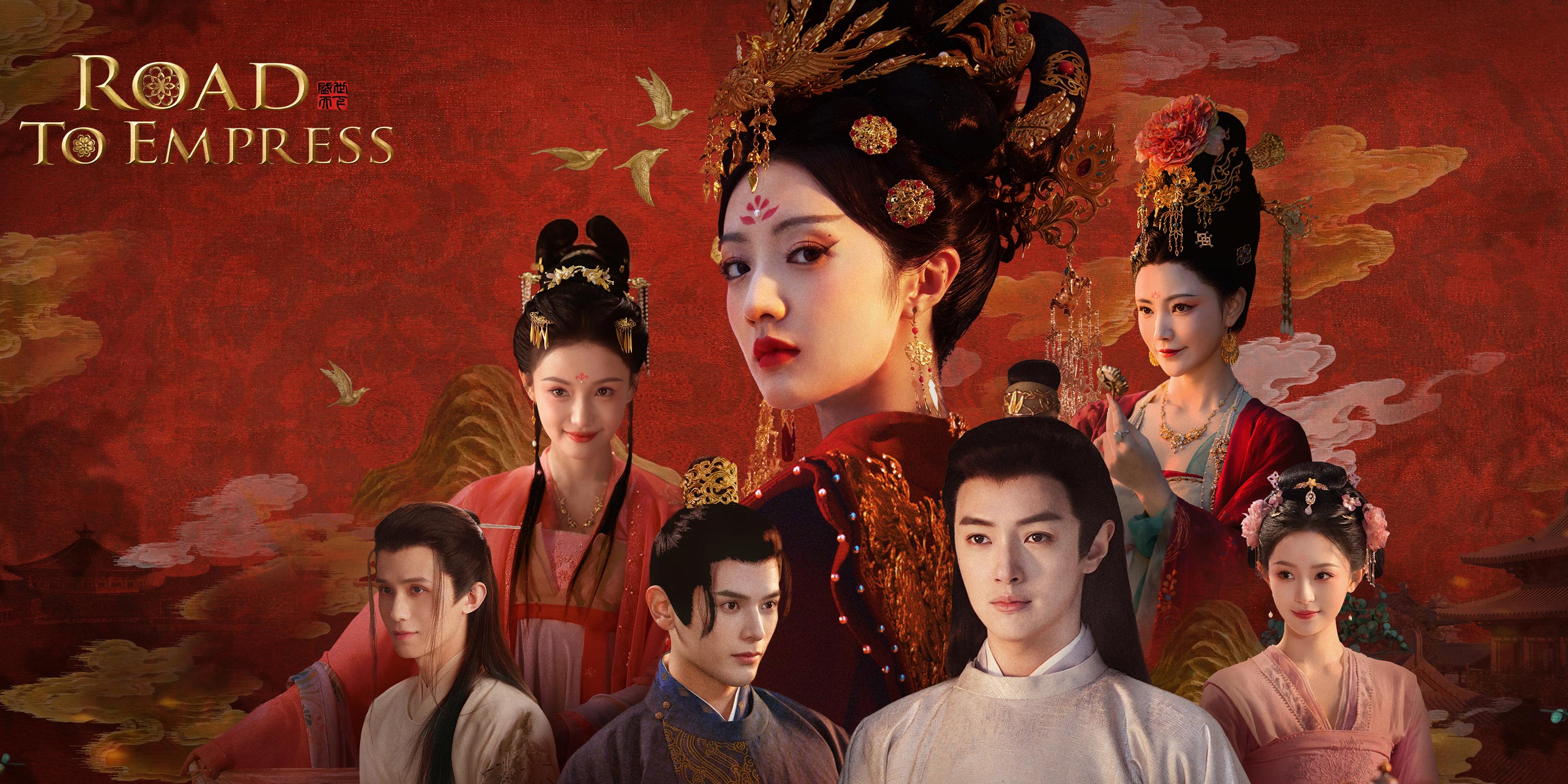
Road to Empress, the Hit Game Navigating China’s Gender Divide
Palace intrigue is a popular Chinese pastime. In many movies and TV shows, imperial princes, concubines, and other palace personnel navigate forbidden romance and murder plots while jockeying for a better position in the emperor’s court.
A recent video game, Road to Empress, has turned such a story into an interactive experience that blends TV drama visuals with gaming mechanics. It has proven a huge hit. When New One Studio released the game in September 2025, it sold more than 1 million copies in its first two weeks and earned an 84% positive rating on digital distribution platform Steam. Its replayability means it still dominates the gaming subculture.
Road to Empress is set during the Tang dynasty (618–907) and centers on Wu Zetian — China’s only female emperor. Players take on the role of a young woman named Wu Yuanzhao, inspired by the real historical figure, and help her navigate the perils of life in the imperial court. Players need to make countless decisions that will determine her fate. Wrong choices lead to her demise at the hands of palace rivals; survival means victory.
Much of the game’s success can be attributed to the way in which it perfectly plays into current market trends and the wider cultural context.
First, it is a “live-action interactive drama.” The game doesn’t use computer-generated graphics but scenes played by actors that look like they belong in a movie or TV show. The footage was filmed in the eastern Zhejiang province’s Hengdian World Studios — China’s largest production hub featuring replicas of palaces and other historical buildings — with a well-known cast and crew.
This fusion of games and movies is a growing genre in China. With earlier successful titles such as Love Is All Around — a dating game — and Revenge on Gold Diggers, which seeks to teach men how to avoid being deceived in romance. An international example is Netflix’s “Black Mirror: Bandersnatch,” which allowed viewers to decide how the plot unfolded.
Road to Empress takes this format to the next level. The game is essentially a high-quality period drama in which players can participate and shape the narrative, providing a strong sense of immersion within a cinematic audiovisual experience.
The game features more than 100 branching storylines. Players can follow the historical storyline, experiencing Wu Yuanzhao’s journey from entering the palace to arriving at Ganye Temple — the backdrop of a key turning point in the life of Empress Wu Zetian. Players can also unlock a variety of fictional endings — with evocative titles such as Medical Sage, Matchmaking Chancellor, the Spy Maestro, and Magnate in Lingnan — thereby constructing alternative histories.
As such, the game can be seen as a textbook example of what game scholar Hartmut Koenitz calls a “proto-narrative.” This concept refers to an interactive experience composed of narrative possibilities. It not only embodies the developers’ intentions but also allows players to participate in the narrative, resulting in a personalized storytelling experience.
Road to Empress also checks all the boxes for social media success: shareability, memeability, suitability for livestreaming, and replayability. In some ways, the game functions like an MBTI-style personality test, generating reports on players’ approaches to romance, career, and relationships based on certain in-game decisions, and encouraging them to share the results.
Several lines from the game — such as Emperor Li Shimin’s “That’s an imperial-level eye-opener” — have gone viral among fans. And since it is composed of a series of high-quality video clips, the game is a natural fit for livestreaming, with streamers enthusiastically creating memes around it. With more than 100 possible endings, Road to Empress encourages players to keep playing and explore a long list of side stories.
However, perhaps the most talked-about aspect of the game is its subtle shift in gender coding. The live-action interactive drama format has thus far mostly been associated with male-oriented titles. But Road to Empress features a female protagonist living in the era of Empress Wu Zetian, blurring the conventional concept of games being oriented toward either men or women.
In China’s game market, the clearest example of “female-oriented” titles are so-called otome games — role-playing dating games in which a female protagonist goes through a series of romantic relationships with male characters. These often feel like visual novels with their text-heavy storytelling and static character illustrations. These games also usually feature a significant number of highly polished cutscenes, presenting close relationships between the female players and male NPCs.
Road to Empress appears to fit this category. Earlier interactive drama successes, such as Love Is All Around and Revenge on Gold Diggers, took on a distinctly male gaze: the player characters are all men, while women are frequently portrayed as objects of desire. Against this backdrop, the developers of Road to Empress opted to shift the narrative.
Besides featuring a female protagonist in the era of China’s sole female emperor, palace power struggles are a common theme in many stories aimed at women. The game is also adapted from Shengshi Tianxia, an interactive game with simpler, 2D visuals released on Orange Light. This platform is known for its female-oriented games, in which male characters are generally presented as handsome, period-style figures and where romantic storylines feature prominently.
However, beyond these surface-level female-first details, the game and its marketing aim to maintain some degree of gender neutrality. Promotional materials for Road to Empress have consistently downplayed its origins as an Orange Light title, instead emphasizing its development team, New One Studio, and its previous hit, Invisible Guardian, in which players take on the role of a spy.
Specifically, the game replaces the emotionally charged core traditionally found in palace intrigue dramas with an emphasis on power politics. The player character, Wu Yuanzhao, is focused on her career and pays little attention to her emotions. Romantic relationships are instead presented via two pairs of NPCs engaged in forbidden love.
Female solidarity is similarly constrained. Save a few friendly characters, most women in the game are out to kill Wu Yuanzhao. At key points, it is in fact often men who assist her. One prince provides her with a crucial medicinal ointment; another rescues her from prison and takes her away from Ganye Temple.
More importantly, Road to Empress is built around a cruel “death-loop” mechanic. Players’ choices not only shape the plot but also directly determine whether the character lives or dies. It’s for this reason that some people have nicknamed the game “100 Ways for an Empress to Die.” Players need to learn the rules for survival through repeated failure, a stark contrast to traditional female-oriented games that tend to emphasize emotional immersion and interpersonal relationships. In this respect, Road to Empress is closer to a hardcore survival game.
Road to Empress attempts to position the narrative of a strong female protagonist within a gaming community dominated by and catering to men, but does so by reproducing the masculine-coded mechanics male gamers prefer.
This strategic blend works well for players seeking thrills and a sense of achievement, but it may disappoint those hoping to immerse themselves in a more nuanced, deeper, and resonant account of a woman’s life. As a result, Road to Empress ultimately becomes “Road to Emperor.”
Translator: David Ball.
(Header image: A promotional image for the video game“Road to Empress.” From the game’s website)