Huawei Forum Highlights Open Innovation and the Value of Patents
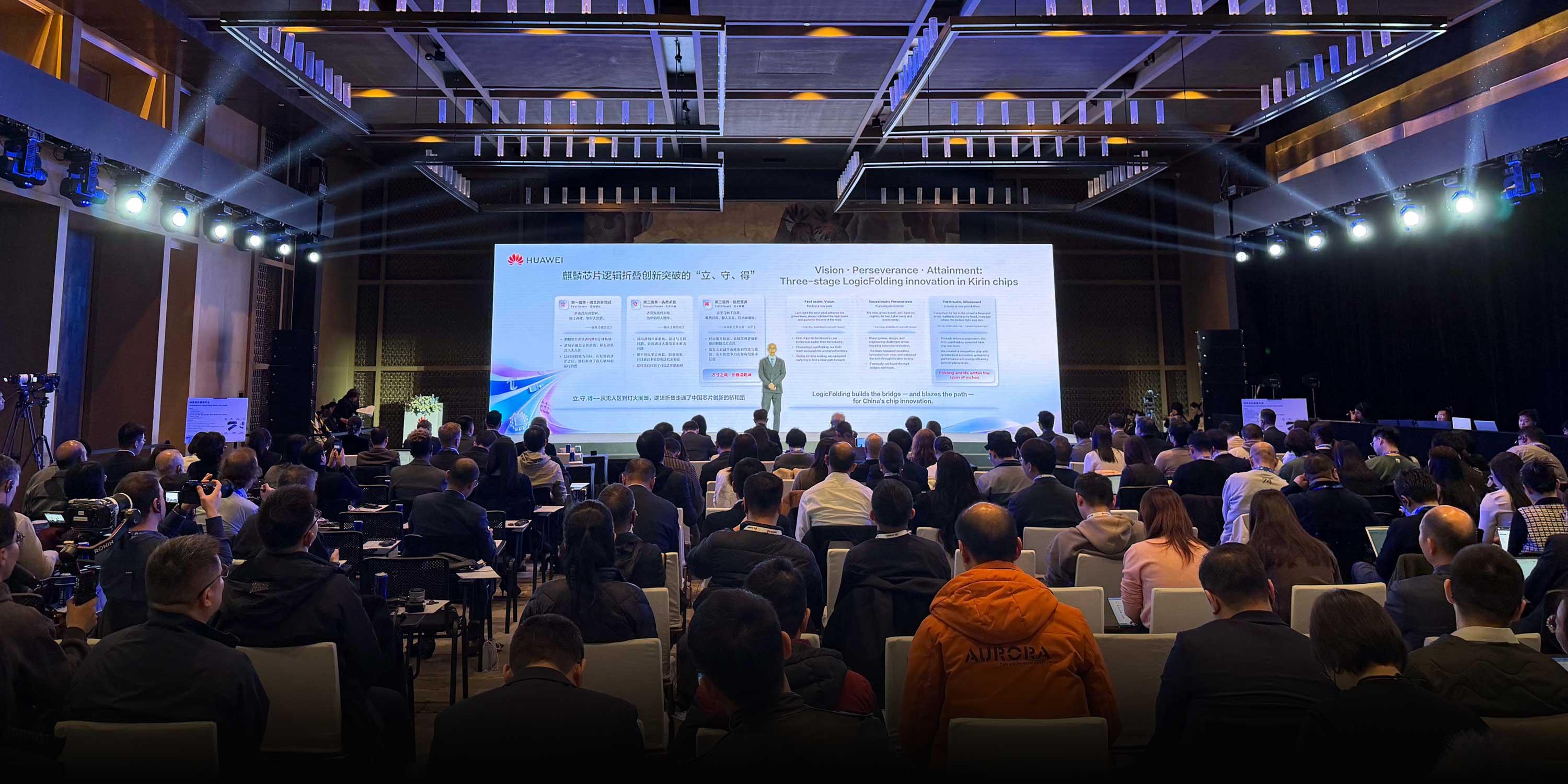
BEIJING, Nov. 24 — The Seventh Huawei Innovation and Intellectual Property Forum was held in Beijing on Nov. 24 under the theme “Invent to Excel, Open to Empower.” Bringing together experts and industry partners in innovation and intellectual property, the forum explored how openness can drive innovation and how intellectual property protection can underpin it. Participants also discussed how sustained innovation can advance technology amid the AI revolution, and how open cooperation can foster industrial upgrading and mutually beneficial ecosystems.
Amid sweeping global changes and a new wave of technological and industrial transformation, companies face new opportunities to innovate. Huawei said its R&D spending reached 192.3 billion yuan ($26.8 billion) in 2025, with R&D spending accounting for more than 20% of revenue for five consecutive years. The company said it received an average of 11.1 patent grants per hour last year and ranked first in international patent applications under the Patent Cooperation Treaty (PCT) for the ninth consecutive year. Revenue from patent licensing reached $800 million in 2025, a record high.
Sir Robin Jacob, the Sir Hugh Laddie Chair of Intellectual Property Law at UCL and former judge of the Court of Appeal of England and Wales, said Huawei has become one of the major holders of global standard essential patents (SEPs). The SEP licensing system helps promote open cooperation, competition and continuous innovation.
“We invent to excel, because only continuous invention keeps technology moving forward,” said Emil Zhang, Head of IP Strategic Planning & Key Project Department at Huawei, in a keynote presentation at the forum. “We open to empower, because invention creates its full value only when others can build on it, on fair, reasonable and non-discriminatory terms.”
Patent licensing revenue reaches US$800 million
Innovation and intellectual property have always been key issues in global technology competition. Innovation determines technological breakthroughs and industrial competitiveness, while intellectual property is the core mechanism for converting innovation outcomes into commercial value and feeding back into R&D.
The World Intellectual Property Organization (WIPO) released its Global Innovation Index 2026 in September, ranking China 10th worldwide, unchanged from the previous year. China was home to 25 of the world’s top 100 innovation clusters, ranking first for the fourth consecutive year, the report said. It also said China was increasingly moving from participating in and contributing to global technology development toward pioneering and leading innovation, with its innovation capacity growing rapidly.
Huawei has also performed impressively. The Paper learned that Huawei’s R&D investment in 2025 reached RMB 192.3 billion, accounting for 21.8% of its annual sales revenue. From 2007 to the end of 2025, its cumulative R&D investment exceeded RMB 1.8 trillion. Since 1995, Huawei has deployed patents in major markets such as China, the United States and Europe. In 2008, it topped global PCT patent applications for the first time, the first Chinese company to do so. By the end of 2025, Huawei had more than 165,000 valid granted patents worldwide, making it one of the world’s largest patent holders.
Alan Fan, Huawei’s Vice President and Chief Intellectual Property Officer, said in opening remarks that for Huawei, patents represented not only legal rights for the company, but also the achievements of its technological innovation and the pride of its R&D staff.
Fan said Huawei signed licensing agreements with 20 new patent licensees in 2025, across sectors including network and communications equipment, consumer electronics, computing, the Internet of Things (IoT), automotive, streaming media and semiconductors.
By the end of 2025, more than 3.2 billion 5G devices, 1.6 billion Wi-Fi-enabled consumer electronics devices and 4.1 billion multimedia devices were using technologies covered by Huawei patents, according to the company. Wireless communications accounted for 41% of its patents in force, terminal devices for 16%, and AI and computing for 13%, reflecting its R&D work in communications and emerging technologies.
Huawei has emphasized R&D and long-term investment since 1992. In 2011, it consolidated research resources from around the world and established 2012 Labs to conduct research into technologies with a horizon of five to 10 years. The lab focuses on longer-term areas such as ICT network architecture, standards and materials, rather than products or software versions designed to deliver short-term returns. Xu Zhijun, Huawei’s deputy chairman and rotating chairman, once said: “To find our ‘Noah’s Ark’ in the coming flood of digital information, we strengthened basic research. 5G, autonomous driving and Ascend were all industries incubated by 2012 Labs.”
Huawei also built the non-profit network platform “Huang Danian Tea House,” advocating “a cup of coffee absorbs the energy of the universe,” enabling scholars from different fields to exchange and collide ideas, freely opening global sci-tech information queries, and advancing basic research through open cooperation and collaboration with universities. Ren Zhengfei, Huawei Director and CEO, once said, “These are strategic investments and are not assessed. For basic theory, we have set up an internal mechanism; we don’t know when it can be done, and we don’t make demands on scientists.” About one-third of Huawei’s annual R&D investment is used for basic research, without short-term commercial performance assessment.
Huawei showcases advances in frontier technologies
During the forum, core inventors from several Huawei R&D teams took the stage to share technological breakthroughs in Tau (τ) Scaling Law, UnifiedBus, near-packaged optics (NPO) and 6G, as well as their innovation journeys from basic research to practical application.
Among them, LogicFolding, the key technology of Tau (τ) Scaling Law, draws on the design concept of traditional Chinese mortise and tenon joint structure. Using hybrid bonding, it creates extremely short interconnects and reduces the distance between chips, offering a potential new approach to improving computing performance.
Liu Yu, Huawei’s Kirin Chipset architect, said at the forum that the Kirin 9050Pro chip project was codenamed “Yellow Crane Tower,” “because logic folding is building a tower; naming it after the ancient famous tower carries meaning.” In his view, “the hybrid bonding (HB) connecting folded chips is like micron-scale mortise and tenon joints: tens of millions or even hundreds of millions of joints fit tightly, achieving extreme short-distance interconnection; the through-silicon vias (TSVs) penetrating the chips are like the solid pillars of Yellow Crane Tower: running through the chip from bottom to top, with power and signals winding up around the pillars; the clock and power networks are like exquisite dougong brackets: the tremendous weight of each floor is evenly distributed and buffered.”
Liu said the design team had carefully looked at Yellow Crane Tower from the Wuhan Yangtze River Bridge, and many design inspirations came from it. “It rises straight from the ground, with layered flying eaves—very spectacular. We have gained a lot of inspiration from ancient Chinese architecture,” he said.
In addition, the UnifiedBus team systematically innovated technologies already widely used, such as multi-chip interconnection, PCIe, high-performance networking and storage networking, covering underlying chips, software and hardware architecture and other levels, further advancing computing system architecture.
Meanwhile, Huawei’s NPO engine, Hi-ONE, officially unveiled in September, has entered commercial deployment, the company said. This achievement reflects Huawei’s more than 30 years of technical accumulation in optical communications and provides a new solution for the growing high-speed data transmission demand in the AI era.
Zhu Peiying, Huawei Fellow and IEEE Fellow, pointed out that the real value of patents comes from technological breakthroughs, and a company’s position in intellectual property depends on long-term sustained R&D investment, knowledge accumulation and innovation outcomes.
Expanding international industrial cooperation
The forum also demonstrated Huawei’s open cooperation achievements with international companies. “Openness works both ways,” Emil Zhang said, “just as others build on our technologies, Huawei has always licensed and built on the inventions of others.”
Zhang introduced that in 2025 Huawei added 20 new licensees, covering multiple industries including network and communications equipment, consumer electronics and computing, IoT, automotive, streaming media and semiconductors. Its partners are located around the world, including Mercedes-Benz, Volkswagen, Qualcomm, HP, Harman, Seiko Solutions, Mitsubishi Fuso and Fujitec.
At the forum, He Qing, chairman of Hangzhou Phlexing Technology Co., Ltd., and Toshiyasu Ito, fellow at Yamaichi Electronics Co., Ltd., shared their collaborative innovation and open exchanges with Huawei in Tau (τ) electronic design automation (EDA) tool support and NPO technology.
He Qing said that through high-value frontier guidance and all-round empowerment and capability support, Huawei’s open ecosystem has brought new quality productive forces to the EDA industry including Phlexing Technology and the entire semiconductor industry. “In the past few years, Huawei led us, under extremely constrained conditions, to climb a steep cliff,” he said. “After climbing up, we saw a vast new continent above the cliff.”
Jamie Ribman, president and COO of Avanci, a licensing platform for video-related technologies, and Mattia Fogliacco, president and CEO of Sisvel, an Italian intellectual property management company, also discussed their approaches to technological innovation, IP management and cooperation.
Alan Fan said Huawei will continue to adhere to the development philosophy of innovation and openness and looks forward to working with partners across industries to promote technological progress and industrial development, so that innovation outcomes can benefit more enterprises and the public.
“We contribute our innovations to industry standards so that companies across the industry can build networks that work together.” Fan said, “We donate source code to open-source projects, enabling broader collaboration, helping reduce development cost and partners across the industry.”
(Header image: The Seventh Huawei Innovation and Intellectual Property Forum is held in Beijing, Nov. 24, 2026.)
This article was produced independently of Sixth Tone’s editorial team.