Two Deadly Henan Train Accidents in Five Days
Eight railway-maintenance workers died in two separate accidents this week in Henan province, central China.
On Wednesday, two workers patrolling a railway that runs through provincial capital Zhengzhou were killed by a train while trying to avoid another locomotive, reported financial news outlet Caixin. The article could no longer be accessed by Friday morning.
On the previous Saturday, the Zhengzhou Railway Bureau confirmed on its official Weibo microblog that an accident had happened that morning in Anyang City, also in Henan province, in which two employees and four contract laborers were killed by a freight train.
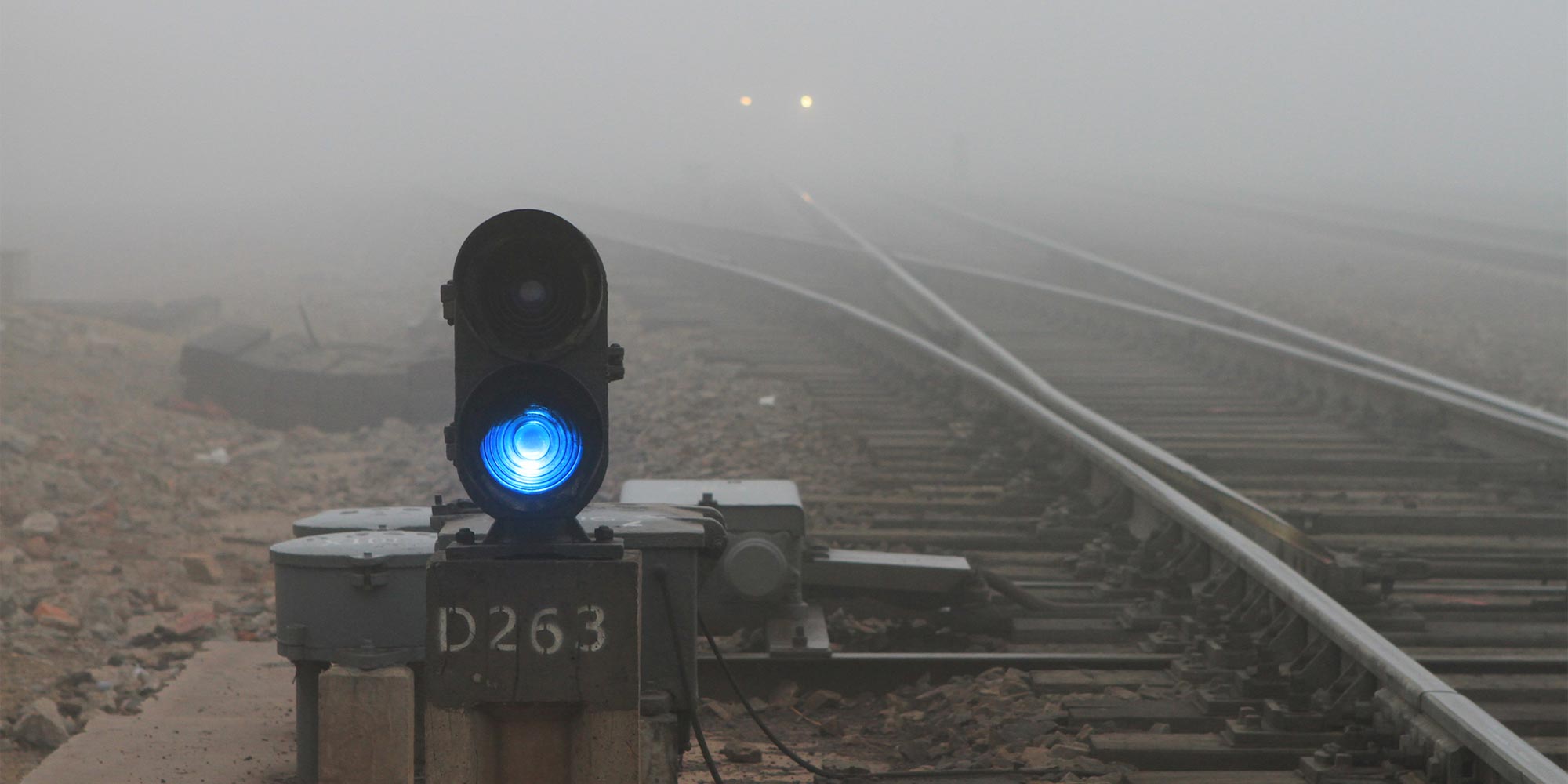
According to a preliminary investigation conducted by the Wuhan Railway Administration, the cause of the accident on Saturday was the failure of a communication procedure in which railway employees receive a signal to stop their work in time to avoid being hit by an approaching train. Caixin reported that a signal to the workers had been sent, but that there had been no response, and that the driver had not been informed of this fact. Video footage from inside the train’s cab shows that visbility was poor due to smog.
By Friday, there had been no official announcement about the Wednesday accident. State-owned China Railway Corporation (CRC) on Wednesday reportedly told employees not to disclose information about railway accidents on social media or in group chats.
Both accidents occurred on tracks overseen by the Zhengzhou Railway Bureau. Neither the bureau nor the CRC could be reached for comment on Friday.
A woman surnamed Yang — who refused to reveal her full name to protect her privacy — told Sixth Tone that one of the workers who died on Saturday was her cousin. “It broke six families,” she said, referring to the accident. “My uncle is more than 50 years old, and he lost his only son.”
Yang said that her family was not satisfied with the government’s response. “They blame all errors on the dead,” Yang said, agitated. “The first priority is to ascertain where the responsibility lies, and the second is the compensation,” she said. Yang did not wish to reveal the exact compensation figure that the government has offered the affected families because it is still being negotiated.
Yang’s cousin was 25 years old, and his family had started planning for his future marriage. He had worked as a railway-maintenance employee for three years, following in his father’s footsteps. “We were never worried about his safety because my uncle worked for the railways for his entire life,” Yang said, adding that she thought it was impossible for such a big accident to happen. “We were overly confident in the [railway’s] safety and supervision,” she said.
Yang said that her cousin regularly worked overtime to meet tight deadlines, but that it was unusual for railway-maintenance staff to work during the day, when there are more trains in operation.
The CRC announced in November that it would conduct a comprehensive railway inspection through January 2017 to increase safety. Figures released by the National Railway Administration show that the number of deaths caused by railway accidents has steadily decreased in the past five years. In 2015, the death toll was 1,037, a decrease of 16 percent compared to the previous year.
(Header image: VCG)