University Financial Statements Reveal Stark Funding Inequalities
More than 70 state-funded universities across China have released their financial reports for 2015, once again raising the question of funding inequities across China’s higher education system.
The country’s top-ranked institution, Tsinghua University in Beijing, received 4.9 billion yuan ($733 million), while Lanzhou University — the top higher education establishment in the less-developed northwestern province of Gansu — received just 1.4 billion yuan. As a result, Tsinghua ran a surplus of 5.6 billion yuan at the end of the 2015 fiscal year, while Lanzhou had just 0.68 billion yuan left over.
According to experts, China’s current university funding model perpetuates education inequality, encouraging the uneven distribution of resources. In recent decades, residents of China’s east-coast cities, such as Beijing and Shanghai, have been served with vastly better-funded universities than their counterparts in the mainland’s interior provinces, and for two simple reasons.
Local governments deliver a large part of the funding academic institutions receive. In wealthy regions, such as coastal Zhejiang province, near Shanghai, the municipal governments can afford to be generous, whereas in Gansu, local universities receive far less. In addition to local funding, China’s highest-ranked universities then receive top-up grants from the central government, further deepening the resource divide.
The results of this imbalance are evident in economic terms, said Wu Xiaogang, a sociology professor at Hong Kong University of Science and Technology. Wu told Sixth Tone that there is a positive correlation between a region’s economic growth rate and the amount of higher education funding it receives.
In a previous interview with Sixth Tone, Xu Youwei, a history professor at Shanghai University and also a the father of a high school student, said the imbalance of the state’s education funding will inevitably lead to large gaps in achievement between students from different parts of China. “While the top-tier universities like Peking and Tsinghua are getting several billion yuan in government funding, other universities receive far less,” Xu said. “It’s easy to see the fruits from funding famous universities, but the effects of funding universities in poorer regions will take a longer time to be revealed.” Xu believes that funding for better universities in less-developed regions is essential to furthering higher education in China. “This matter is vitally important for the country’s long-term educational development,” he said, “as well as for bringing education equality to young people across China.”
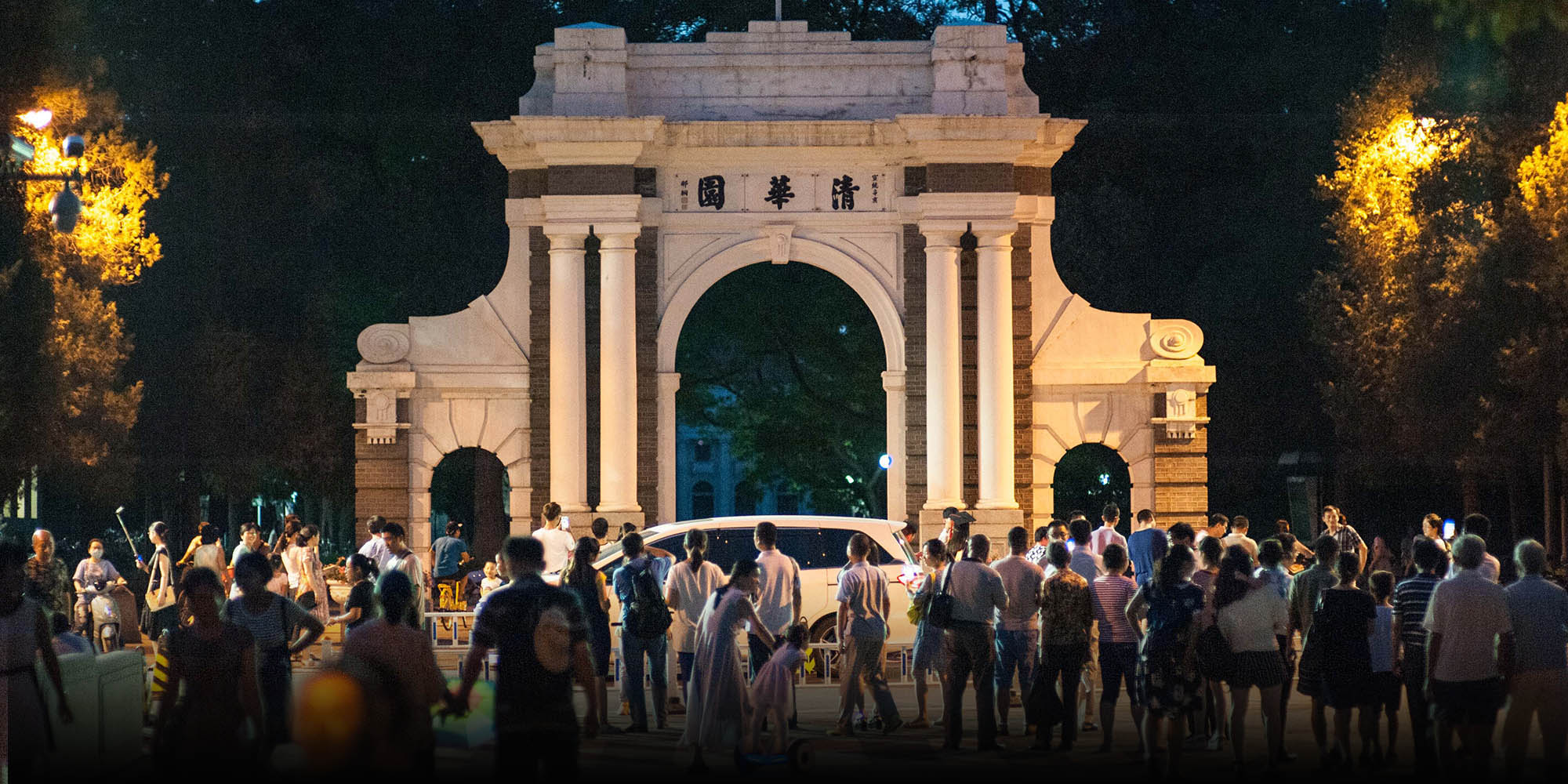
(Header image: A memorial arch at Tsinghua University in Beijing, July 2, 2016. VCG)