A Year After Explosion, Victims Want to Leave Tianjin Behind
Ji Jianfeng clearly remembers the explosions that rocked Binhai New Area in Tianjin, northern China, just before midnight on Aug. 12, 2015. At the time, the 34-year-old lived less than 600 meters from Ruihai Logistics, the company in the city’s harbor area where the fire that lit up a shipment of hazardous chemicals broke out.
The resulting fireball billowed hundreds of meters high, killed 165 people, and hospitalized hundreds more — many of them residents like Ji who lived close to the harbor.
“One minute before the blast I suddenly woke up,” Ji told Sixth Tone in a telephone interview on Thursday. Sighing deeply, he recalled: “I thought it was thunder so I walked to the window. Suddenly, the glass shattered. The shards lacerated my wife’s right eye, and she fainted immediately.”
Ji asked his neighbors to look after his 1-year-old daughter, and — too afraid to use the elevator — carried his wife down 33 flights of stairs. He drove her and two other injured neighbors to the hospital. “The emergency room was full of injured people,” he said. Ji’s wife also suffered a brain hemorrhage and had to stay in the hospital for five months.
To Ji, the memories of that night are still hard to face. When he talks about it with his wife, he has a hard time expressing how terrifying those hours were. She was mostly unconscious, and she remembers little.
Liu Jinquan lived in the same neighborhood as Ji — Harbor City — but farther away from the explosion. As a property manager he knew how to react in case of an emergency. Liu grabbed important documents, dashed out of his apartment with his wife, who was 32-weeks pregnant, and warned his neighbors to do the same. “I saw blood everywhere; the floor was covered with broken glass. I was terrified,” the 40-year-old told Sixth Tone in a phone interview on Thursday.
When Liu returned to their house the next day he looked around the apartment. “In another bedroom, I saw that metal components of the window had punctured four holes in the cement wall.”
Both Ji and Liu received replacement housing, but Liu is disappointed with how the aftermath was handled, saying nobody from the government reached out to him. “I don’t care about money, but no one has ever consoled me,” he said.
An official report from February said that the cause behind the blasts was illegal storage of chemicals, resulting in air, water, and soil pollution in the immediate area. It said 49 people were detained in connection with the incident. Industrial accidents frequently occur in China, in part due to lax oversight. On Thursday, a pipe blast at a coal-fired plant killed 21 people in Hubei province, central China.
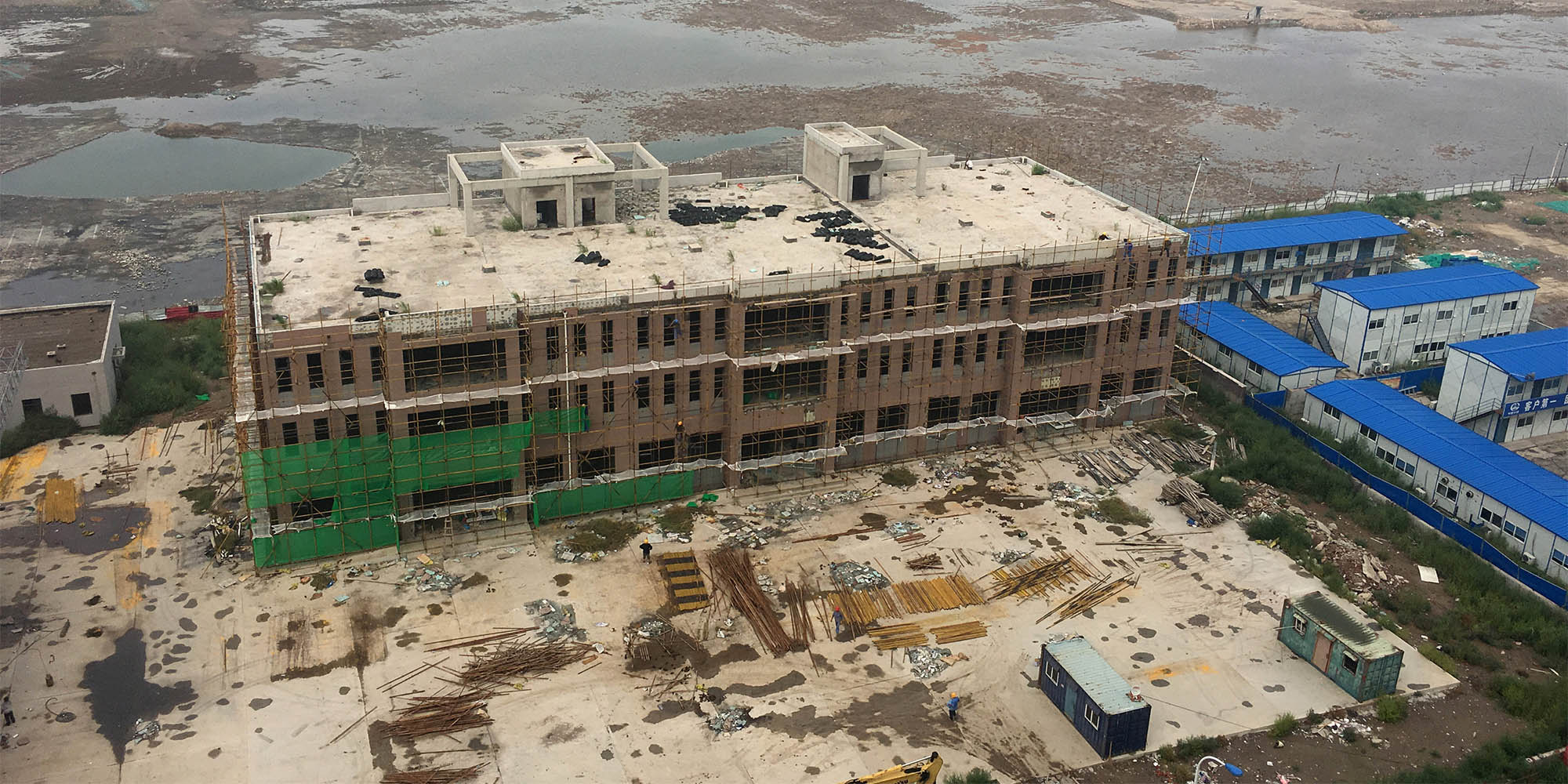
A year on, the area around the blast site is reportedly starting to look like it used to. On Wednesday, the government of Binhai New Area said on its Weibo microblog that pollution levels for water and air near the site of the explosion had gone down to pre-disaster levels. Soil restoration is underway and is expected to finish by September. The report also said that of the nearly 800 people who were injured by the blast, 13 are still hospitalized and 14 are undergoing rehabilitation.
The Beijing News reported in June that Harbor City, the residential area closest to the blast site, is coming back to life — “the lights are on,” the paper wrote. But both Ji and Liu never want live there again. They have been given replacement housing nearby, and they are looking to leave the city altogether. To them, moving on means moving away. Ji said he wants to quit his job in Tianjin and go to nearby Beijing. “I will resign and never come back,” he said.
Liu said he used to joke around, but that since the blast, he has become quiet. He keeps his most important belongings in a bag, ready to grab in case of emergency. Someday he wants to buy a house, but he said that he’d thoroughly research the area. “I will carefully look at all the buildings in a range of 3 kilometers,” Liu said.
Ji still has pain in his back and leg due to injuries he sustained in the explosion. He works in construction, and he has to climb up and down half-finished buildings every day. He has a hard time focusing on his work. “The scars on a person’s body can be seen,” he said. “But those in the heart cannot.”
(Header image: An overview shows the site of the explosions on August 12, 2015 at the Binhai New Area,Tianjin, Aug. 9, 2016. Jason Lee/Reuters)