The ‘Dumbphone’ Defenders
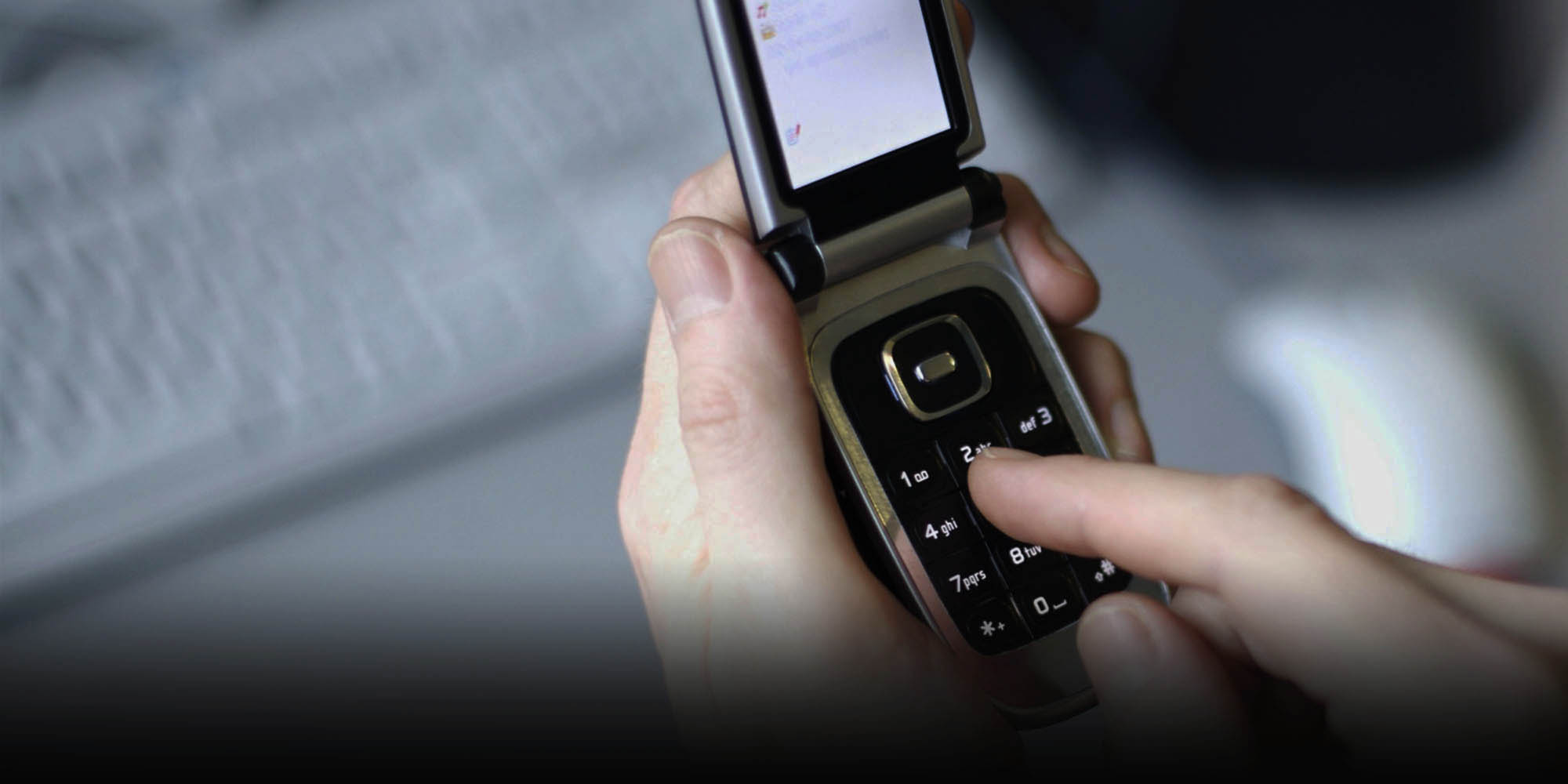
Su Tie is determined not to abandon his dumbphone. At a time when smartphones are all but ubiquitous, with even grandmas on public buses tapping away at handheld screens, the 30-year-old bioengineer said he only uses his mobile phone for calls and text messages.
“I doubt having easy access to information on a smartphone would benefit me in any way,” Su told Sixth Tone. Although all his friends, colleagues, and even senior relatives are using smartphones, he insisted that he wouldn’t follow suit. Instead, Su is sticking with his basic Nokia model.
But Su acknowledged that he is definitely in the minority. China is the world’s largest smartphone market, and according to a 2015 survey by Pew Research Center, a Washington-based think tank, the overall smartphone ownership rate in the country has now reached 58 percent overall, and 85 percent among the 18-to-35 demographic. In first-tier cities like Shanghai, where Su lives, the penetration rate was already 94 percent in 2014, with the market now driven by consumers upgrading to higher-end handsets according to Nielsen.
But though smartphone apps are changing the way people communicate with each other and arrange their lives, a growing number of users are getting sick of certain features. A recent survey carried out by China Youth Daily, the official newspaper of the Communist Youth League, indicated that 35.8 percent of the 2,000 smartphone users they surveyed said they wanted to get rid of “Moments,” a timeline feature on social networking app WeChat where users share photos and updates, because some felt it kept them over-informed when it came to their friends’ day-to-day lives. But only 2.4 percent of respondents said they had already deleted the feature.
Abandoning smartphones altogether certainly requires more resolve than just giving up one function on the device. For Jiang Xiaonian, a 24-year-old factory worker in Shanghai, the breakdown of her smartphone last August was a golden opportunity to make the transition. She replaced her busted smartphone with a functioning dumbphone to see how her life might change.
Jiang worried she might find herself isolated without a smartphone, but ditching technology hasn’t markedly changed her social life. “I used to contact my friends via WeChat, but now I call them or meet them in person more often,” she said. As someone who used to be a self-confessed “phubber” — someone who snubs real-life interactions in favor of the phone constantly in hand — Jiang is relieved to detach from the device.
Jiang also appreciates how the decision has altered her alone time. “I realized I used to pay too much attention to other people’s lives while neglecting what I really wanted for myself,” she told Sixth Tone. “Without a smartphone, I have more time to myself, time I spend reading and planning for my life.”
But Jiang doesn’t have much support for her choice. Nearly a year after she quit using a smartphone, her parents in Jiangsu province still try to persuade her to get a new one because they miss seeing her through video call. “Now we only talk over voice calls,” she said. “Plus they’re afraid I might be left out socially without a smartphone.” Jiang added that both her parents, who are in their 50s, enjoy checking WeChat Moments to post their own updates and see what their friends are up to.
With more seniors adopting smartphones, the departure of a few young users is a barely observable trend. But an online vendor who sells nearly 18,000 Nokia dumbphones each month on Tmall.com has noticed the change. She said sales had grown significantly over the last year, and that most of her customers were young.
But the high sales volume doesn’t mean that people are leaving behind their smartphones completely. Customers commented that they sought simpler models for their extended battery life — up to 15 days on a full charge, compared to half a day for most smartphones. Most dumbphone buyers said they only used them as backups.
Cheng Yuting, 33, and her husband, 38, a university chemistry teacher, are unusual for middle-class Shanghainese of their generation because neither has ever had a smartphone. Cheng, a full-time housewife and mother, told Sixth Tone her days are too busy with household chores and taking care of her 3-year-old son to be concerned with following anyone else’s hourly updates.
“Some of my friends tried to persuade me to get a smartphone years ago, but they’ve stopped by now,” Cheng told Sixth Tone. “My husband and I tend to be old-fashioned and insist that a mobile phone is just for making calls.” Even on a trip abroad, she said she preferred asking people for directions to relying on electronic maps. When she does need to use the internet, she said, she can use her tablet or computer instead.
Although many young people are saying they’re tired of being phubbers, many admit that giving up their smartphones is harder than they imagined. In June, 25-year-old Li Zhihao volunteered for an experiment in which he would spent 72 hours without access to internet, and it nearly drove him crazy.
Li, a graphic designer who works in advertising, had hoped that three days without online influences would help him discover fresh inspiration for his job. “But I just ended up frustrated,” he said.
Li found himself in a series of embarrassing situations during the short experiment. One day he was late for work because he failed to find a taxi without the help of an app. Then at a restaurant, he discovered he couldn’t pay the bill because he’d grown accustomed to mobile payments and wasn’t carrying enough cash. Finally, on a movie date with his girlfriend, they arrived at the cinema to find that all tickets for the movie they wanted to see were sold out for the next three hours.
The experiment forced Li, the youngest of the three volunteers, to realize how dependent he’d become on smartphones since he first acquired one in 2008, when he was still a high school student. “A smartphone is more important than a computer,” he told Sixth Tone. “A taxi hailing app is the most indispensable part of my everyday life.” Li concluded that as much as he felt annoyed with hyperconnectivity, he couldn’t survive without the device.
Seventeen years ago, a different kind of experiment was conducted with 12 volunteers from Beijing, Shanghai, and Guangzhou. Called the “72-hour internet survival test,” the 1999 experiment put volunteers into separate rooms with no food or water — just a telephone and a computer with an internet connection.
Participants at the time said that if it weren’t for a food delivery website that had been set up specifically for the test, they couldn’t have survived the three days. Now, anything from condoms to fried chicken can be ordered on a smartphone and delivered to your door, and some transactions can even be difficult without an app, as Su discovered when his car was in maintenance.
Even Su the dumbphone devotee was forced to acknowledge the inconvenience of his commitment to living without a smartphone when he couldn’t get a cab. “There were so many taxis with their green lights on heading into the high-tech park where I work,” Su said. But as he approached them, they quickly switched off their vacant indicators as they headed to passengers who had made reservations on a ride-hailing app. “I had to wait nearly two hours,” he said.
But Su feels his dedication to dumbphone life is worthwhile for the peace that it provides him. Though 57.1 percent of the 2,000 smartphone users interviewed by China Youth Daily said that the very first thing they do every morning is check their WeChat Moments, Su insists that he’s happier without the endless stream of trifling interruptions.
“I think history has shown us that these apps will eventually perish,” he said. “Life should be more about the physical world than the virtual one.”
(Header image: Altrendo Images/VCG)