Chinese Archaeologists Announce Findings From Four Key Sites
Chinese archaeologists have announced discoveries from four sites across the country, including Paleolithic campsite ruins and greater details of an aristocratic cemetery of the Neolithic Liangzhu culture.
The findings, announced at a Wednesday conference held by China’s National Cultural Heritage Administration, come from four years of work at four sites along the Yangtze River. They include Taohuahe in the southwestern Sichuan province; Fanshan in Hangzhou, capital of the eastern Zhejiang province; Lingtoushang in the eastern Jiangxi province; and Laohudun in the central Hubei province.
The discoveries were presented by Archaeology China, a government program launched in 2018 to fund long-term excavations investigating the origins of farming and civilization.
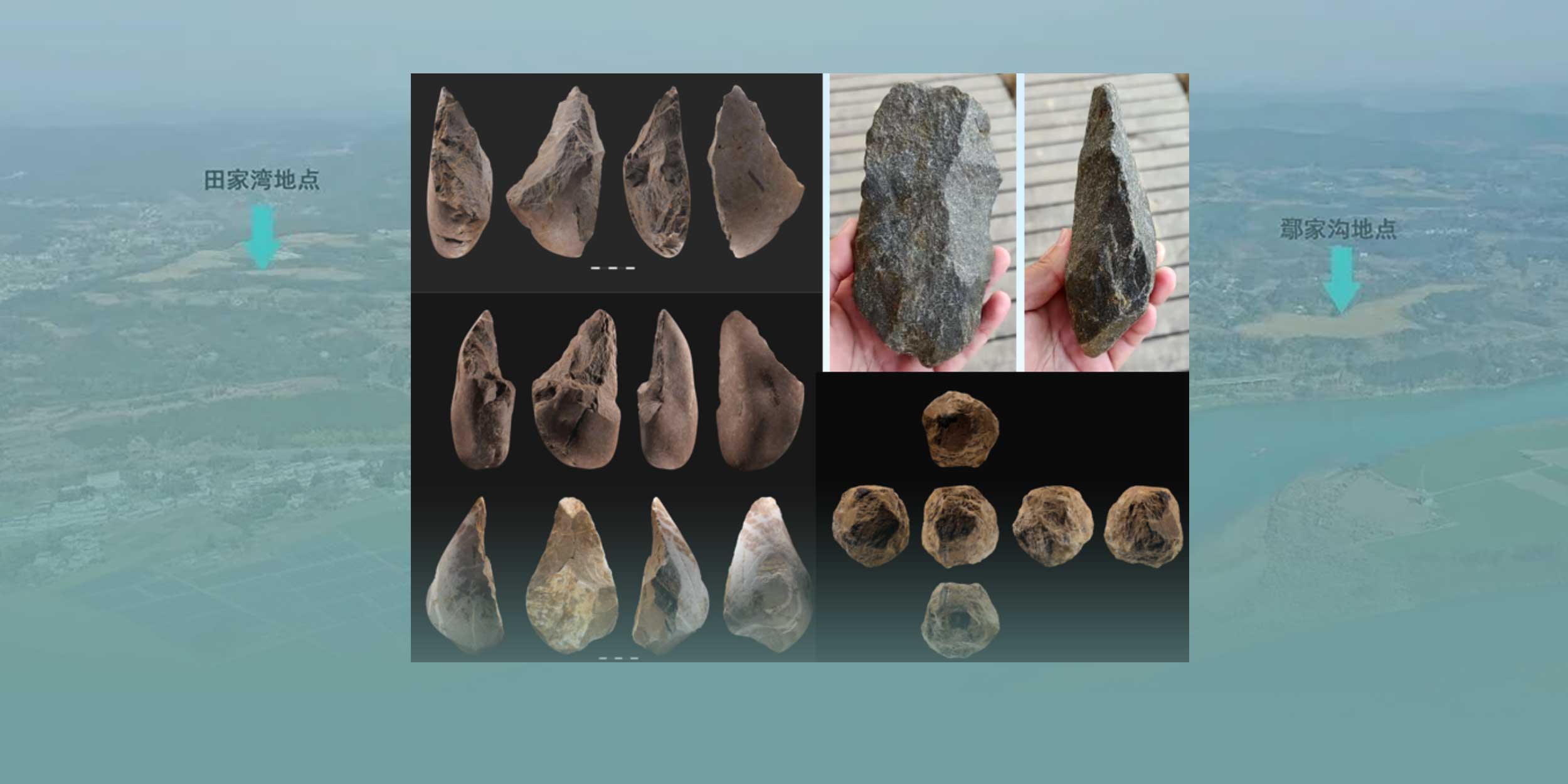
Taohuahe, discovered in 2022, has yielded over 13,000 Paleolithic-age stone artifacts, including large stone choppers, and 179 animal fossils dating from 300,000 to 50,000 years ago, researchers at the conference announced. Excavations have also revealed stone-working and storage areas, cobblestone surfaces, and a semicircular refuse pit.
Wang Youping, an archaeologist at Peking University, told domestic media that, unlike in other archaeological digs in southern China, numerous animal bones have been recovered at Taohuahe.
“Southern China’s acidic soil usually destroys bone,” Wang said. “Researchers had assumed that people in the lush south relied mainly on plants. The (presence of animal) bones suggests that meat was equally important to their work, daily lives, and evolution.”
The second site discussed at the meeting, Fanshan, was discovered 40 years ago and is the highest-ranking aristocratic cemetery of the Neolithic Liangzhu culture ever found, researchers said. The Liangzhu culture, located in northern present-day Hangzhou, flourished about 5,000 years ago. UNESCO added the ruins of its walled city and system of dams and reservoirs to its World Heritage List in 2019.
Excavations that began in 2024 indicate that a walled compound enclosed the site’s cemetery mound. At least three buildings stood at its center, including a large oval structure raised on stilts, likely used for ceremonies. The compound lies on a ridge that formed part of the surrounding area’s water system, leading researchers to hypothesize that the tombs, ritual spaces, and dams were planned as a single complex.
After last year’s discovery of a courtyard wall at the Fanshan site, archaeologists uncovered a group of three related buildings this year. Wang said the wall may have formed the cemetery’s outer boundary, while the buildings may have served as sacrificial halls. He added that the culture may already have had a mausoleum system.
Researchers also announced at the conference that they have discovered Neolithic and Shang dynasty (c.1600–1046 BC) settlements at a third site, Lingtoushang. The settlements contained evidence of smelting and large quantities of copper, shedding light on close cultural exchange and how the societies exploited and controlled metal resources.
Excavation of the fourth site, Laohudun cemetery in Hubei, began this year. According to researchers, the area contains the highest concentration of Qin dynasty (221–206 BC) tombs in southern China.
At the site, archaeologists unearthed bamboo and wooden slips — writing materials used before the invention of paper — along with numerous inscribed lacquerware and wooden artifacts. The inscriptions cover a wide range of topics, including politics, military affairs, literature, medicine, folklore, and art, offering greater insight into society at the time.
Editor: Marianne Gunnarsson.
(Header image: Stone artifacts found at the Taohuahe site in Sichuan province. From the National Cultural Heritage Administration)