Zero-Sum: Nanjing Noodle Shops Set a Price Rivals Can’t Match
A pair of Chinese noodle shops serving free meals sparked debate this week after their popularity reportedly disrupted neighboring shops’ business.
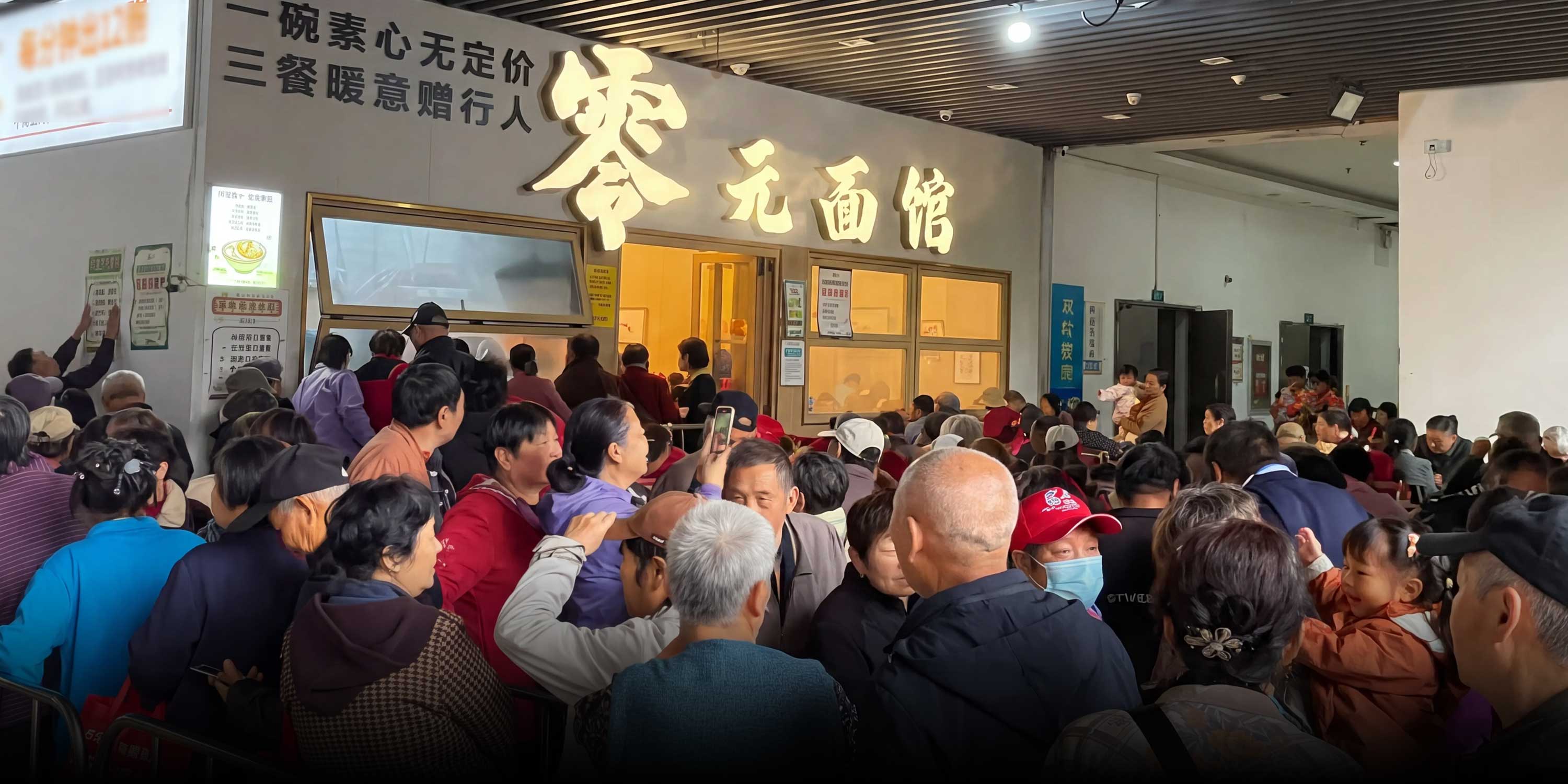
“Zero-Yuan Noodle Shop,” which opened two outlets last month in the densely populated Jiangning and Yuhuatai districts of Nanjing, capital of the eastern Jiangsu province, offers only one dish: noodles with braised vegetarian chicken and shiitake mushrooms. Each restaurant has around 50 seats, and since opening have been frequented mainly by middle-aged and elderly customers, according to domestic media.
Jiangning is home to a large migrant worker population, while Yuhuatai has the city’s largest public housing project. Signs outside the restaurants read, “A bowl of pure intention, with no fixed price; three meals a day, offered with warmth to those in need.”
The owner, surnamed Zhang, told domestic media he opened the shops for two reasons: promoting vegetarianism and charity. He said he had previously donated to charities and operated low-cost vegetarian restaurants but found that offering free noodles was the most effective way to achieve his philanthropic goals.
The two shops have served more than 1,000 bowls of noodles each day, Zhang said. He added that he had initially planned to open 10 stores, each serving 500 bowls a day, but demand had exceeded his expectations.
“Our idea was simple: get more people to come eat,” he said.
The topic has garnered more than 10 million views on microblogging platform Weibo, with many questioning whether the measures can genuinely help those in need.
Asked what they thought about the initiative, a local resident told domestic media, “It’s both good and bad. The good thing is that people who are genuinely struggling can come here to get a meal and meet their basic needs. The bad thing is, how can you tell who has money and who doesn’t?”
Other users suggested requiring customers to show their ID cards to exclude locals and help migrant workers.
In an interview with domestic media, Zhang rejected the idea of screening customers. “We want to give people facing difficulties a sense of dignity and respect,” he said.
Domestic media reported that one nearby restaurant’s daily revenue had fallen from 3,000 yuan ($450) to just a few hundred yuan. Another shop owner said he was considering not renewing his lease over concerns about declining customer traffic.
However, some shop owners said customer traffic along the street had already fallen after the relocation of several nearby factories. Others said the free noodle shops had not significantly affected their business.
Zhang told domestic media that affected business owners could work at his stores if they were willing.
He added that the two shops could lose up to 10 million yuan a year. The stores do not have payment QR codes, and he has also turned down donation offers from friends.
The shops have reportedly recently installed barriers to keep lines orderly and stopped providing noodle refills and napkins to discourage those who don’t truly need help from taking advantage of the offer.
Authorities told domestic media they had found no evidence that the restaurants were providing free meals as a publicity stunt. Local authorities also said they had visited the shops to check food safety compliance and help maintain order among customers queuing outside.
Editor: Marianne Gunnarsson.
(Header image: Crowds gather at a “zero-yuan noodle shop” in Nanjing, Jiangsu province, October 2026. From Weibo)