What a Lost City Can Tell Us About Chinese Civilization’s ‘First Draft’
Fufeng County, some 110 kilometers west of the northwestern Chinese city of Xi’an, is best known for its stunning Tang dynasty (618–907) relics, unearthed from an underground crypt beneath Famen Temple in the late 1980s.
But ask a Chinese archaeologist about Fufeng, and they’ll likely point you in another direction: toward a quiet cluster of more than 20 villages located along the border with neighboring Qishan County. There, hidden beneath unassuming farms and village houses, lies what a growing number of experts believe was the first capital of the Western Zhou (1046–771 BC) — one of China’s earliest and most important dynasties.
Known as Zhouyuan — literally “The Plains of Zhou” — its excavation sites have produced some of China’s most famous bronze ritual vessels. In the 1940s, those discoveries led archaeologist Shi Zhangru to survey the area and eventually propose that this was Qiyi, the center of Zhou culture before the Zhou toppled the Shang dynasty (c. 1600–1046 BC).
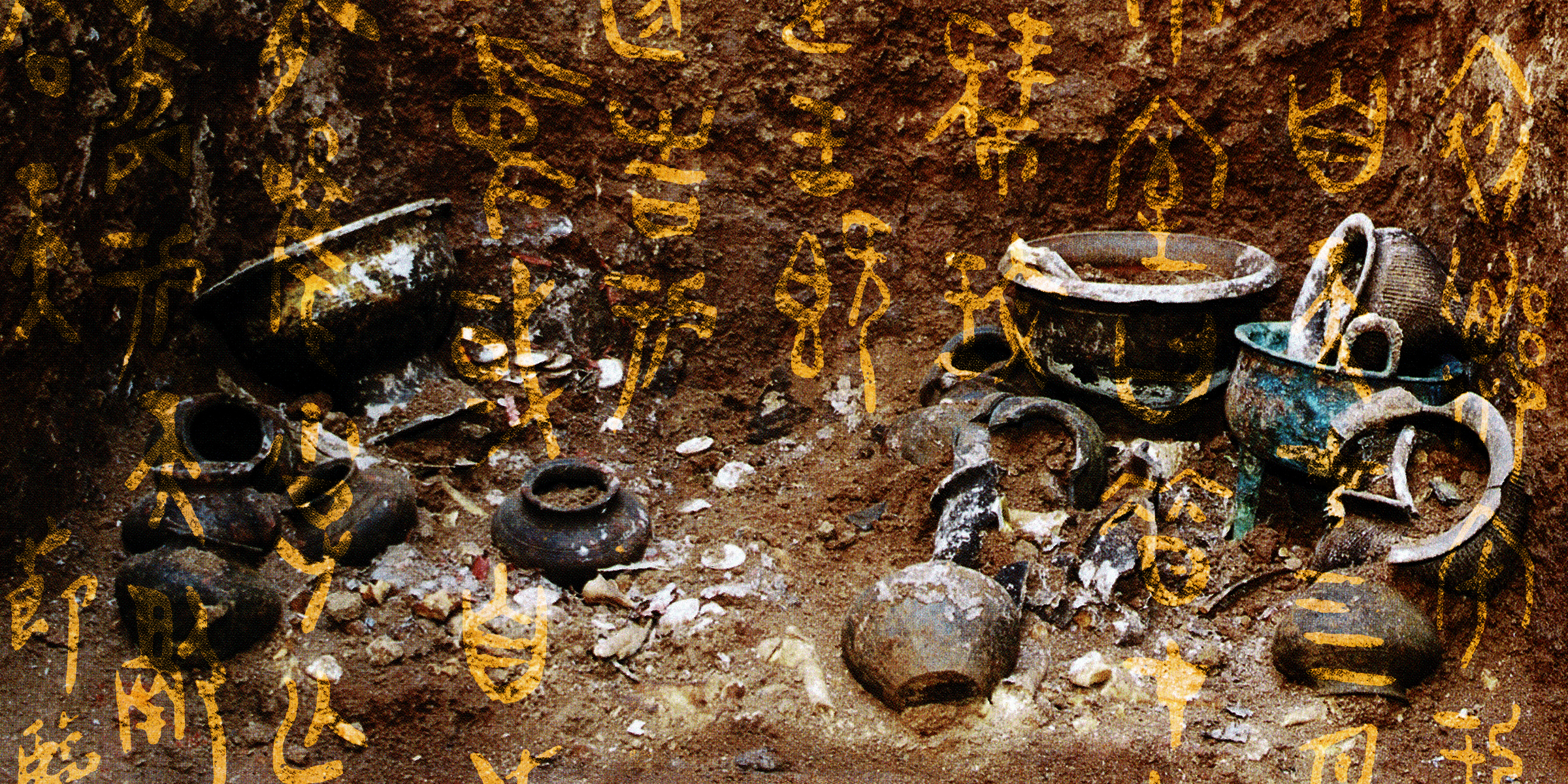
In the decades that followed, archaeologists worked on the site sporadically, uncovering large rammed-earth building foundations, cemeteries, craft workshops, bronze hoards, and oracle bones, all dating to the Zhou period.
Yet planned, continuous excavation at Zhouyuan began only at the turn of the 21st century, when the Institute of Archaeology at the Chinese Academy of Social Sciences (CASS), the Shaanxi Academy of Archaeology, and Peking University’s School of Archaeology and Museology formed a joint team to systematically explore the site.
Why the delay? Part of the problem was historiographical. Chinese scholars have long relied on written texts to locate historic sites, and for more than 2,000 years historians placed the Western Zhou capital dozens of kilometers away, in a place called Fenghao, near Xi’an.
This drew attention and resources from other sites in the region, including Zhouyuan. But over the past decade or so, the joint archaeological team at Zhouyuan has made a string of breakthroughs that suggest Shi Zhangru’s near-century-old hunch might be right — and possibly even show that Zhouyuan, not Fenghao, was the Western Zhou’s first capital.
“Modern excavations are revealing more and more contradictions between the archaeological record and traditional accounts,” Cao Dazhi, a Peking University-based archaeologist and co-leader of the Zhouyuan team, wrote in a 2023 paper. Cao’s analysis attracted widespread attention in China for arguing that Zhouyuan was the Zhou capital, while the Fenghao region was merely an important hub and site of the royal hunting grounds.
But the dispute over ancient capitals may not be the biggest revelation to emerge from the Zhouyuan excavations.
While the exact significance of the discoveries remains a matter of debate even within the team, mounting evidence suggests the Zhou capital’s population was far more diverse than previously thought. In addition to the core Zhou population, it was home to large numbers of conquered Shang, as well as migrants from the northwest and south.
That matters because, over time, the Zhou would establish a very different political and moral order from the Shang, one combining military power with ritual, moral claims to legitimacy, and the incorporation of conquered peoples. This order would help shape Chinese political culture for the next 3,000 years, but where did it come from? And could the answer lie in the palaces, streets, and workshops of Zhou’s most prominent early settlement?
“Sweet as sugar”
Zhouyuan was founded by a people on the move.
According to legend, an ancestor of the Zhou people had served as an agriculture official under the Xia — a legendary state traditionally regarded as China’s first dynasty — and the clan made its living farming the land north of what is now Xi’an.
After the Xia declined, the clan lost its fief. For most of the Shang, the Zhou wandered from place to place.
Finally, around the 12th century BC, their leader Gugong Danfu set out with his people in search of a land where they could finally settle and prosper.
“Mian,” a poem from the “Book of Songs,” China’s oldest surviving poetry anthology, tells this story in just 400 characters: After a long journey, the Zhou arrive at a place called Mount Qi, where they find wild herbs “sweet as malt sugar.” They carve a turtle shell for divination, and the resulting oracle tells them to settle there.
Laborers toil under the direction of officials, stretching cords to mark straight lines and raising frames to tamp the earth. Soon, “a hundred walls rise together.” Ancestral temples, palaces, and homes are built, roads are laid down, and the local barbarian tribes, awed by the magnificent new city, can only flee in disarray.
The claim that Zhouyuan’s wild grass tasted as sweet as sugar may be poetic license, but modern archaeological discoveries support the outlines of the story. Archaeological and environmental evidence suggests that the region offered favorable conditions for early agriculture, with fertile loess soils and plentiful rainfall.
That supported the Zhou as they developed a mixed agricultural system dominated by millet and, later, wheat. The region’s abundance is reflected in the contents of a predynastic Zhou storage pit — a kind of primitive refrigerator with walls plastered in straw-tempered mud — containing some 500 apricot pits, more than 150 melon seeds, and a handful of plum pits, some still glossy after 3,000 years.
But the crucial evidence for Zhouyuan as the site of the Zhou’s foremost settlement only came in 2020, with the discovery of a building archaeologists call Wangjiazui No. 1. Covering more than 2,500 square meters, the compound is divided into front and rear sections, with a front courtyard framed by gatehouses, side chambers, and a front hall. In the rear lies another courtyard, surrounded by a hall, side chambers, and a back chamber.
It’s a structure of truly royal proportions, and Wangjiazui No. 1 quickly caught the attention of the archaeological team. “Ever since Shi Zhangru proposed in the 1940s that Zhouyuan was where Gugong Danfu migrated, the bronze hoards and large building foundations unearthed here have steadily reinforced that judgment — but hard proof of a high-ranking predynastic building was always missing,” Chong Jianrong, director of the Shaanxi Academy of Archaeology, tells Sixth Tone. “Large rammed-earth foundations are the most direct indicator of a settlement’s rank: Only a settlement with capital-level political functions could build such a structure. Wangjiazui No. 1 provides that key evidence.”
Based on stratigraphy and radiocarbon dating, the team confirmed that the building dated to the predynastic Zhou period, before the conquest of Shang, thereby verifying the existence of a “central settlement” within the Zhouyuan cluster. Wangjiazui No. 1’s size and clearly defined layout are unmatched among predynastic finds, and archaeologists were also able to trace a belt of predynastic structures stretching over 150 meters from north to south — evidence of a deliberately planned settlement that was developed continuously, rather than a temporary encampment.
Yet even the grandest predynastic building at Zhouyuan pales next to contemporary Shang architecture: the No. 1 palace at the Shang city of Huanbei, built at least a century earlier, covers some 16,000 square meters — six times the size of Wangjiazui No. 1.
The gulf in scale reflected a gulf in power. In the 12th century BC, the Shang were a powerful empire built on violence and tight state control, with formidable armies, complex cities, and impressive industry.
The Zhou, meanwhile, were still a small tribe on the distant fringes of the Shang cultural sphere. But after centuries of wandering, they had finally found land to farm and walls to call home. And within a few generations, their roles would flip as the Zhou destroyed the Shang and conquered the Chinese heartland.
A melting pot
In early 1046 BC, on a plain in what is now the central province of Henan, the Battle of Muye — a clash that would transform the course of Chinese history — was about to begin.
According to traditional accounts, Ji Fa, Gugong Danfu’s great-grandson, led a coalition of allied tribes numbering fewer than 50,000 men. Opposing them was a Shang army said to number hundreds of thousands. Yet despite its supposed numerical superiority, the Shang force offered little resistance, and its defenses collapsed almost immediately. The decisive battle was over in a single day — and with it, nearly six centuries of Shang rule.
Zhou’s conquest of Shang greatly expanded their territory. To administer their new lands, the Zhou established two capitals. One was Luoyi, near present-day Luoyang in Henan. Close to the conquered Shang heartland, it was intended to keep watch over Shang remnants and the eastern lords.
For centuries, the other was believed to be Fenghao, in what is now Xi’an’s Chang’an District, roughly 90 kilometers from Zhouyuan as the crow flies.
But recent finds at Zhouyuan have uncovered hard evidence against that view: in particular, the presence of a walled city of about 1.75 million square meters, with a palace complex at its core.
The palace lies at the exact center of the city’s northern half, says Cao, the Peking University archaeologist whose article kickstarted the Fenghao-Zhouyuan debate. Covering roughly 500,000 square meters, it is the largest and best-preserved pre-Qin dynasty (221–206 BC) palace complex ever discovered.
A comprehensive coring survey in 2023 revealed buildings across almost the entire site. Roads crisscross the area: the avenue leading into the city was paved with a foundation of large stones topped with soil and gravel, not unlike a modern gravel road. And in the moats outside the palace city’s walls, archaeologists found oracle bones used in royal divination.
“By comparison, no city walls have yet been found at Fenghao,” Cao says. “In fact, Zhouyuan’s remains of every kind are richer than Fenghao’s: more people, more nobles and officials, more wealth.” He adds that a building he is currently excavating is the largest structure ever found from the Western Zhou.
Inside the palace district, members of the royal house would have enjoyed the highest luxuries the age could offer. Beyond the palace walls, the settlement hummed with industry. Archaeologists have identified 61 craft production sites within the settlement, which produced bronzes, bone objects, pottery, jade ware, and lacquered wood.
Notably, many of the laborers staffing these workshops were not from the Zhou. Strontium isotope analysis of human bones and teeth from sites across the Yellow River basin found that populations at predynastic Zhou and Western Zhou sites were among the most heterogeneous on record in China, pointing to large-scale migration to Zhouyuan.
The influx began even before the conquest of Shang, says Chong of the Shaanxi Academy of Archaeology. He identifies two early waves of migration: people associated with the Nianzipo culture to the north, whose graves featured distinctive vertical shafts, followed by people associated with the Liujia culture to the west, who used catacomb-style tombs.
Once the Western Zhou was established and Zhouyuan became a dynastic capital, people and cultural influences converged there from every direction — including the Chu from the south and the Qin from the west. Two shell carvings of human heads unearthed in 1980 feature high-bridged noses and deep-set eyes reminiscent of depictions of the Saka, a Scythian-related people of the Eurasian steppe — a hint that even more distant groups may have lived at Zhouyuan.
But the largest group of migrants came from the east: the conquered people of the Shang. In fact, the Shang may have been the city’s second-largest demographic after the Zhou themselves.
“The population structure of Zhouyuan was highly complex, and the available material doesn’t yet support precise ratios,” Chong tells Sixth Tone. “But what is certain is that, while the Zhou formed the ruling core, other groups from the northwest and south were integrated in different ways; and Shang remnants were a major group of considerable size.”
Learning from the conquered
So why were so many Shang people living in the Zhou capital?
Immediately after their victory at Muye, the Zhou were faced with a challenge: how to integrate this distant power center into their new state. They moved quickly to extend their rule east, building Luoyi to strengthen their position in the Shang heartland, while planting their agents and allies at strategic points throughout the new territory.
They also pursued a deliberate strategy of breaking up the close-knit Shang clans and resettling them across their empire.
It must have been a colossal undertaking. At its peak, the Shang capital alone is estimated to have had a permanent population in the hundreds of thousands. But in the eyes of the Zhou rulers, the effort of relocating large numbers of people hundreds of kilometers was worth the trouble. Not only did it allow them to keep a close eye on their new subjects, but it also made a powerful political statement: the remnants of the fallen dynasty had fully submitted to the Zhou order.
Then there were the practical reasons for the relocation: Archaeological finds suggest that Zhouyuan’s new Shang residents clustered around the city’s workshops, where they would have put their technological know-how and skills to work for their new rulers.
“In the predynastic period, bronze casting across the Guanzhong region (surrounding Zhouyuan) was scarce, and only very simple vessels could be made,” Cao tells Sixth Tone. “Then, at a certain point, large numbers of exquisite bronzes suddenly appear, essentially identical to late Shang products.”
Scholars such as Cao speculate that this sudden shift was connected to the Zhou bringing Shang artisans — along with bronzes seized in war — back to Zhouyuan.
Bronze was just one of many crafts and cultural practices the Zhou learned from the Shang. Li Xueqin, the late chief scientist of the state-sponsored Xia-Shang-Zhou Chronology Project, compared the oracle-bone inscriptions of Yinxu and Zhouyuan and found them “more alike than different” — evidence of continuity in the writing system and divination practices across the two dynasties.
Song Jiangning, who heads the CASS Institute of Archaeology’s Zhouyuan project, argues that several early Western Zhou buildings imitate Shang architectural forms, and believes that their designers were most likely Shang people.
The evidence suggests the Zhou allowed these people to maintain many of their cultural practices. Excavations at multiple Zhouyuan workshops show that Shang people carried on key traditions, including burying their dead close to home and organizing production around clan lines.
Production and daily life were concentrated within the workshop quarters; the dead were buried there in their clan’s customary way; and children inherited the family trade. In other words, the Zhou rulers treated them with relative leniency — especially in contrast to the Shang’s own brutal treatment of outsiders, as attested by the large numbers of human sacrifice victims unearthed at the former Shang capital.
“The archaeological material tells us that the early Western Zhou inherited many Shang practices across the board — crafts, writing, architectural layouts, and even the ‘hereditary artisan clan’ mode of organizing production,” Chong tells Sixth Tone.
Running dry
As Zhouyuan attracted more and more people, its workshops continued to grow, eventually outpacing the city’s initially planned borders.
Toward the end of the Western Zhou period, the dynasty established a new, far larger settlement southeast of the original city, roughly tripling Zhouyuan in size and turning it into the largest known Chinese city of the Western Zhou. Excavations have uncovered walls and gates on a scale unprecedented for the pre-Qin period. It was a clear display of power and order.
Yet the city’s residents had little time to enjoy their magnificent new metropolis. In 771 BC, after 275 years of rule, the Western Zhou fell. Nomadic tribes from the west invaded the Guanzhong Basin, and King Ping fled east with his lords to the dynasty’s second capital of Luoyi. The Zhou would survive as the Eastern Zhou, but royal power quickly declined, and China descended into centuries of conflict and war.
Curiously, archaeologists have found almost no Eastern Zhou artifacts at Zhouyuan.
That might seem natural enough: after all, Zhouyuan was no longer the capital. But experts say it is highly unusual. “Think about it,” Song Jiangning of CASS tells Sixth Tone. “Chinese history is full of cities — Xi’an, Nanjing, Hangzhou — that were once capitals and later weren’t. When a city loses capital status, the royals and officials leave, sure. But do ordinary people leave? No. They go on with their lives. Zhouyuan is different. After the Western Zhou, the people of that city disappeared almost completely.”
The bronze hoards found densely packed across the site suggest the city’s abandonment was sudden.
“Picture the scene: the city suffers a sudden disaster, and the noble families must flee with the royal house,” Cao explains. “Their bronzes are incredibly precious — and far too heavy to carry — so they hastily dig pits and stash them away. The density of bronze hoards at Zhouyuan makes it easy to picture the rows of aristocratic mansions that once stood here, and the panic of their owners’ flight.”
But what exactly was the catastrophe? Many historians attribute the city’s fall to invasions by groups from the west. Song, however, wonders whether the city succumbed to something deadlier than war.
“Down through the ages, cities have generally met one of two fates,” he says. “The first is ‘rise and decline’: once a capital, then no longer; once prosperous, then decayed. That kind of story is common, and behind it are human factors.”
“The second fate, less common, is ‘life and death,’” he says. “Liangzhu died, Shimao died, Taosi died, the capitals of the 36 states of the Western Regions almost all died. Perhaps that is what happened to Zhouyuan. The death of a city means its people simply could no longer live there — and behind that usually lie forces of nature.”
For years, Song has studied the relationship between Zhouyuan’s water resources and its urban planning, hoping to crack the mystery of the city’s disappearance. Zhouyuan sits on a loess tableland, and its inhabitants drew water from two rivers descending from the mountains. To secure a sufficient, stable supply, they built a hydraulic system covering more than 30 square kilometers — enormous in scale and remarkably complex and refined in design.
For a time, the artificial canals worked well. But rivers rushing down from the mountains continually cut deeper into their channels; as the water levels fell, the canals had to be dug ever deeper, and at ever greater cost. Meanwhile, Zhouyuan kept expanding, and the demand for water kept growing.
To make matters worse, sediment analysis suggests that the city’s water-management authorities maintained the system diligently in the early Western Zhou, but grew lax in the middle period, and had ceased to function entirely by the dynasty’s collapse.
Although the evidence is inconclusive, water scarcity may be one reason Zhouyuan was abandoned. The same may have happened to several large Western Zhou dozens of kilometers to the west.
To Song, the quest to understand how Zhouyuan collapsed is almost as important as the answer itself. “To attend to one thing is inevitably to neglect another — and on that, we are no different from the ancients,” he says. “What the ancients did is done and cannot be redone. But we can study them, assess them, and learn from them. Zhouyuan is a modern-day revelation — how it rose, prospered, and died.”
A new order
The death of Zhouyuan was a catastrophe for the nobles and commoners who called it home. For archaeologists today, it has proven an unexpected gift.
One need only compare it with Luoyi — modern-day Luoyang — the Zhou’s eastern capital. Celebrated in China as the “ancient capital of thirteen dynasties,” Luoyang has served as a seat of power longer, and for more dynasties, than almost any other city in China. But that very longevity is the archaeologist’s headache: wave upon wave of construction has left cultural layers piled one atop another, making dating unearthed remains a thorny task.
Zhouyuan is different. No major city has stood there since the Western Zhou. The land has been farmed for nearly 3,000 years, and remains so today.
For China’s archaeologists and historians, that is rare good fortune, especially given that Zhouyuan may contain the answer to one of the longest-standing riddles in Chinese history: How China transitioned from the Shang to the Zhou, whose focus on ritual, order, and moral justifications for rule would shape future Chinese states for millennia.
Over a hundred years ago, the renowned scholar Wang Guowei called the Shang-Zhou transition “the most drastic transformation in Chinese politics and culture.” In essence, it shifted the basis of political order — from sacrificial ritual to political ethics. The Shang revered gods and ghosts, seeking to appease them with elaborate sacrifices, including human sacrifice; the Zhou, while not immediately breaking from Shang practices entirely, set out to build an alternative justification for their rule.
Historians have read this shift in many ways. According to one widely shared view, the Shang placed their faith in divination and sacrifice, trusting that so long as the rituals never lapsed, their ancestors and the spirits would protect them.
The Zhou advanced a different argument: Heaven favored virtue, and political legitimacy depended on the moral conduct of the ruler. Through the patriarchal clan system and the strategic allocation of titles and fiefs, they wove political and ethical order into a single fabric.
Dynasties rose and fell over the nearly 3,000 years that followed, and the machinery of government was rebuilt many times — but the Zhou ideal of “governing through virtue” endured. “By the Western Zhou, Chinese civilization had its ‘final draft,’” says Song.
Now, archaeologists can look for the physical evidence of that transition. The numerous tombs of Shang survivors found around Zhouyuan’s craft workshops, for instance, reveal a dynasty that inherited Shang culture and technology on a massive scale even as it labored to build a new ethical and moral order — one that could legitimize Zhou rule while incorporating conquered peoples and other groups.
“What did not change between Shang and Zhou dwarfs what did,” says Chong. “But that is precisely why we focus on the change — on how the Zhou built the ritual order that would define Chinese political culture for the next 3,000 years.”
(Header image: Visuals from Shaanxi Academy of Archaeology, reedited by Fu Xiaofan/Sixth Tone)