Postscript: China Opens School Dedicated to Ancient Chinese Writing
China has opened its first school dedicated to declining and obscure fields of study, with a focus on ancient and classical Chinese texts.
The School for Rare and Endangered Disciplines was inaugurated in Beijing on Nov. 6 under the University of Chinese Academy of Social Sciences (UCASS). At the opening, the university also announced the launch of a national alliance of more than 80 universities, museums, and cultural and research institutions to share resources, conduct collaborative research, and cultivate talent in related fields.
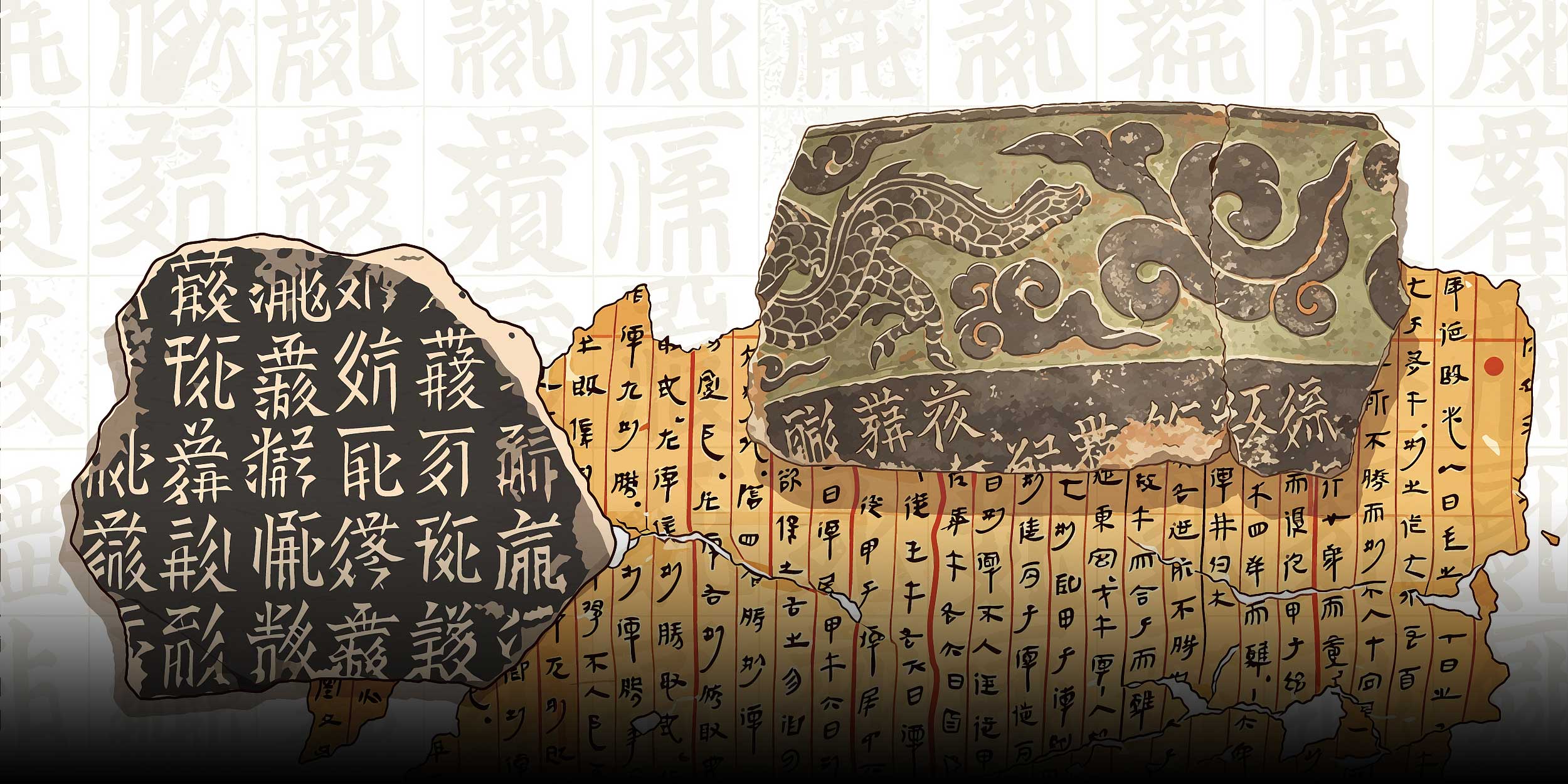
The school comes as the number of scholars studying ancient Chinese scripts dwindles. Nationwide, only about 500 people work in ancient Chinese writing studies, and of the roughly 4,500 known oracle bone characters — the oldest known fully developed form of Chinese writing and widely used for divination purposes during the Shang dynasty (c.1600–1046 BC) — nearly two-thirds remain undeciphered, underlining the need for further research.
The initiative also builds on previous attempts by UCASS to preserve such fields, such as establishing an institute for rare and endangered studies in 2024 to train future talent in fields such as bamboo and silk studies, which examines script on the two materials, as well as classical studies, Turkic studies, and Assyriology, or studies of the Ancient Near East.
Each student of the new school’s bachelor’s, master’s, and doctoral degree courses will be mentored by two members of the school’s more than 140 faculty members. UCASS has also built dedicated laboratories for the school’s use.
Students may pursue research in oracle bone studies, bamboo and silk studies, and classical studies. They may also train in over 10 ancient ethnic scripts, including Turkic, Tangut, Khitan, Jurchen, Manchu, Old Tibetan, Old Yi, Phags-pa, Naxi Dongba, and Zhuang.
“Ancient scripts like oracle bone script are on the verge of being lost, and some frontier history research relies on the survival of the country’s cultural roots and its long-term development,” Huang Dekuan, director of the Research and Conservation Center for Unearthed Texts at Tsinghua University, told state broadcaster CCTV.
Such disciplines are also hampered by scattered resources and research institutions working in isolation — key obstacles to research and transmission, according to CCTV.
China has called for increased focus on cultural heritage preservation in recent years. At an October press conference on cultural heritage protection, government officials called for advancing cultural heritage as a discipline, cultivating interdisciplinary talent in the field, and encouraging qualified universities to establish cultural heritage schools.
In a Nov. 7 commentary, domestic media outlet The Beijing News wrote that by emphasizing rare and endangered disciplines, the new school offers a lesson to other universities: schools should develop their own distinctive majors, resist the urge to offer only popular fields, and actively strengthen less mainstream majors.
“Only then can a university truly serve education,” it stated.
Editor: Marianne Gunnarsson.
(Header image: VCG)