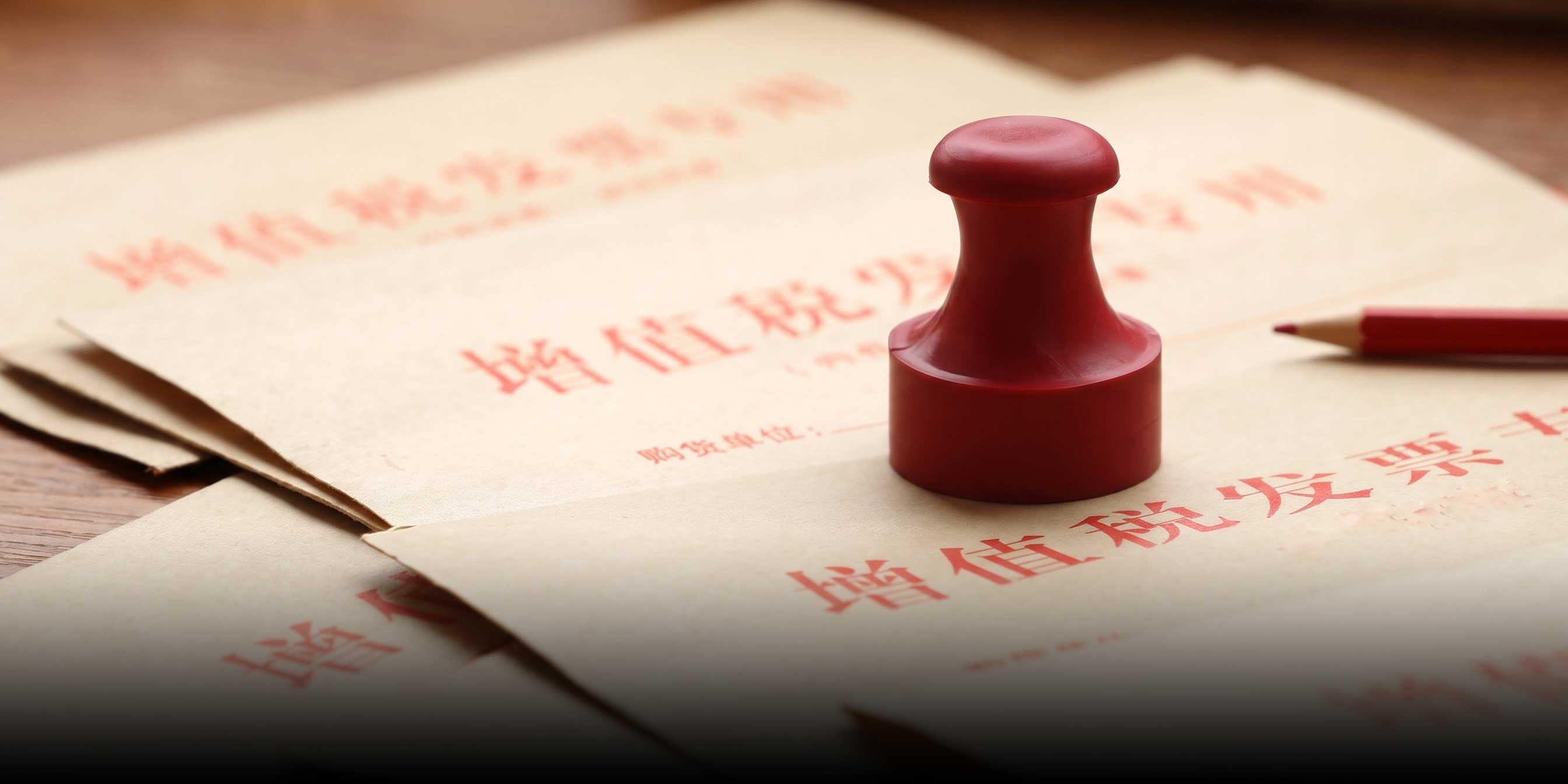
90 Face Chinese Legal Action After $1 Billion Tax Fraud
Chinese prosecutors have exposed an invoice-trading network that illegally traded special value-added tax (VAT) invoices totaling more than 7.4 billion yuan ($1.1 billion) over three years.
Under the guise of a Shanghai-based advertising business, the group profited by issuing and charging service fees for fake invoices from shell companies it registered to customers seeking to illegally claim tax deductions — which can be claimed for special tax invoices, but not ordinary tax invoices in China — domestic media reported Tuesday.
The case has exposed major weaknesses in business-registration oversight, tax monitoring, and financial regulators’ ability to detect suspicious fund flows between affiliated company accounts, according to experts.
From June 2025 to June 2026, more than 90 criminal suspects on the case were processed by the Shanghai Pudong New Area People’s Procuratorate, some of whom were ordered to return their illegal gains. Processing of the case is ongoing.
The group’s ringleaders, surnamed Cui and Shen, first had employees register over 70 shell companies in their own names. Invoices were then handled via three steps: a sales team first connected with customers, who transferred money to the group in order to receive invoices; then a team obtained invoices from both the operation’s registered shell companies or legitimate businesses with unused invoicing quotas; before another team returned funds to customers following invoice-fee deductions. Customers were charged a service fee of between 7% and 13% of the invoice value.
Chinese tax law requires contracts, fund transfers, invoices, and movement of goods to align. Falsely issuing invoices can result in fines of up to 500,000 yuan, while tax dodgers may be fined up to five times the underpaid tax. Both carry risks of criminal prosecution.
To circumvent the law, customers transferred the full invoice amount to the group, which then transferred the remaining funds back to the customer through a separate, third account.
The group illegally traded over 7.4 billion yuan in VAT invoices, involving more than 420 million yuan in VAT. It also conducted illegal foreign-exchange transactions totaling 420 million yuan.
“The scale of the crimes, the degree of organization, and the length of time over which they were committed were all relatively unusual,” Li Huaisheng, a professor at the School of Criminal Justice at China University of Political Science and Law, told state media outlet CCTV.
Similar cases involving companies that obtained invoices through intermediaries have made national headlines in recent years. Last year, a group allegedly used 15 shell companies to falsely issue almost 3,500 special VAT invoices totaling 300 million yuan, domestic media reported. The defendant, surnamed Li, was sentenced to 13 years and six months in prison and fined 500,000 yuan.
According to the State Taxation Administration, such companies often disguise themselves as consulting, advertising, or other business services in industries with low fixed-asset requirements, long industrial chains, and large transaction values, such as recycling, road freight transport, and information technology consulting.
Li Huaisheng recommended that market regulatory authorities establish early-warning models to flag suspicious company registrations, and tax authorities improve big-data checks on invoices, capital, contracts, and goods.
In an interview with CCTV, Zhou Xianbao, a lawyer at BZW Law Firm in Beijing, also recommended establishing a system requiring real-name authorization for invoice issuance and formal tax-compliance commitments.
Editor: Marianne Gunnarsson.
(Header image: VCG)