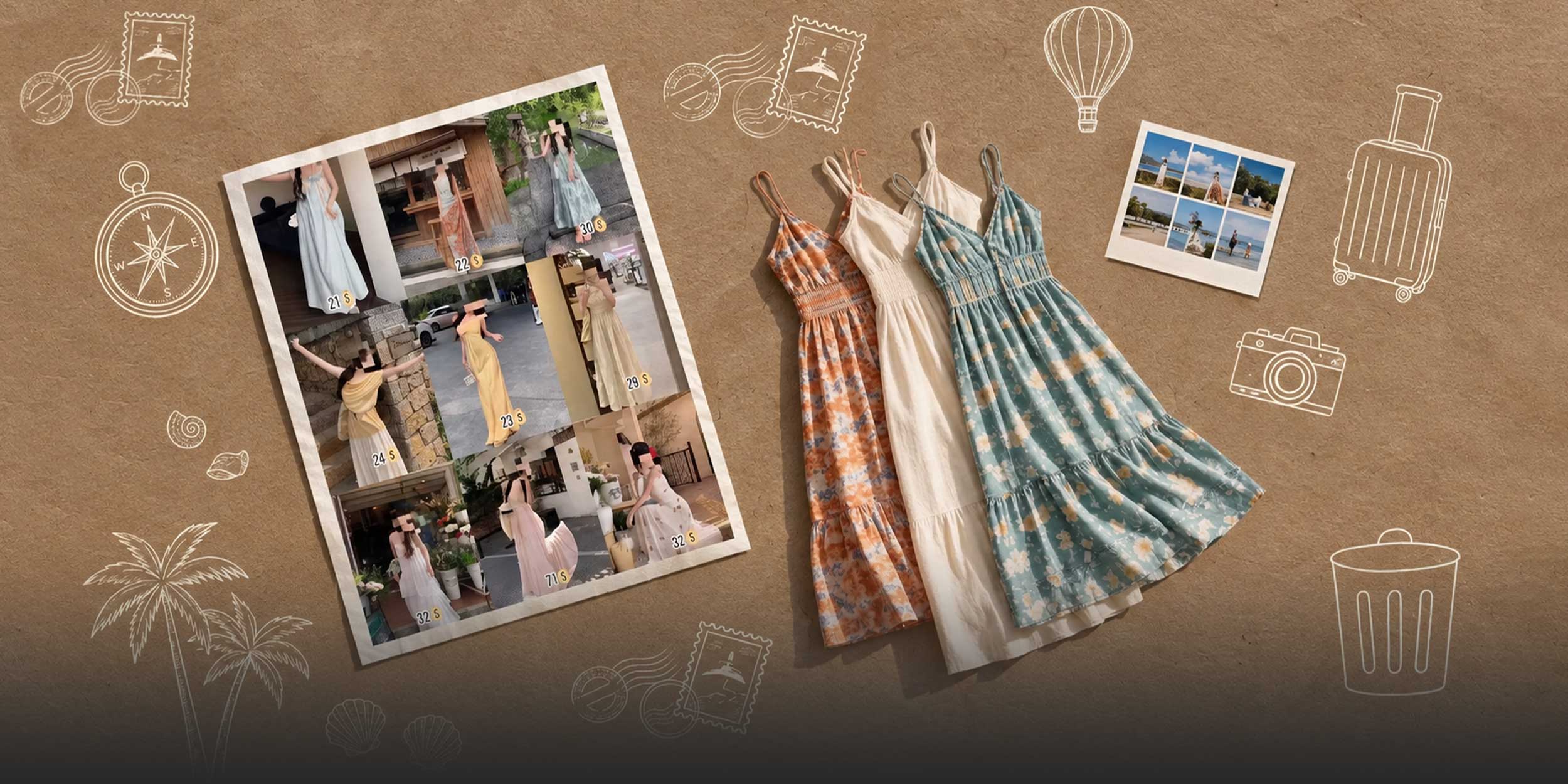
In Stitches: Why Young Chinese Are Buying Clothes They Can Throw Away
For her vacation to China’s southern province of Hainan during this year’s weeklong National Day holiday, Chang Yajie bought five new pieces of clothing: a beach skirt, a floral halter top, a straw hat, a swimsuit, and a pair of loose rainbow pants.
She wore them all on the trip, relishing taking photos in her new outfit on the resort-laden island’s beaches and posting them to social media.
But when she got home, she stuffed the clothes into her trash can.
Chang, an office worker in Xinxiang, a city in the central Henan province, used to spend thousands of yuan on vacation outfits. Unsuitable for work and out of place in everyday life, they ended up at the back of her closet after her trips.
“You can’t possibly wear a plunging, neon-colored beach dress to a corporate desk job,” the 37-year-old told Sixth Tone. “Spending so much on clothes I might wear only once or twice just isn’t worth it.”
In contrast, the five items she packed in early October had cost a total of just 200 yuan ($28). Known as cipaoyi, or disposable outfits, these clothes typically cost under 50 yuan per item and are designed to be worn once for holidays, photo shoots, or social media posts, and then discarded or resold.
The trend, which took off this National Day, comes amidst fast fashion and influencer-driven consumer culture, as well as the phenomenon of haoyangmao, or buying clothing, wearing it for travel, photoshoots, or events, and then returning it for a full refund.
On Douyin, the Chinese version of TikTok, posts under the topic have drawn over 60 million views. On e-commerce platforms, sellers offer clothing ranging from coats and snowpants for use in the northeastern city of Harbin to red dresses designed for photos in the desert. The trend is particularly popular among young women.
Proponents of disposable outfits argue that they’re an inexpensive way to look and feel good while matching scenery and holidays. But others, including environmental advocates and medical professionals, have raised concerns about their potential impact on the planet and people’s health.
Cutting costs
Despite having always loved dressing up, Chang said her clerical desk job leaves little room for it, so she keeps an understated, practical wardrobe. Disposable outfits, then, are a way to “boost her mood.”
“When I go to work, I just wear whatever helps me blend into the crowd,” she said.
But travel, and embellishing her outfits, have helped her reconnect with a more energetic, youthful version of herself. “After months of the same dull routine, dressing up for a trip feels like a shot of adrenaline,” she said.
Chang wasn’t initially looking for disposable clothes. But as she scrolled online for holiday looks, she found it hard to choose among those that caught her eye. In the end, she opted for cheaper versions of similar styles so she could buy more.
A brand dress can easily cost 300 to 500 yuan, she said. “For the same amount of money, I could buy seven to 10 cheaper outfits — enough to wear a different look each day of the trip.”
Chang said the appeal of disposable outfits lies partly in their novelty, helping her match a destination’s look and feel. The clothes let her try styles she rarely wears in daily life — brightly colored pieces with bold, saturated hues, more revealing cuts, or designs that push the boundaries of her usual wardrobe.
For 20-year-old Wu Xiangmeng, a college student in the southern Guangdong province, disposable outfits help her travel money — saved from her university’s monthly living allowance — go farther, leaving more for train tickets, accommodation, food, and activities. So far, she has visited almost 10 cities across China this way.
Before each trip, she researches her destination to pick disposable outfits that fit the scenery. When she’s done with her clothes, she lists them on secondhand platforms like Xianyu and Xiaohongshu instead of throwing them away, pairing the listings with photos of herself wearing the outfits on holiday to attract buyers.
“I can recoup some of the cost while making room — and saving money — for my next trip,” she said.
Outside impact
Though disposable clothing can be a cost-effective way to dress for specific destinations, Wu said she spends hours finding clothes she considers suitable, shopping, sorting through poor-quality purchases, and returning those that don’t make the cut. “The shopping experience is very draining,” she said.
While preparing for a trip to Hainan’s city of Sanya, for instance, Wu ordered several dresses, only to find the fabric flimsy, ripping at the slightest pull. She ultimately kept only two pieces from the pile and returned the rest.
Zhang Bingquan, who operates a garment factory in Hangzhou, capital of the eastern Zhejiang province, said disposable outfits cost so little partly because of their simplified designs and production process. With fewer patterns and straightforward sewing techniques, as in beachwear, he said production costs per garment can be kept in the single digits in yuan.
But the low prices have also intensified competition among manufacturers. To cut costs, some factories use lower-quality fabrics, reduce fabric weight and thickness, or take risks by using fabrics and dyes that fail to meet quality standards, he added.
“The biggest health risk with disposable clothing lies in the materials used,” Zhong Jianbo, deputy chief physician of the dermatology department at Hangzhou First People’s Hospital, told local media. “Cheap garments often use low-quality fabrics and dyes that may contain high levels of chemical residues.”
Sun Weiling, a dermatologist at Jiangsu People’s Hospital, told domestic media that disposable clothing is often made from stiff fabrics that can irritate the skin and cause damage, particularly in more delicate areas, such as the underarms, chest, waist, abdomen, and inner thighs.
The trend has also drawn criticism over its environmental costs. China is the world’s largest producer, consumer, and exporter of textiles, and generates vast amounts of textile waste. According to the China Association of Circular Economy, discarded clothing in the country is expected to reach 50 million metric tons a year by 2030, with each person throwing away an average of 16 garments annually.
During this year’s National Day holiday, the volume of textiles collected by Shanghai-based recycling platform Feimayi nearly doubled from the same period last year, Deng Qihua, the company’s head of marketing and sustainable development, told Sixth Tone.
“Some of the clothes we collected still had their original tags attached,” Deng said.
But recycling disposable outfits can be difficult and costly, as they are often made from blends of synthetic fibers, she added. “A garment bought cheaply and worn only a handful of times may therefore leave behind a much longer problem once its owner is ready to discard it,” Deng said.
A growing number of users are noticing the problem. A September commentary by state-run media outlet People’s Daily called on regulators to steer the market toward more sustainable alternatives, such as clothing rental. A Douyin hashtag promoting alternatives to “disposable fashion,” with tips on styling existing clothes and buying clothes with long-term use in mind, has garnered more than 32 million views.
But for many, health and environmental concerns take a back seat to looking good on vacation for minimal cost. Chang, the office worker, said that when she posted pictures of herself in her disposable outfits, friends praised her looks and “girlish charm.”
“At least it helps me feel better about myself,” she said.
Editor: Marianne Gunnarsson.
(Header image: Visuals from Xiaohongshu and VCG, reedited by Sixth Tone)