Two Chinese Books Shortlisted for US National Translation Awards
Two books translated into English from Chinese have been shortlisted for the 2026 U.S. National Translation Awards, which recognize excellence in both original and translated literary works.
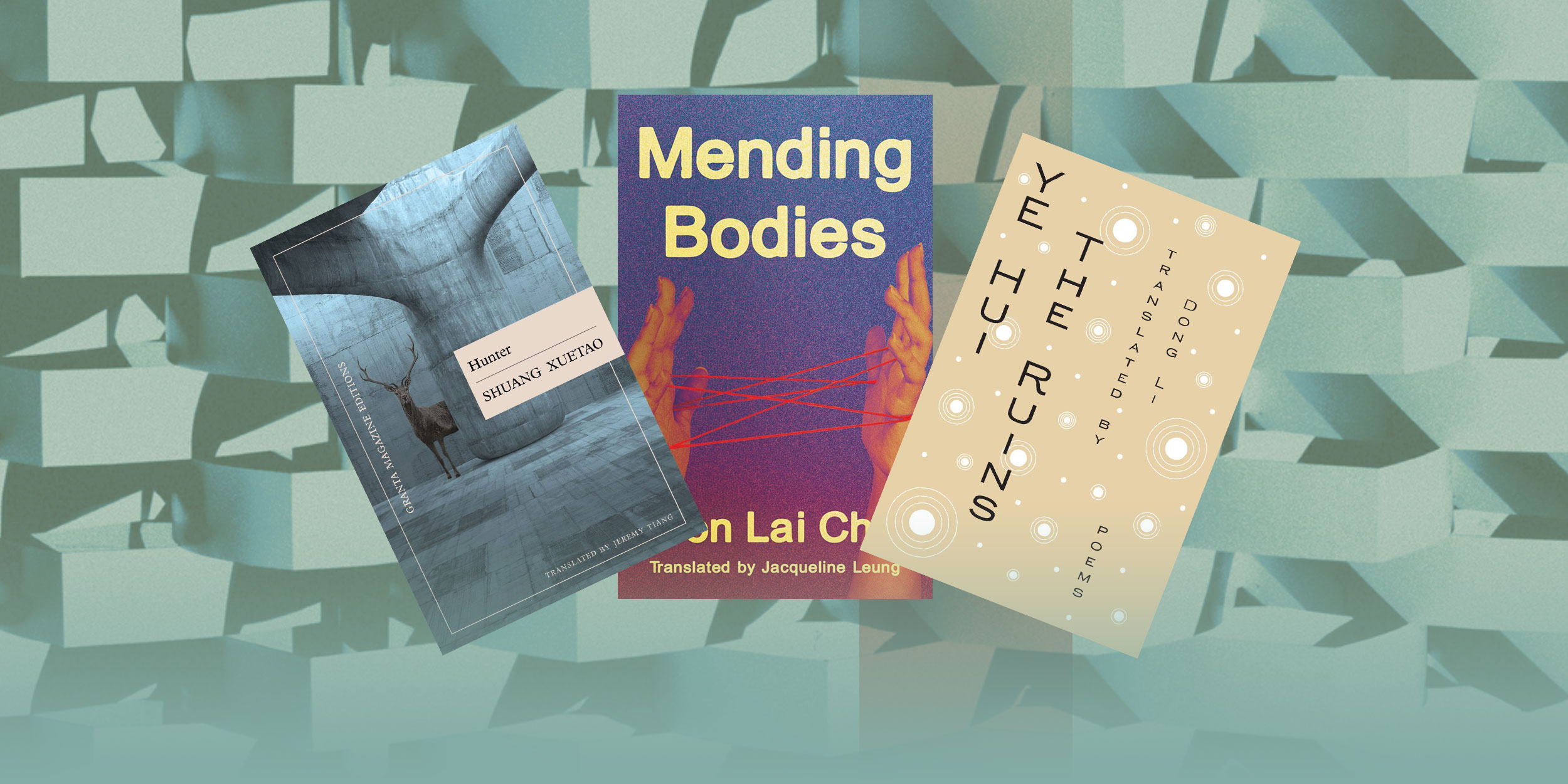
The shortlist, announced Tuesday by the American Literary Translators Association, includes two originally written in Chinese: Chinese author Shuang Xuetao’s short story collection “Hunter,” translated by Jeremy Tiang, and Hong Kong writer Hon Lai Chu’s “Mending Bodies,” translated by Jacqueline Leung, among a total of 11 poetry and prose works translated from nine languages.
“The Ruins,” an anthology by Chinese poet Ye Hui and translated by Li Dong, was longlisted among 23 works across prose and poetry on Sept. 3 but did not make the shortlist. Ye is known for his spare, understated poems that draw on everyday life and nature and explore questions of time, memory, and existence.
Established in 1998, the awards rank among the world’s top professional accolades for literary translation. Winning translators in both categories — poetry and prose — each receive a $4,000 prize. Translations of Chinese works have previously been listed for the prize, including works by contemporary writers Xu Zechen and Yan Lianke, as well as Qing dynasty (1644–1911) novelist and playwright Li Yu.
Shuang Xuetao, author of “Hunter,” one of the two shortlisted Chinese works, was born in 1983 in Shenyang, capital of the northeastern Liaoning province. He is widely considered a leading figure in the “Dongbei Renaissance,” a cultural movement emerging from northeast China, or Dongbei. Known for his use of local dialect, Shuang often portrays the lives of ordinary people in the region, long dismissed as a cultural backwater and rust belt. Several of his works have been adapted into films.
“Hunter” features 11 standalone stories, some of which were originally written in Dongbei dialect: from provincial ambulance drivers searching for a hospital in the middle of the night, to a legendary knife fighter working in a factory. In a note about their selection published alongside the announcement, the competition’s judges wrote that Shuang’s stories “paint a portrait of a region marked by gritty pragmatism, dark humor, and magical realism.”
The work was translated by Shuang’s long-term collaborator Jeremy Tiang — a novelist in his own right. The judges wrote that Tiang “expertly translated Shuang’s often inventive, utterly unique description; his English texts are layered and witty.”
The second book nominated for the prize, “Mending Bodies” by Hong Kong writer Hon Lai Chu, is a work of speculative fiction and follows a young woman adjusting to life after surgically binding her body to a partner, in a future where people are encouraged to do so. Hon has previously drawn praise for her surreal, introspective fiction, which often explores the fragility of the body, memory, and human relationships.
According to the judges, Jacqueline Leung, the book’s Hong Kong-based translator, “flawlessly translates the between-the-lines subtleties of the languages.”
“The shortlisting of these works carries substantial significance for the overseas circulation of Sinophone literature and its greater visibility within global professional literary circuits, representing, in a sense, a multifaceted retelling of Chinese stories across fiction and poetry,” Shao Dong, an assistant professor of creative writing at Hong Kong Metropolitan University, told Sixth Tone.
The overall award winners will be announced on Oct. 23 as part of the American Literary Translators Association’s annual conference.
Editor: Marianne Gunnarsson.
(Header image: Covers of “Hunter,” “Mending Bodies,” and “The Ruins,” by Shuang Xuetao, Hon Lai Chu, and Ye Hui, respectively. Reedited by Sixth Tone)