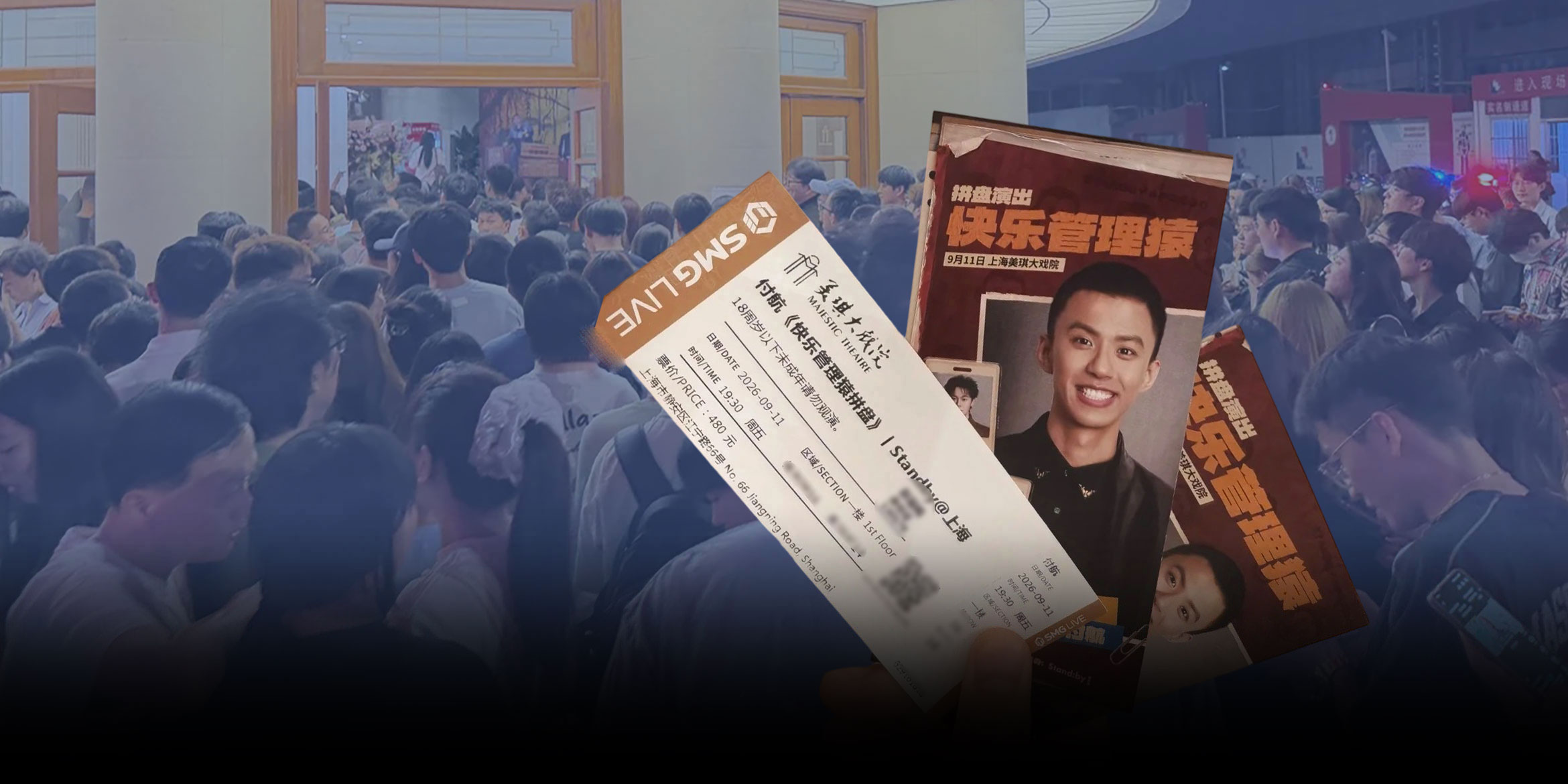
Ticket to Trouble: Scalping Row Disrupts Shanghai Comedy Show
An incident at a Shanghai stand-up show in which customers who bought tickets through unofficial channels were denied entry because of the venue’s ticket identity-verification requirements has sparked public debate over China’s ticket scalping market.
The topic has surged to Chinese microblogging platform Weibo’s trending list, receiving over 57 million views as of Friday. Many argued that making exceptions for scalped-ticket holders is unfair to legitimate buyers and could further fuel the practice.
The show, held Sept. 11 at the city’s Majestic Theatre, was headlined by Fu Hang, a comedian known for his high-energy performances and distinctive delivery. To combat ticket scalping, show organizer Standby had implemented a system requiring attendees to present their ID cards and undergo real-name checks upon entry.
The scene quickly became chaotic, as ticketholders whose ID cards did not match the identity information provided at the time of purchase were not allowed entry. Videos of the incident circulating online showed a large crowd gathered outside the theater, demanding entry, and delaying the show’s start time. Because of the disorder, all ticket holders were eventually allowed in, and Fu extended his performance for 20 minutes to make up for the delay.
Chinese law prohibits ticket scalping for profit, which can result in administrative penalties, including detention and fees. In 2023, the Ministry of Culture and Tourism and the Ministry of Public Security jointly issued a notice requiring shows with a capacity over 5,000 to adopt real-name ticket purchases and admission.
Ulala Li, a Shanghai resident and comedy fan who bought her ticket through an official channel, told Sixth Tone she felt overlooked by Standby. “Shouldn’t the audience members who entered the venue properly and were left waiting for 20 minutes have received an apology and compensation?” she said.
“I think there’s a legitimate place for a secondary market. But when there are too many professional scalpers, they can seriously disrupt the healthy functioning of the market,” she added.
Tickets for Fu’s show were priced between 280 and 580 yuan ($42 to $86). According to domestic media, one attendee told Fu that he had paid 3,500 yuan for a scalped ticket — roughly seven times its original price.
Event organizer Standby said on Sept. 12 that it would cover documented losses caused by the delayed performance, including cancellation, train and flight ticket change fees, and additional accommodation expenses.
A day later, Shanghai police announced that three scalpers who bought 104 tickets to the show and resold them at higher prices had been placed under criminal coercive measures. The three reportedly made more than 18,000 yuan in illegal profits.
Three others also received administrative penalties for reselling eight tickets they had purchased through official channels, making more than 570 yuan in profit, the police added.
An audience member was also punished for starting a widely spread rumor online that “80% of the show’s tickets were sold through scalpers.”
Internet celebrity and stand-up comedy commentator Luo Yonghao criticized Standby’s actions in a popular Weibo post on Saturday, saying that “ticket scalpers can never be completely eliminated.” He suggested introducing regulated secondary ticketing platforms to legalize ticket resales and called for legislation on the issue.
Editor: Marianne Gunnarsson.
(Header image: Visuals from Xiaohongshu, reedited by Sixth Tone)