One Last Night With Shanghai’s ‘Sleep No More’ Superfans
SHANGHAI — On Aug. 30, Dong Minghai returned to Shanghai’s McKinnon Hotel one last time. It was his 518th visit to “Sleep No More.”
The 44-year-old machine vision quality engineer had been going roughly once a week since the production opened in 2016, enough to see nearly one in five of its 2,670 performances. “I’ve spent enough on it to buy an EV,” Dong said. “The number always shocks people.”
Over nearly a decade, the immersive production — co-produced by Shanghai Media Group and British theater company Punchdrunk — transformed a former power station into a six-story theatrical world set in 1930s Shanghai, drawing more than 750,000 visitors before its run ended. A new production of “Sleep No More” is planned for China’s southern tech hub of Shenzhen in 2027.
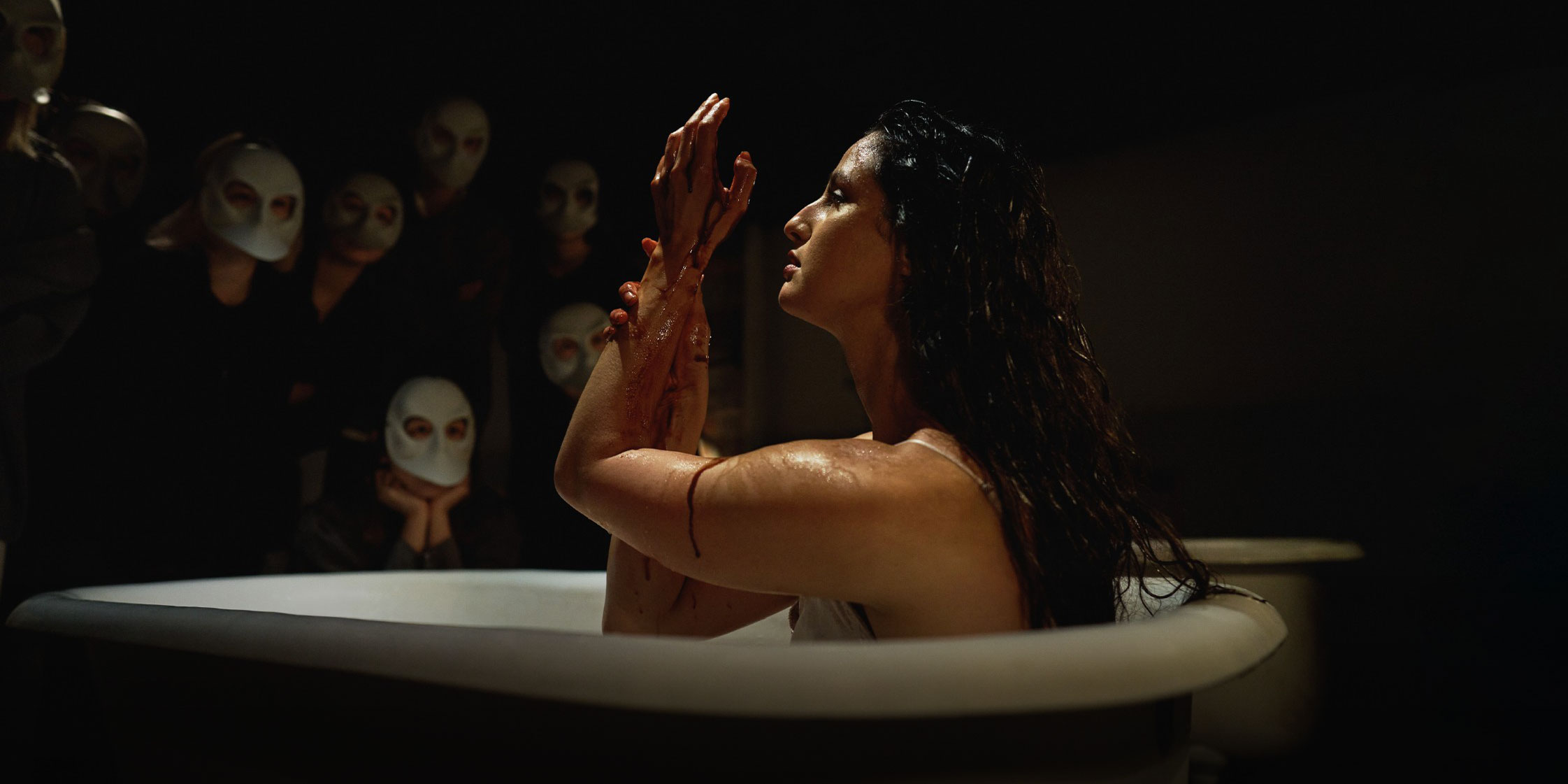
Audience members locked away their phones, put on white masks, and roamed freely through 90 rooms as 25 characters performed simultaneous storylines inspired by Shakespeare’s “Macbeth,” the novel “Rebecca,” and the Chinese folk tale “The Legend of the White Snake.” Because scenes unfolded at the same time across the building, no one could see everything in a single visit.
Macbeth scrubbed blood from his hands in a bathtub, splashing water onto nearby spectators. At the White Snake’s wedding, paper flowers rained down over the newlyweds and audience. Elsewhere, visitors could wander through a bamboo forest smelling of damp earth, a psychiatric hospital sharp with disinfectant, or a speakeasy bar scented with whiskey.
Tang, a 38-year-old supply chain manager who asked to be identified only by her surname for privacy reasons, had attended more than 160 times since 2018. She compared repeat visits to “collecting pieces of a puzzle,” returning to see how different storylines intersected and to discover scenes she had missed.
Over time, some repeat visitors became increasingly invested in the show’s private “one-on-one” encounters. A performer could single out an audience member, lead them away from the crowd, and perform for them alone — removing their mask, sometimes clasping their hand or pulling them into an embrace. The encounters could not be reserved, and the choice was entirely the performer’s.
For fans who returned again and again, that uncertainty became part of the attraction. Being chosen could bring the thrill of feeling seen; being passed over could sting. Over hundreds of visits, those moments could begin to feel personal.
“I know how the trick works,” Tang said. “And it still works on me. But perhaps that doesn’t make the happiness any less real.”
Choose me
On Tang’s first visit, she watched an actor playing Malcolm, a prince in “Macbeth,” choose her friend for a private one-on-one scene. The actor led her through a door and closed it behind them, leaving Tang outside with no idea what was happening.
It took Tang another 20 visits to be chosen for the same encounter.
Inside, Malcolm crushed a dust-covered bird’s egg in her palm, part of a scene tied to the murder of his father, King Duncan.
“That is the final piece of the ‘Malcolm’ puzzle,” Tang said. “Only the two of you know what happened in that room at that moment. You share the same secret.”
To choose someone, a performer might turn toward a room full of masked spectators and study the crowd, ignoring people directly in front of them before reaching past others for someone farther back.
When Dong entered the same one-on-one with the same performer for a second time in 2017, the actor greeted him: “It’s you again. I’m glad you are here.”
Only later did Dong realize it was a standard line. “The line is deliberately written to create the suggestion that he recognized me,” he said.
But after enough visits, recognition could also be real. Fans said performers learned to identify regulars even behind identical white masks, picking up on their build, gait, or other physical cues.
“It’s a very clever business model,” Tang said. “It gives you the illusion that the actor favors you.”
She compared the encounters with romance-themed jubensha, live-action role-playing games where customers pay for personalized attention. “Here, everyone pays for a ticket, but the actor can still refuse you,” she said.
Fans also developed favorite performers. Different actors could give the same character markedly different personalities, Dong said.
“I’ve seen the same role played as sad and desperate, playful, or even as someone who picks on the weak,” he said. “That keeps the show feeling fresh no matter how many times I see it.”
Because casting was not announced in advance, regulars called buying tickets “gambling on the cast,” trying to work out performers’ schedules before spending around 700 yuan ($98) in hopes that a favorite would appear.
Some fans began studying performers’ apparent preferences and adjusting their own behavior accordingly. They compared who favored regulars or newcomers and who seemed drawn to particular genders, body types, or styles of dress. Some stood in particular places, wore conspicuous clothing or wigs, and kept spreadsheets tracking performers’ selections. Rival groups traded gossip about one another’s visits.
When Tang first began following a performer she liked, she would position himself at the front of the crowd and wait to be chosen. After being passed over repeatedly, she learned to “manage expectations” and step back.
One performer she liked once told her: “I didn’t pick you because I thought you’d seen the show so many times that you must have already had this interaction.”
After the final performance on Aug. 30, Tang heard a young woman crying in the bathroom after apparently being passed over during an interaction. “Why did they let go of my hand?” the woman asked her friend.
“That’s why being chosen in front of so many people feels far more intense than happiness you can simply buy,” Tang said.
For Liu, a 20-year-old university student who had seen the show 254 times since 2021, the imbalance became harder to ignore when a performer she repeatedly followed through the show stopped choosing her for interactions. On one milestone visit that she had told him was important to her, he chose a stranger instead.
“I began to realize that this model gives actors too much power,” Liu said, asking to be identified only by her surname for privacy reasons. “The relationship isn’t equal. We are the ones asking for the interaction, and the performer is the only person who can decide whether we get it. So they can hurt you very easily.”
Last dance
Liu often wondered whether she had fallen for a performer’s characters or for the performer himself. “At first, I was stubborn with myself. I told myself it was only this place that had given him that magic,” she said.
But she eventually realized she still enjoyed watching him even in roles she thought did not suit him particularly well. Over time, rejection bothered her less; she found herself paying more attention to his dancing, improvisations, and the small ways he departed from the script.
“That psychological shift was a little painful for me,” Liu said. “Was it a romantic attraction? I didn’t really dare admit it.”
She eventually stopped trying to define the feeling. “Love doesn’t have such clear divisions,” she said. “It’s difficult to say, this is romantic love, and this is admiration. You can’t really separate them.”
Outside the theater, Liu found herself “unusually shy” around him and struggled to start conversations at the stage door. “But eventually I stopped trying to guess what he thought of me,” she said. “I really appreciate what he does onstage, and I’m still happy watching him. That’s enough.”
The experience also made Liu think differently about what she wanted from relationships.
“I hope that in other relationships in the future, I’ll be a braver person,” Liu said. “If I date someone next, I hope I find someone who loves me a little more. Recently, I’ve become used to being the one who gives, and even giving without expecting anything in return.”
For Tang, meanwhile, attending “Sleep No More” on important dates became “a habit, and a kind of ritual.”
“At first, it was the unpredictability of the show that attracted me. Later, it was the opposite: its certainty,” she said. “So many uncertain things happen in the real world, and I can’t control all of them. But inside this building, I know what will happen at every point in time, with every piece of music. That’s what kept bringing me back.”
All three formed friendships through the show that lasted for years. Tang became a part-time performer in another immersive production and met the man who is now her boyfriend. Dong, meanwhile, was already planning to see “Sleep No More” in Seoul and said he would return when a new production opens in Shenzhen.
On the final night, familiar scenes began to change.
In one encounter, a witch who normally trapped a mortal in an endless cycle instead left him a letter: “You are free.” Elsewhere, performers kissed and embraced, exchanged small handmade bouquets, and arranged black sand from the set into the shape of a mask.
In the finale, when Macbeth was hanged, the audience erupted in applause. On ordinary nights, the moment was met with gasps and stunned silence.
Performers, including some who had not appeared that night, emerged around the audience. Together, they sang “A Nightingale Sang in Berkeley Square,” the song normally played as spectators left the building. Some went off-key as they cried. Audience members sobbed too.
Then the lights went out.
Tang was the last audience member to leave. As staff closed the door behind her, she thought of an adapted line from “Rebecca” that appears in one of the show’s one-on-one encounters:
“We can never go back to Manderley again, that much is certain. But sometimes, in my dreams, I do return.”
Editor: Apurva.
(Header Image: Lady Macbeth washes away blood in a bathtub. From @SleepNoMore上海 on Weibo)