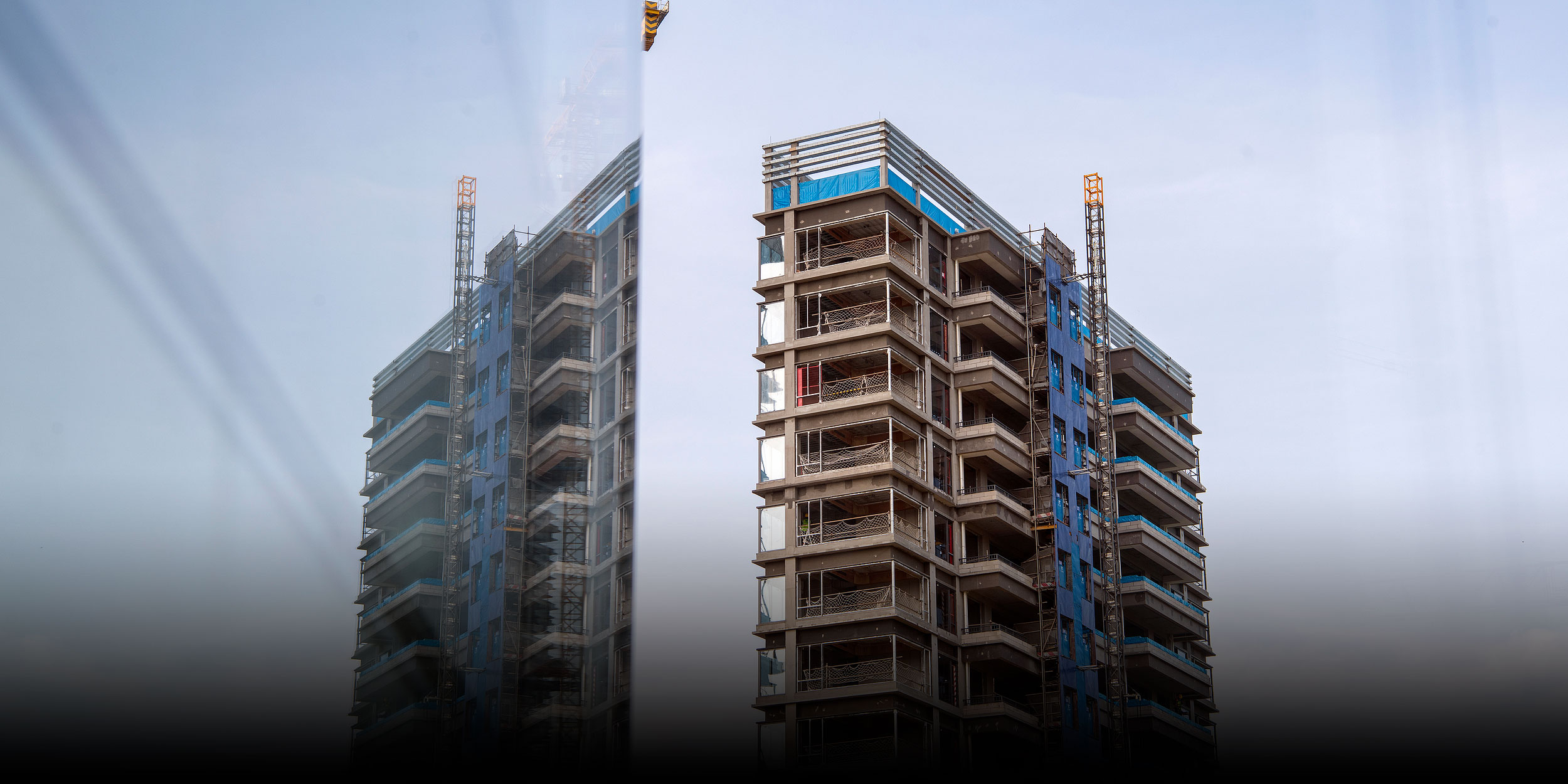
China Pushes for Homes to Be Completed Before They’re Sold
China is transitioning away from its presale housing system and encouraging the sale of completed properties.
On Friday, the Ministry of Housing and Urban-Rural Development, the National Financial Regulatory Administration, and the Ministry of Natural Resources jointly unveiled new guidelines promoting the sale of completed homes.
China introduced its presale system in the 1990s, allowing developers to fund rapid expansion by selling unfinished homes. The model remains a major source of funding for the sector today, with roughly two-thirds of new homes in 2025 sold while still under construction.
The model fueled both the housing market and the country’s urbanization, but came under scrutiny in 2021 as a downturn in the property market exposed stalled projects, quality disputes, and fund-management risks.
The new guidelines encourage the sale of completed new housing projects. The presale model will remain in place for existing projects; however, a building’s main structural framework — including the foundation, concrete flooring, and roof — must be completed before sales begin.
Domestic real estate consulting firm CRIC estimates that the new policy could delay presales of existing projects by about a year, in part because most cities previously allowed presales as soon as a project’s foundation was completed.
Under the new policy, housing authorities are encouraged to strengthen sales oversight by requiring all homebuyer payments, including down payments and mortgages, to be deposited into supervised project accounts. Payments may be transferred to developers only after homes pass final inspections, conducted by the developer under the supervision of local housing authorities.
The same day the new policy was announced, China also introduced accompanying credit and market measures to cushion the financial impact of the transition.
China’s central bank, for example, issued a regulation requiring housing project financing to be tied to a lead bank and extended the maximum term for personal mortgage loans from 30 to 40 years.
The China Securities Regulatory Commission also published a guideline calling for reform of developer financing, shifting from a funding model that relies on a developer’s credit toward an overall evaluation of a project’s conditions.
Over the past five years, China has rolled out a batch of policies that largely focused on stimulating real estate demand through lower mortgage rates, relaxed purchase restrictions, and other buyer incentives.
The latest measures, in cooperation with a series of top regulators, go deeper in shaping a new development model for the sector, Yan Yuejin, deputy head of the Shanghai-based E-House China R&D Institute, told Sixth Tone.
“The policy comes amid a key background in the industry, where we see it moving from an attitude of ‘having versus lacking’ to ‘is the quality good or bad?’” he said. “Every housing reform is closely linked to real market needs.”
Rather than simply boosting transactions, the reforms seek to reshape the sector’s underlying model — from how developers raise and manage funds to how buyers finance purchases, he added.
Editor: Marianne Gunnarsson.
(Header image: A residential development under construction in Guangzhou, Guangdong province, April 25, 2026. VCG)