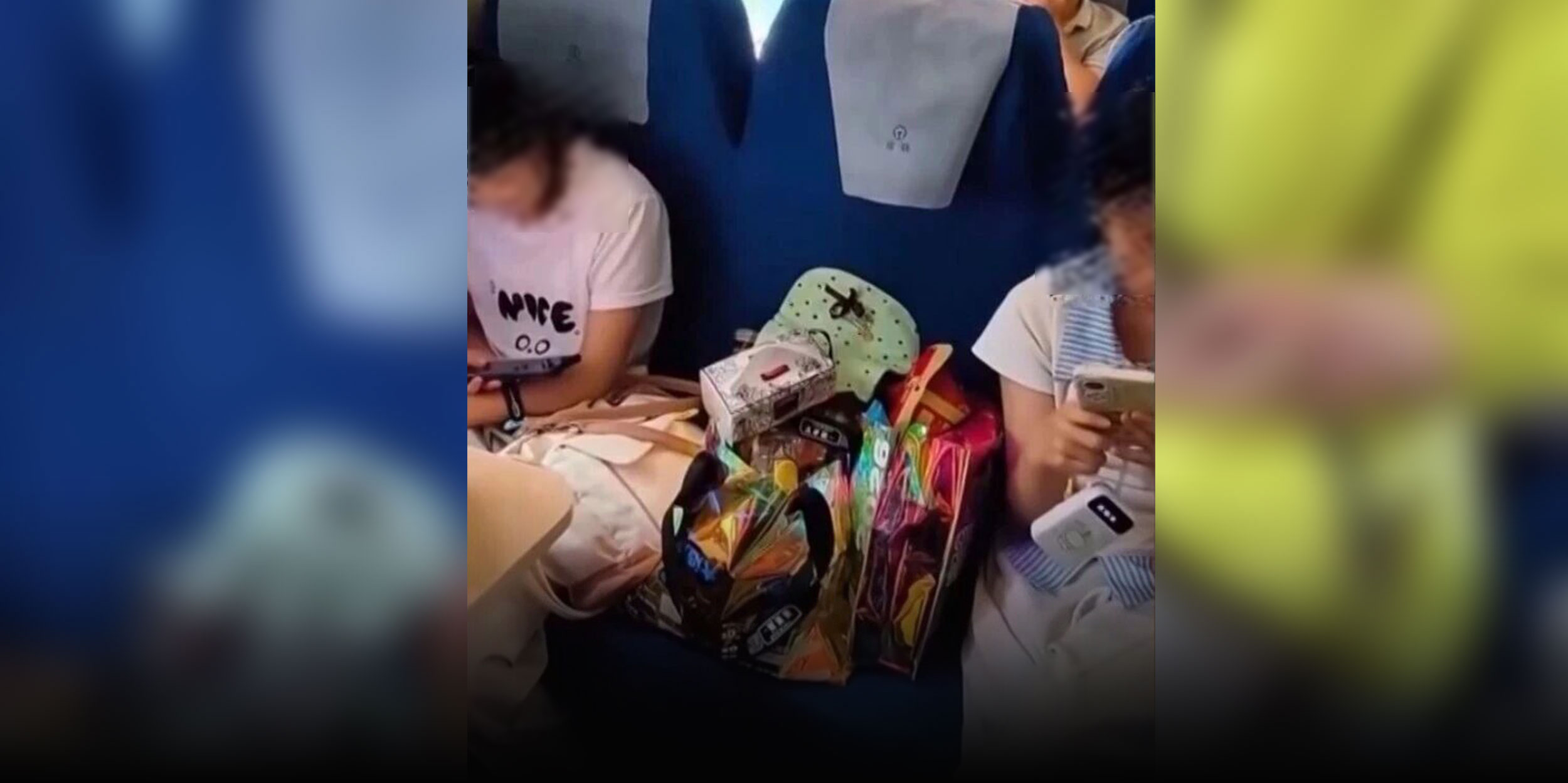
Chinese Mother Buys Daughters Extra Train Seat, Sparking Debate
“We bought three tickets,” a teenager says to a woman asking to use the empty seat beside her — occupied by snacks — her sister sitting on the other side.
“We’re all in the same carriage,” the standing woman says. “Shouldn’t we help each other out?” She calls a train attendant for help.
“Places 5, 6, and 7 — those seats are theirs,” the attendant says after checking the teens’ tickets. “You need to talk to them about it. Telling me won’t help.”
This scene, which took place Aug. 18 on a slow train traveling from Shanghai to the southwestern city of Chengdu — a 27-hour journey — was captured in a video that went viral in China this past week.
Online, people heatedly discussed whether the girls should have shared the seat or whether they were entitled to keep it for themselves. The topic rose to the second-highest place on Chinese microblogging platform Weibo’s trending list, receiving over 37 million views and 12,000 discussions as of Monday.
Many were in support of the girls’ decision, arguing that giving up their seats would be a favor, not an obligation, as the teens themselves had paid for the three tickets. Others said that they were “wasting public resources.”
Still others contended that the train attendants should have been more proactive, pointing to railway ticketing rules that say customers can only buy one ticket for themselves per train and that if the ticket holder does not board, their seat should be reassigned by train attendants.
Despite these stipulations, passengers can buy tickets for others using their identification information on train ticket purchasing platforms.
The girls’ mother did just that, buying their tickets as well as entering her own information for the third seat, according to a now-deleted post she made on Aug. 20 on Douyin, the Chinese version of TikTok.
“My original intention was to keep them from taking up other people’s space because they had too much luggage, so I bought an extra ticket,” she wrote. “Since they’re both girls and didn’t want to sit with others, I bought three tickets together.”
In response to the issue, 12306 — China’s official train ticketing and service platform — told Shanghai-based media outlet The Paper that in the event that a passenger does not board the train, their ticket remains classified as “sold” in the train’s online system. In addition, if a ticket is purchased for a passenger but they do not board, the person whose ID was used to buy the ticket retains the right to decide how the seat is used.
On Aug. 21, the Chengdu Bureau of China’s National Railway responded to the controversy, seemingly contradicting 12306: “If a passenger fails to board after purchasing a ticket due to personal reasons, the passenger is considered to have forfeited their right to use the seat … according to the rules, the seat cannot be occupied by a third party.” The bureau noted that such instances should be reported to the train staff.
But a day later, the case shifted from a dispute over passengers’ rights and entitlements to discussions on the lack of support for children traveling alone, as well as the difficulties faced by migrant families. The girls’ mother, speaking to domestic media on Aug. 22, explained that she works in Shanghai and was sending her two daughters back to their hometown. She added that she did not have enough time to escort them and wanted them to “develop their independence.” The extra seat, she said, could also serve as a place to lie down for the two, as she worried about male strangers sleeping beside them in sleeper cars.
She also noted that, under ticketing rules, minors cannot buy tickets themselves and their tickets must instead be purchased alongside an adult ticket.
In a commentary, The Paper wrote that “behind the purchase of the three tickets lies a harsh reality faced by millions of working families, leaving migrant families with no alternative.” It recommended that the railway system follow airlines — which allow parents to apply for service for unaccompanied minors in advance — as an example.
Editor: Marianne Gunnarsson.
(Header image: A video screenshot shows the empty seat that gave rise to a national debate. From Weibo)