Saving China’s Vanishing Fields of Knowledge
Every summer, millions of Chinese high school students who have just completed the national college entrance examination, or gaokao, face a pivotal decision: which university and major to choose. At the same time, media outlets and social platforms fill with debate over which fields of study offer the best employment prospects and financial returns. Driven by pragmatism, students tend to favor majors that lead to well-paid or stable careers, such as computer science, software engineering, medicine, and accounting.
At the other end of the spectrum are disciplines that appear to have little practical value and remain unfamiliar to most people, including Western Xia studies, bamboo and wooden slip studies, silk manuscript studies, and Dunhuang studies. In recent years, these fields have come to be grouped under the poetic term “lengmen juexue,” often translated as “niche and endangered disciplines.”
The phrase combines two concepts. Lengmen, or “niche disciplines,” refers to traditional humanities fields with small research communities that attract limited scholarly attention and produce results slowly. Juexue, or “endangered disciplines,” refers to fields of exceptional cultural significance that require highly specialized expertise and risk disappearing as senior scholars retire. In other words, lengmen describes their circumstances, while juexue reflects their value. A true niche and endangered discipline must satisfy both conditions: it has only a small community of researchers while preserving an irreplaceable body of cultural knowledge at risk of being lost.
Many of these disciplines have a long history. Fields such as philology, Confucian classics, epigraphy, bibliography, ancient musicology, and calendrical studies were once central to Chinese scholarship but gradually became marginalized following the introduction of Western academic disciplines in the modern era. The term juexue itself dates back more than a thousand years. During the Northern Song dynasty (960–1127), the philosopher Zhang Zai (1020–1077) wrote in his “Hengqu Yulu” of the need “to ordain conscience for Heaven and Earth, to secure life for the people, to continue the lost teachings of past sages, and to establish peace for all future generations.”
Today, however, “niche and endangered disciplines” is more than a descriptive label. It has become an institutional framework within Chinese academia. In 2016, President Xi Jinping called for greater attention to marginal disciplines with high cultural value and significance for Chinese heritage during a speech at the Seminar on Philosophy and Social Sciences in Beijing. Quoting an old Chinese saying, he argued that resources maintained over the long term prove their worth when they are eventually needed.
That vision took institutional form in 2018, when the National Social Science Fund of China established a dedicated funding program for niche and endangered disciplines. Since then, the Ministry of Education, the Chinese Academy of History, and other institutions have launched related initiatives. One flagship funding program provides around 350,000 yuan ($52,000) for individual research projects and about 800,000 yuan for collaborative projects, placing these disciplines on a similar footing to other major National Social Science Fund initiatives.
These disciplines contribute little to GDP growth and seem far removed from everyday life. So why do the state and the academic community devote such significant resources to supporting them?
The answer lies in their role in helping Chinese civilization understand itself and sustain its continuity. Civilizations do not endure by chance. Their longevity depends not only on creating new knowledge but also on preserving and interpreting their past.
These disciplines address fundamental questions about China’s history. Why were oracle bone inscriptions written the way they were? How was the millennia-old “Book of Documents” passed down through the centuries? How did ancient Chinese societies observe the skies and develop calendars? What does the Library Cave at the Mogao Grottoes in Dunhuang reveal about cultural exchange? Such questions may seem remote, but they form the foundation of a civilization’s understanding of its own history.
These disciplines also safeguard cultural continuity. The longevity of the Chinese civilization has depended on generations of scholars who continuously compiled classical texts, interpreted ancient scripts, and preserved knowledge. Without this work, vast collections of cultural heritage might survive physically while becoming increasingly difficult, or even impossible, to understand.
These disciplines also shape China’s cultural narrative. Research into frontier history, ethnic writing systems, and Chinese texts preserved overseas extends beyond academic inquiry. It informs historical interpretation, cultural identity, and international exchange.
In short, niche and endangered disciplines preserve the historical memory of Chinese civilization. Once sustained by only a handful of scholars, they have become an important part of China’s broader cultural strategy.
So what qualifies as a niche and endangered discipline? There is no definitive list. Instead, the category has steadily expanded. It initially included fields such as oracle bone studies, Dunhuang studies, bamboo and wooden slip studies, and ancient script studies. More recently, it has broadened to encompass the history of ancient Chinese science and technology, ancient astronomy and calendrical studies, ethnic scripts, Chinese texts preserved overseas, frontier history and geography, and research on exchanges between China and other civilizations. Today, these disciplines are generally grouped into four broad categories: ancient scripts and extinct languages; traditional classics and endangered classical studies; ancient specialized histories and niche skills; and research on China’s frontiers and its exchanges with other ancient civilizations.
Why has the category expanded? Not because more disciplines have become obscure but because there is growing recognition that many specialized fields are indispensable to understanding Chinese civilization.
Take ancient astronomy and calendrical studies. Without them, it would be difficult to understand how ancient China developed its calendar, organized agricultural production, and structured political authority. Likewise, without research into historical ethnic writing systems, countless documents produced by frontier peoples would become unreadable. Moreover, dedicated funding programs provide specialized institutions and researchers with the long-term support needed to sustain this work.
State support has already produced significant results. The Chinese Academy of Social Sciences, for example, has published major works including “Heroic Epic and Oral Tradition” and “Translations of Sanskrit Literature.” These works preserve and interpret historical texts, making them accessible to modern scholars and readers. Meanwhile, digital technologies are increasingly being used to collate ancient texts, digitize documents, and recognize historical scripts, greatly improving research efficiency. Even so, significant challenges remain.
The greatest challenge is not funding but time. One scholar may spend three decades studying just a few dozen oracle bones. Another may devote an entire career to deciphering a script that disappeared more than a thousand years ago. A third may spend decades reconstructing an ancient calendar.
Mastering a niche and endangered discipline often requires decades of training, yet an entire field can disappear within a single generation. Early Chinese astronomy, for example, demands expertise in ancient astronomy and calendrical systems, the ability to decipher ancient scripts, and a deep understanding of history. The barriers to entry are therefore exceptionally high. Since the deaths of leading scholars such as Bo Shuren (1934–1997), Xi Zezong (1927–2008), and Chen Meidong (1942–2008), the field has weakened significantly, with few young researchers able to replace them. Sustained institutional support is therefore essential.
These disciplines also sit uneasily within a modern research system that rewards speed and measurable output. Their work progresses slowly, while public awareness remains limited and relatively few young people are willing to commit to careers that require decades of patient study.
Protecting niche and endangered disciplines therefore requires training and evaluation systems tailored to their unique characteristics. Only then can more students be encouraged to enter these fields, allowing scholars to devote themselves to the long-term work of preserving and expanding humanity’s understanding of China’s past.
Translator: David Ball; portrait artist: Wang Zhenhao.
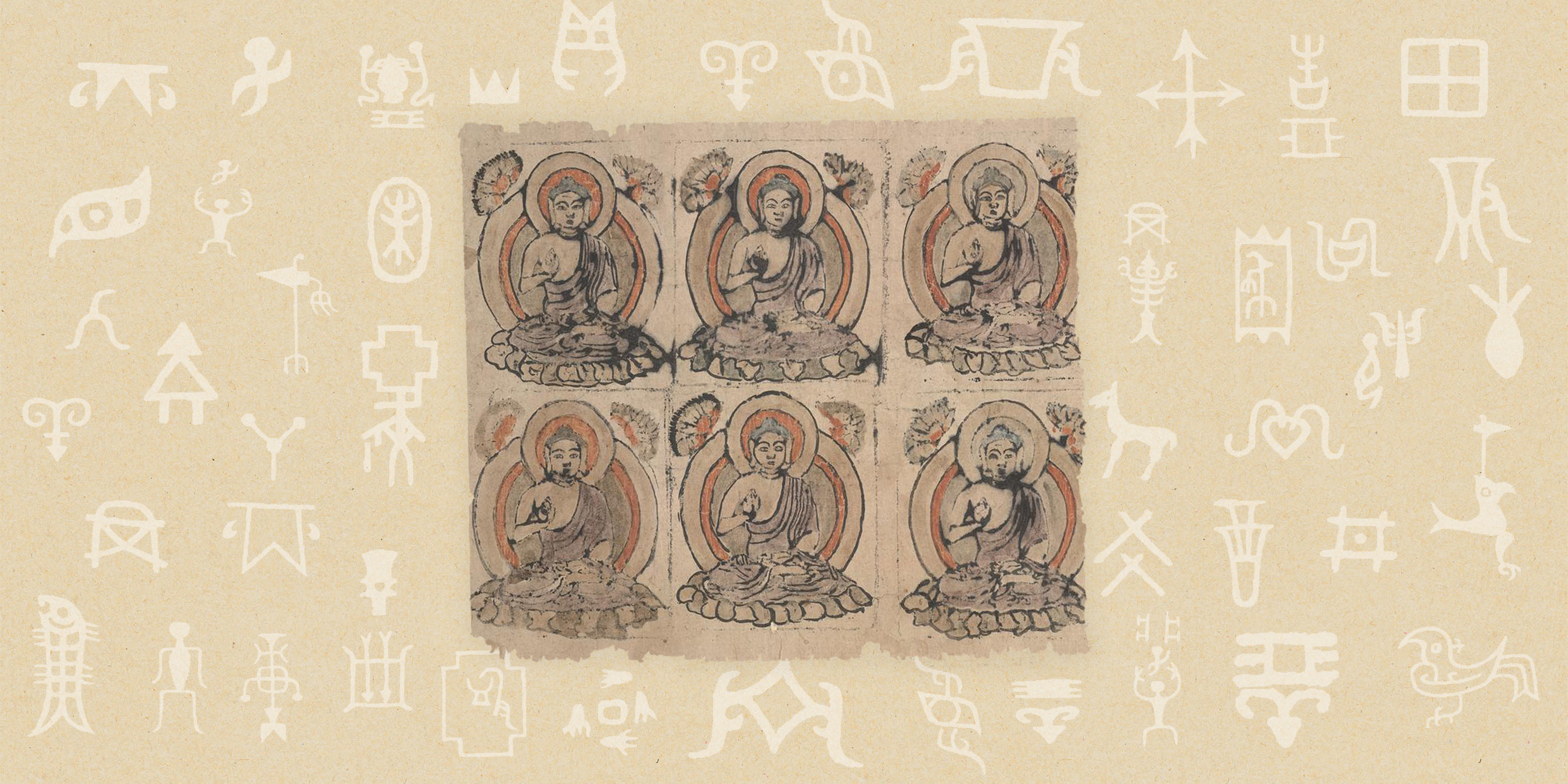
(Header image: Visuals from International Dunhuang Programme and VCG, reedited by Sixth Tone)