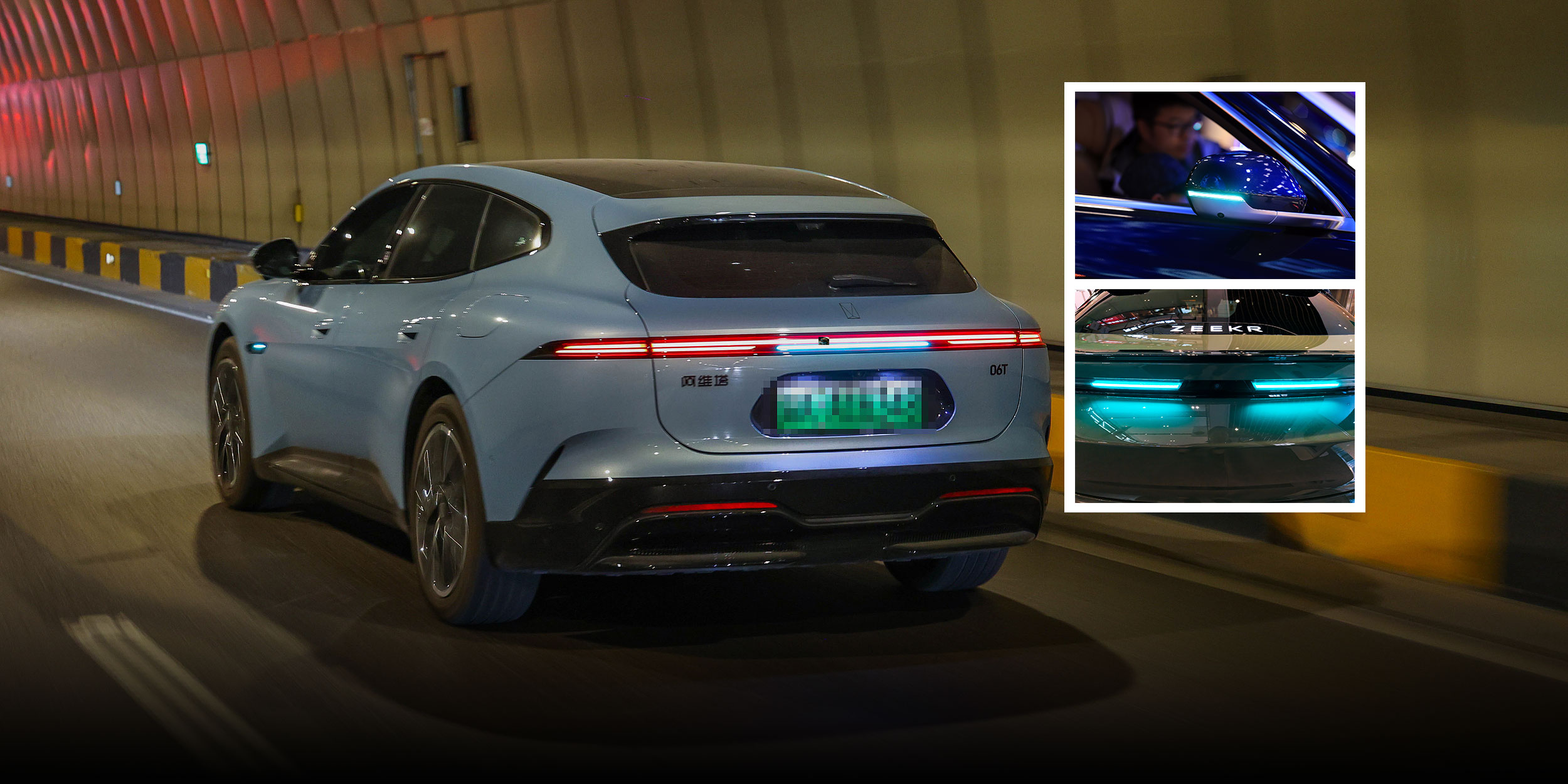
Out of the Blue: China Bans Lights Signaling Self-Driving Mode
China has discontinued the blue exterior lights common to its vehicles equipped with autonomous driving features.
The ban, leaked by a car industry blogger on microblogging platform Weibo on July 29, was outlined in an official notice from the Ministry of Industry and Information Technology. According to the notice, the ban took effect as of July 27 for new vehicles, while existing vehicles are apparently not affected at this time.
The same day, the state-affiliated China Automotive Standardization Research Institute, while not directly confirming the ban, said on its public account on messaging app WeChat that the blue lights have been used excessively and improperly, and that a new national standard is under revision.
The blue lights, or advanced driver assistance system indicator lights, are usually found on the wing mirrors or lower front and back fenders of vehicles with advanced driver assistance systems. Introduced in 2022 by domestic car brand Li Auto, automakers began adopting them to indicate to other road users that intelligent driving systems were in use.
However, China’s current vehicle lighting standard does not include specific provisions for blue lights and permits only white, red, yellow, and amber for vehicle signal lights.
In its July 29 post, the China Automotive Standardization Research Institute said blue lights can cause glare for other road users at night, distracting them or interfering with their judgment of road conditions. It also noted that vehicles equipped with the lights are more likely to be cut off or followed closely by other drivers, increasing the risk of accidents.
In addition, many vehicles’ blue lights are installed in the car’s preexisting turn lamps, meaning that turn signals can sometimes glow blue.
An insider at Geely Automobile, China’s leading car manufacturer, confirmed to domestic media that they had indeed received notice of the ban but declined to disclose specific details. “We are aware of the news and will strictly comply with national regulations, awaiting further instructions from the government,” the insider said.
Zeng Qinglin, general manager of domestic car brand Yijing, listed what he sees as the reasons for the ban on his Weibo account. “First,” he said, “the brightness and flickering of various blue lights lack unified standards, affecting traffic safety and causing light pollution.”
“Second, other drivers, seeing blue lights on the car ahead, know it’s using an intelligent driving system and deliberately cut in, assuming the system will brake automatically,” he wrote. “As a result, drivers using the intelligent driving system are often startled by sudden braking. A device intended to signal safety has instead become a new source of risk.”
Editor: Marianne Gunnarsson.
(Header image: Blue lights on a car indicating self-driving mode. VCG)