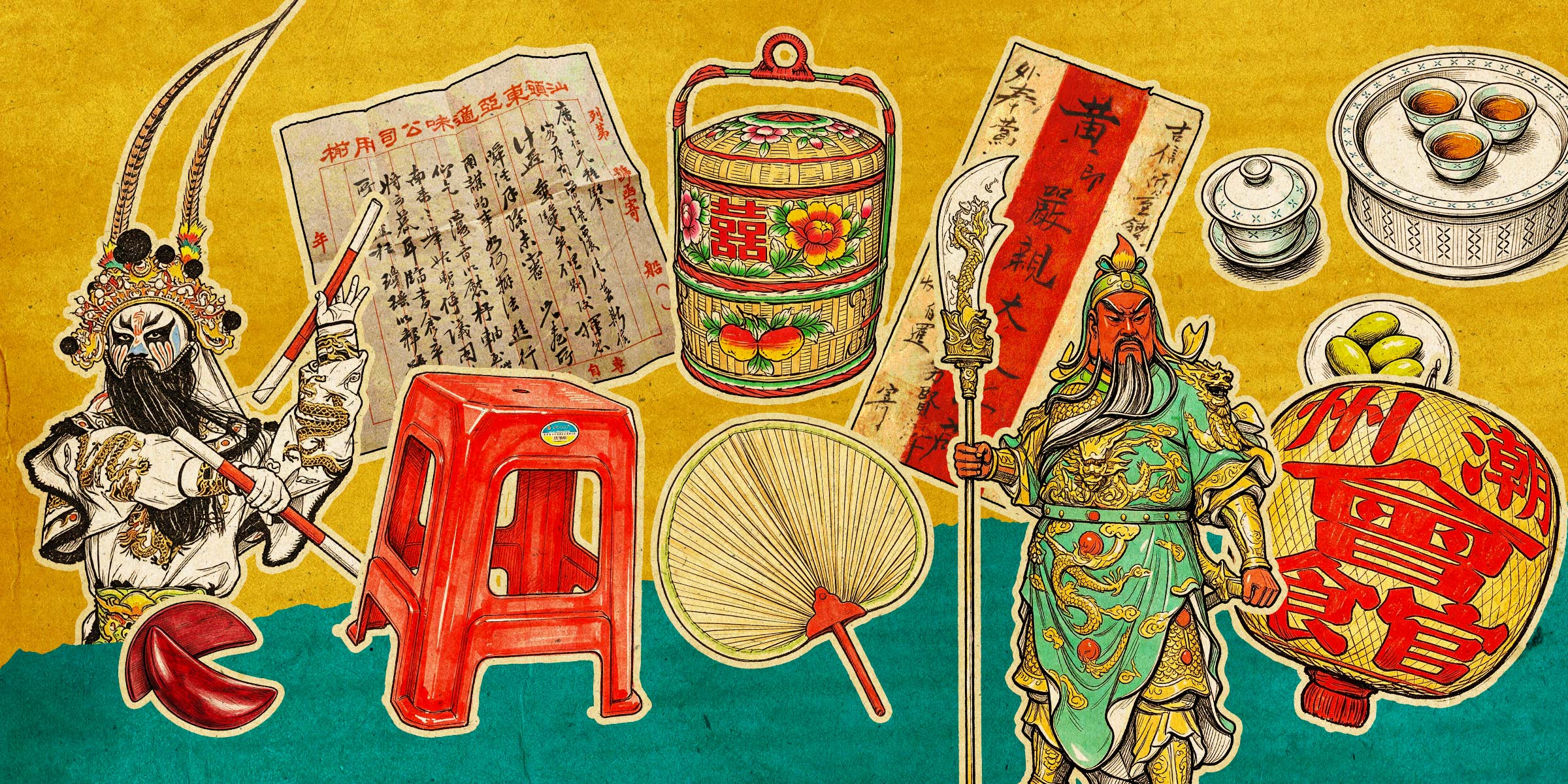
The Many Lives of Chaoshan
This year, Chaoshan found itself in the national spotlight. Located in eastern Guangdong province on China’s southern coast, the region unexpectedly became one of the country’s biggest cultural talking points. During Chinese New Year, travelers flocked there in search of “authentic” New Year traditions. Soon after, a low-budget film set in Chaoshan became a surprise national hit. Spoken largely in the Teochew dialect, which is unintelligible to most Chinese audiences, and centered on a little-known episode of local history, the film sparked widespread curiosity about the region and its culture.
Yet this renewed fascination only scratches the surface.
Chaoshan’s influence extends far beyond what its geographic size might suggest. For centuries, Chaoshan has looked outward. Waves of migration carried its merchants across Southeast Asia and beyond, creating one of the world’s most influential Chinese business and diaspora networks. At the same time, it has remained one of China’s strongest bastions of traditional culture, where ancestral rituals, lineage ties, and local customs continue to shape everyday life.
What appear to be contradictions are, in fact, central to the region’s identity — at once global and deeply local, commercially dynamic yet rooted in tradition, remarkably adaptable while fiercely protective of its identity. That combination has made Chaoshan one of China’s most distinctive regional cultures and given it an outsized role in China’s modern history. Its overseas networks helped connect China to global markets, capital, and ideas, while its enduring kinship ties and cultural traditions reveal how local identities have persisted through decades of rapid economic and social change.
This series explores how Chaoshan has been imagined, remembered, and transformed, and why it has once again captured the country’s attention. More broadly, it examines what the region’s story reveals about China’s relationship with migration, commerce, identity, and tradition.
(Header image: Fu Xiaofan/Sixth Tone)