The Chinese Resignation Letter That Caused a CEO-Toppling Storm
Earlier this June, a product manager at DingTalk, the team collaboration platform developed by the Chinese tech giant Alibaba, posted a farewell letter on the company’s internal forum. It takes hours to read the entire letter, which is roughly the length of a book, but its message is clear: the team behind a product that shapes the workplace experience of hundreds of millions of people has itself a toxic workplace culture.
The author of the 75,000-character letter, Teng Yaxin, recounted how she and her colleagues burned out under the extreme pressure imposed by DingTalk founder and CEO Chen Hang to develop an AI tool, only to watch the product lose users and the project eventually be scaled back. When details were shared on social media, the letter went viral. People snickered about the irony of an AI tool bringing not the promised efficiency but more friction, and the schadenfreude of DingTalk — the app many Chinese office workers see as a source of daily stress — being an employer worse than their own. The social media storm was fierce enough to eventually cost CEO Chen his job.
One anecdote in particular caught people’s attention: in early April, the team was ordered to remain in the office until midnight so they could see with their own eyes how late the nearby offices of their rival — ByteDance’s Feishu app, known internationally as Lark — turned off the lights. “As if seeing that their lights were still on meant that their will to fight was still burning, and that as long as our own lights don’t go out, we can offset the uncertainty in our strategy,” Teng wrote.
The letter offers a rare glimpse into how Chinese tech workers have become victims of “involution,” a term for relentless competition that yields only minor gains. In this culture, decisions are driven not by vision, but by fear: the fear that losing a single point could cost a set, then a match, and ultimately determine who takes all. This worldview has fueled a race to the bottom. According to Teng, just as the DingTalk team was anxious about losing market share, so apparently was ByteDance’s. She repeatedly received phone calls from people claiming to be recruiters for ByteDance who probed for sensitive information about her team.
This fear-driven corporate culture permeates across sectors. In 2025, major Chinese e-commerce platforms burned billions of dollars on coupons, fueling a “price war.” According to the Chinese business news outlet Late Post, platforms at one point raced to break transaction records because they feared their rivals were quietly pursuing the same goal, even as they recognized that such records were unsustainable. The pressure then shifted to shop owners and staff, who not only had to deal with mountains of orders but also felt compelled to lower prices to keep customers accustomed to discounts.
What sets involutionary competition apart from effective competition is its sense of meaninglessness. Without a clear vision to work toward, employees often find themselves wasting time, effort, and resources on arbitrary — sometimes contradictory — directives from management. Many also feel pitted against each other, performing busyness to impress management. It is no coincidence that such workplaces are often hotbeds of bureaucracy: employees are drained by hourslong meetings, endless memos, and performance reviews, giving rise to a culture that prizes reporting to management rather than serving users. “Organizations are always more agile to certain people, matters, and signals,” Teng observes, referring to the “agile methods” championed by tech companies as an advanced model for project management.
Once employees are expected to execute tasks that ultimately make little sense — such as staying in the office to see a rival company turn off its lights — they begin to question not only the meaning of the job but also their own value as workers. Wouldn’t an AI agent be better suited to meeting such demands, able to work around the clock and respond instantly to even the weirdest prompt? Could they be next on the redundancy list as employers seek to “reduce costs and increase efficiency,” a mantra popularized by tech companies and parroted across industries?
In a written response to Teng’s letter, former DingTalk vice president Ma Ruila said he was “pained, pained, and pained” by her account of relentless pressure, effort without reward, and the reality that “a young product manager full of ideas had to write more than 70,000 characters to keep herself from drowning in a system.” Indeed, the greatest cost of involutionary competition may be the damage it inflicts on young workers’ confidence in their future. Teng reflects on this in her letter: “Whether a job nourishes or drains a person depends on where it leads them: does it hone their skills, sustain their health, and strengthen their dignity, or leave them weary, numb, and adept at nothing but making do?”
While headlines have centered on DingTalk, the culture of involution — and the devaluation of people that accompanies it — extends far beyond the tech industry. Ironically, this is partly a result of the industry’s success in reshaping the modern workplace. Today, employers use DingTalk for task assignments (complete with read receipts), WeChat for customer service, and Feishu for project management. Quantitative performance review systems such as KPIs (key performance indicators) and OKRs (objectives and key results), pioneered by tech companies, are now common across both the private and public sectors. Companies that do not necessarily share the tech industry’s network effects — where having more users makes a product more powerful and harder for competitors to catch up — have nonetheless adopted its fixation on market share and user base rather than profitability and sustainability, pushing employees to chase short-term results that ultimately prove unsustainable.
Indeed, a major privilege of tech workers is that their voices are more likely to be heard. As a public relations crisis brewed on social media in the days after the letter was posted, Alibaba’s senior leaders released a statement criticizing the high-pressure management style of the DingTalk team and calling for a more humane corporate culture. Chen Hang was quickly removed as DingTalk’s CEO — a rare occurrence at Alibaba, according to Late Post. But what about delivery workers and small business owners faced with “voluntary” overtime and weak negotiating power in the platform economy? What about white-collar professionals who are never truly able to go offline, only to earn a fraction of tech workers’ salaries? What about the many young workers to whom their jobs feel meaningless and career advancement feels like a lottery?
There are no simple answers to these questions, but one thing is clear: the culture of involution is unsustainable for everyone — employees, companies, investors, and consumers alike — as it generates more precarity than value. Companies with less entrenched bureaucratic cultures are already leading a return to creativity as a core competitive advantage. Chinese AI start-up DeepSeek, for example, reportedly discourages overtime to reduce the risk of poor decisions made by burned-out employees.
The government also has a role to play. Since 2025, the Chinese government has made “anti-involution” a priority in its economic agenda, introducing policies to strengthen labor protections and curb race-to-the-bottom price wars among e-commerce platforms, solar panel companies, and electric vehicle manufacturers. More challenging, however, is addressing the imbalances in both the labor and consumer markets, whose weaknesses are deeply intertwined. Whether these goals can be delivered will shape young Chinese people’s sense of meaning at work and their confidence in the future.
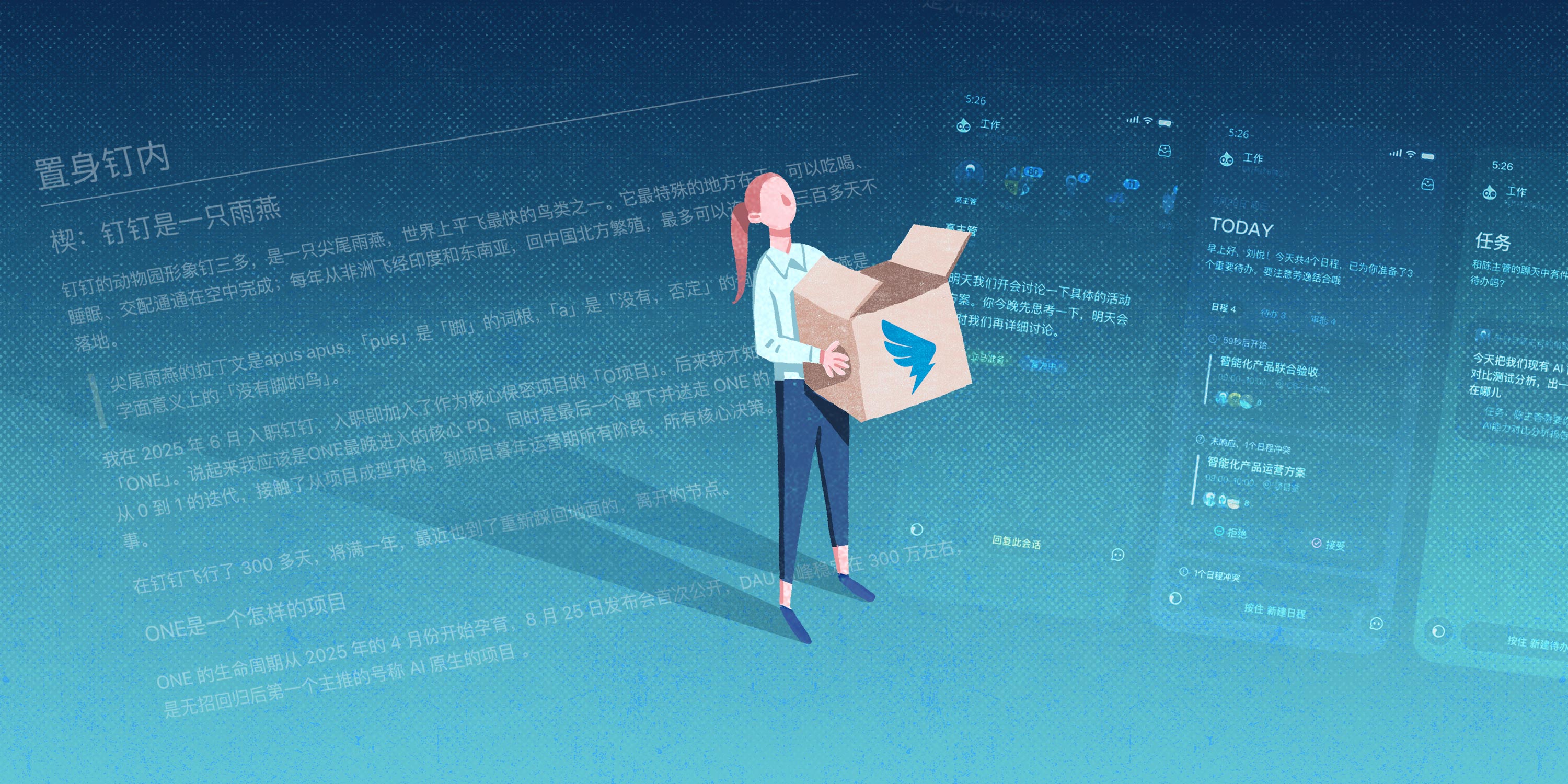
(Header image: Visuals from ImazinsCG/VCG and Zhihu, reedited by Sixth Tone)