In China, the Middle-Class Home Aesthetic Is for Hire
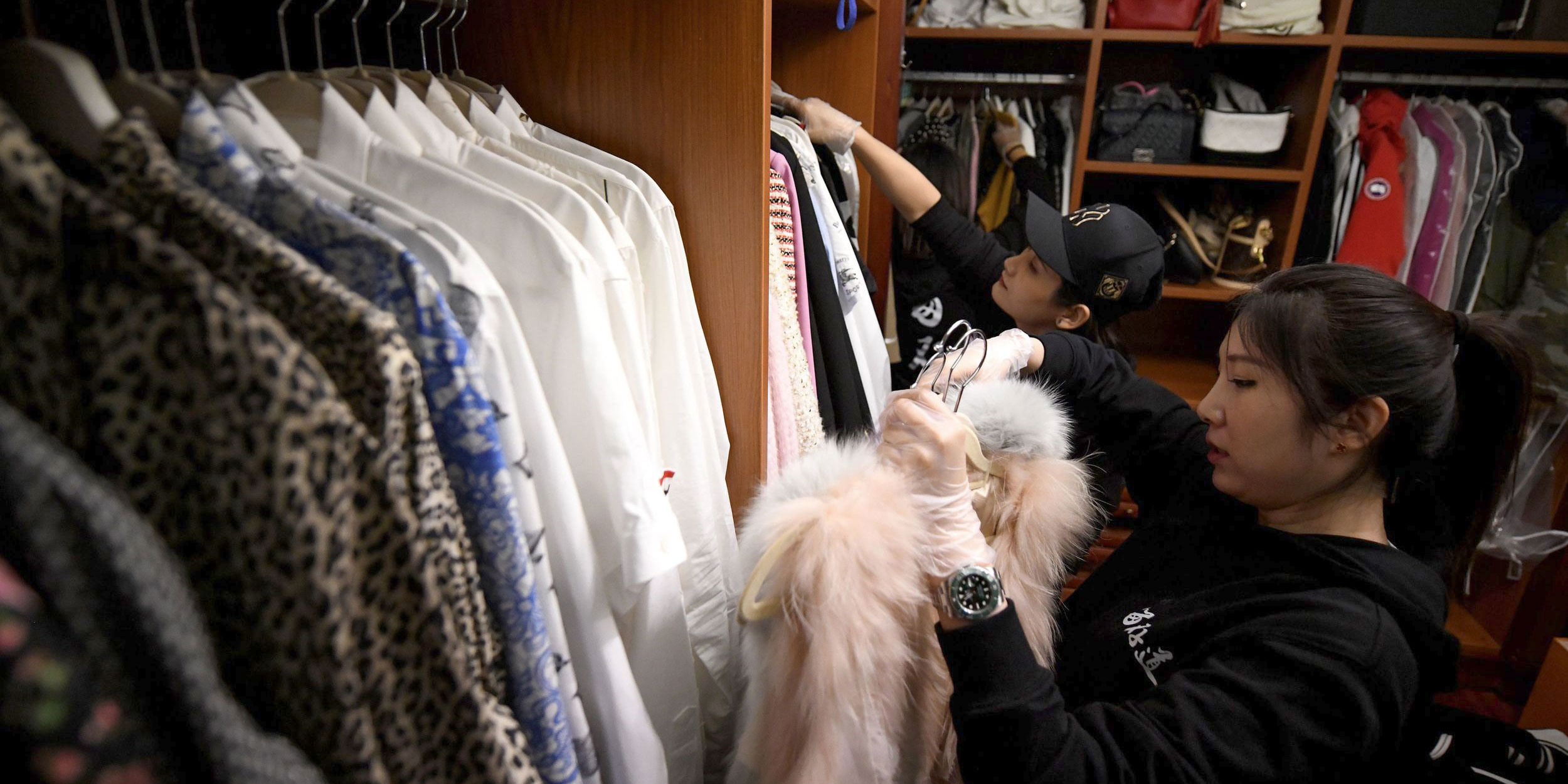
In the high-end residential areas of Chinese cities, you will often see people dressed in neat uniforms and carrying toolkits who are doing their best to be elegant, soft-spoken, and sophisticated. They are professional organizers, hired to enter clients’ homes to create “beautiful” spaces by improving layouts and reorganizing belongings.
In China, home organizing is a rapidly emerging profession — between 2020 and 2023, the number of such companies increased 87-fold. In 2022, the Chinese government added “organizer” to its official list of occupations. Unlike traditional cleaning services, this type of service emphasizes aesthetics rather than cleanliness. (At about 100 yuan — $15 — per organizer per hour, they are also more expensive.) Companies promote slogans such as “creating a better life” and brand their organizers as “space stylists.”
To find out how this emerging profession is reshaping Chinese middle-class homes, my research partner and I conducted a 14-month field study at the Shanghai branch of Pretty, a company that provides organizing services. Founded in 2015, it employs around 500 professional organizers in cities across China.
One of our most immediate findings was that the organizers shaping middle-class aesthetics themselves also come from middle-class backgrounds. Of the 17 organizers and three trainers at the Shanghai branch, all but one were women. The average age was 35, 95% had a bachelor’s degree or higher, 85% were married, and 80% had children. Most of their husbands worked in professional roles such as managers, lawyers, engineers, or business owners, with total family incomes ranging from 300,000 yuan to 600,000 yuan per annum.
Ruolan, 35, is one of Pretty’s organizers. (In line with research ethics, we have given the company and its employees pseudonyms.) Originally from a neighboring province, she settled down in Shanghai like many of her colleagues. When she became a mother, she gave up her career in graphic design to become a full-time housewife. Although her husband, a lawyer, earns 500,000 yuan a year and the family is comfortably off, she still wants to earn some extra money.
For her, the flexibility of working as an organizer suited her perfectly. “You can arrange your time more freely, balance the work alongside home life, taking care of a child, and still pursue your own interests,” she said. Having always enjoyed organizing her home, Ruolan can now flexibly earn extra income from her hobby, while boosting her self-esteem.
Customer demand fluctuates, so Pretty hires organizers who aren’t looking for full-time jobs. As a result, organizers like Ruolan work seven to 14 days and make an average of 5,000 yuan per month — less than the cleaners in her residential community earn. However, the pay isn’t the most important thing. For them, the job provides an outlet for their sense of self-worth and allows them to turn a hobby — and their middle-class cultural capital — into fulfilling work.
“Middle-class spatial aesthetics” was the term that we heard most often during training sessions at Pretty. Lily, a 36-year-old trainer from Shanghai, worked through the course materials, introducing organizers to the company’s own standardized aesthetic templates.
One aspect of this “standardization” is precise measurements: organizers are required to ensure items fit perfectly in drawers and other storage spaces. Another set of figures relates to body dimensions and everyday habits. For example, the height of the fingertips when the arms are raised equals a person’s height multiplied by 1.2 — crucial information when it comes to which household members can reach which shelf.
Beyond technical knowledge, organizers are also expected to be proficient in various aesthetic styles. Lily outlined the company’s four main templates: Japanese, industrial, artistic, and minimalist Scandinavian. Based on a client’s furniture, they will pick whichever matches best. Pretty also sells accessories to complete the picture.
The Japanese style requires organizers to create a clean, simple look that conveys a sense of calm. Clothes should be folded with near-identical precision, drawer compartments should be measured to the millimeter, and there are even rules for labeling storage containers.
The industrial style is more casual, with décor, carpets, and vases dominated by gray and darker tones, while storage containers are typically metal and should not have any superfluous decoration.
The artistic style combines retro and ethnic minority elements, with rattan and linen storage products being standard, along with a few green plants. There are rules for where to place them, and how many: Between three and five plants, arranged in corners and on shelves.
The minimalist Scandinavian style calls for a “fresh and clean” aesthetic, dominated by soft, pared-down tones, creating a restrained and gentle atmosphere.
During training, Lily repeatedly emphasized: “These templates were created by the company based on research into hundreds of middle-class households. The core principle is ‘practical but pretty.’ Clients should be able to easily access items while ensuring the look is visually pleasing.”
According to Pretty’s guidelines, organizers must first communicate with clients to determine their desired style, then apply the templates to replicate the aesthetic in each home. Some clients opt only to tidy their home; others choose a complete furniture rearrangement.
Sometimes those discussions turn into lengthy negotiations. The needs and tastes of real family life cannot be easily defined by one single style put forward by a company. But the spaces organizers create are highly similar.
On two occasions, we joined organizing teams as they went to work. The team leader had finalized plans for the clients’ homes, with many details determined ahead of time. One visit was to a professor’s house, who had requested a minimalist style. Following the guidelines we had learned in training, we carefully lined the scattered books on bookshelves and then categorized and arranged the clothes in her wardrobe. Another visit was to help a client move into their new home and organize furniture and other belongings.
In addition to standardized services, organizing companies also focus on cultivating a high-end professional image for their employees that aligns with “middle-class aesthetics.” Pretty, for example, has designed custom uniforms for its organizers based on the model of housekeepers employed by British aristocracy: British-style suits, elegant scarves, custom pin badges, and patent leather shoes. Even their face masks and work bags must match in both style and color.
Linda, a 23-year-old organizer, explained the company’s highly detailed rules: “They cover everything: how to greet clients, how to take off your shoes when entering, which foot to step in with first, and how to put on shoe covers. There are standards for all these things.”
However, for these middle-class housewives, this kind of training is not at all burdensome. Their own cultural capital, consumption habits, and aesthetic sensibilities closely align with the “high-end” concept the company seeks to project. In their view, the etiquette and image requirements presented in training are merely extensions of their daily habits, while projecting a “high-end” image also makes their work feel more meaningful.
Yet when standardization conflicts with clients’ needs, organizers are often the ones who bear the strain. Mary, a 28-year-old organizer, recalled designing an elaborate storage plan for a client, but the client’s mother — who lived with them — strongly opposed it. After some back and forth, Mary abandoned the plan and arranged according to the mother’s preferences. “I put the things where she wanted them. It’s her stuff, after all.”
Organizers also sometimes face additional demands from clients. Ruiyun, 33, said that after organizing one home, the client hinted that she would help clean the kitchen. Although the company’s rules clearly state that organizers are not responsible for cleaning, she stoically put on gloves and cleaned the dishes and sink — both to keep the client happy and secure repeat business.
Conflicts such as these highlight the organizers’ weak position in labor relations. These middle-class housewives — with their high levels of education, comfortable family backgrounds, financial security, and emphasis on a “sense of purpose” in their work — are ideal workers in the eyes of employers. However, if organizers are creating ideal living spaces for middle-class households, efforts should be made to make sure that they enjoy better working conditions too.
The conflict between standardized “spatial products” and clients’ needs, along with the challenges organizers encounter in their work, precisely reveals the illusion behind the home organizing industry. The industry caters to middle-class families’ desire to make their homes “more beautiful,” as well as to a deeper cultural imagination of what constitutes a “good” middle-class life. Yet these standardized spatial products are, in essence, templates manufactured by organizing companies to make spatial aesthetics replicable and marketable. Within this delicate and fragile illusion, the imagination of the “good life” is reduced to stereotypes about class and gender roles, producing a contradiction that the industry itself can hardly overcome.
Zhou Xuan, a master’s student at Shanghai University of Finance and Economics, also contributed to this article.
Translator: David Ball.
(Header image: Home organizers arrange a client’s wardrobe in Beijing, 2020. Noel Celis/VCG)