Marrying at This Chinese University Comes With a Diamond Ring
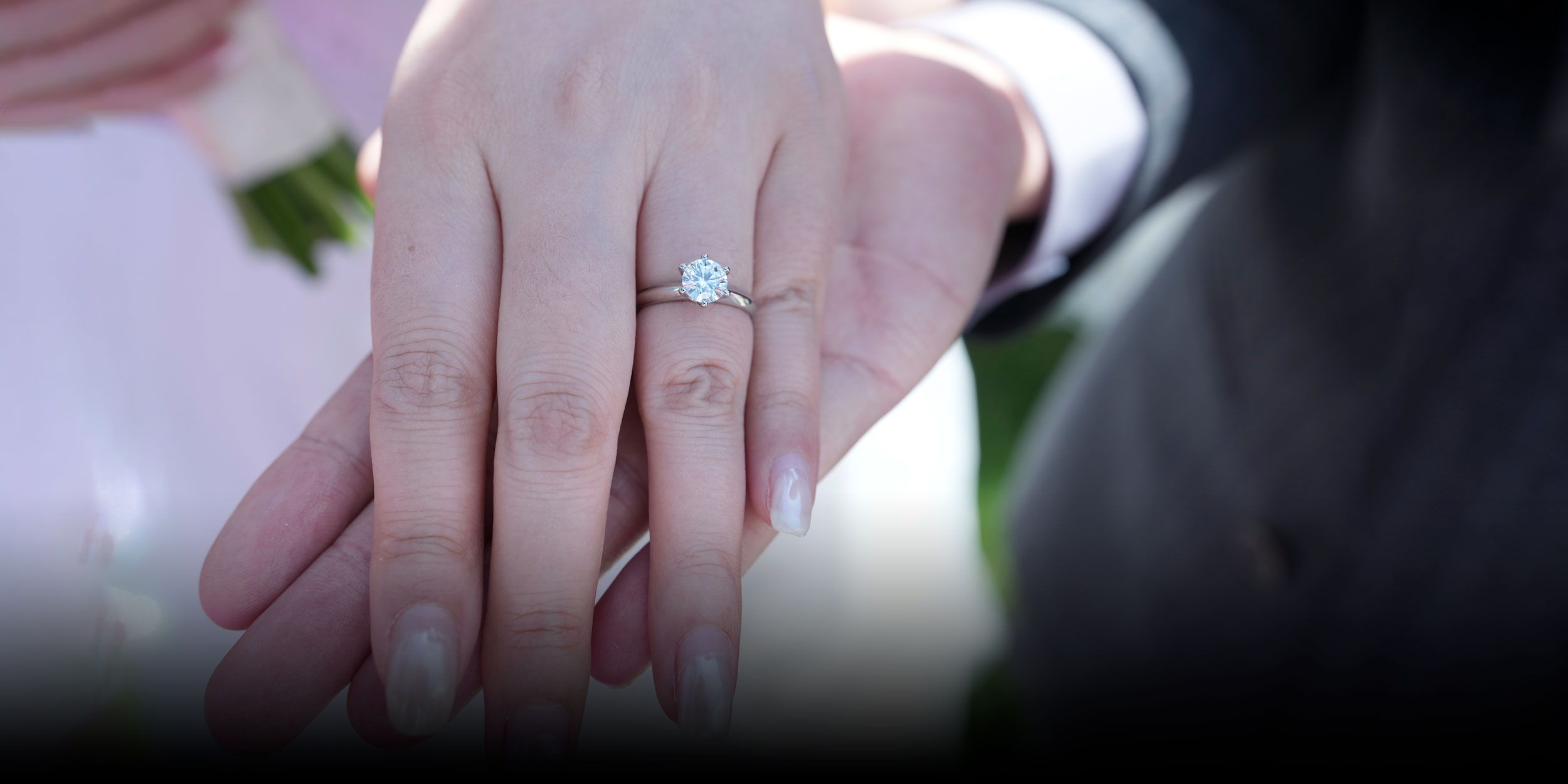
A Chinese university has given wedding rings — each bearing a 1-carat diamond grown in one of the school’s labs — to 187 doctoral candidates married at its annual Doctoral Wedding.
Awarded on May 31 by the Harbin Institute of Technology (HIT) in the northeastern Heilongjiang province, the rings were produced in just a few days by the Infrared Thin Films and Crystals team at HIT’s School of Astronautics. The formation of a natural diamond usually requires billions of years under high-temperature and high-pressure conditions deep underground.
Since its inception in 2013, the university’s annual Doctoral Wedding has become a celebrated event in the campus calendar, with 803 couples tying the knot over the years. Participating couples in the last two years have received a ring with a lab-grown diamond.
Zhu Jiaqi, professor of astronautics and head of the Infrared Thin Films and Crystals team, told domestic media that “growing” diamonds in the lab is “like building structures at the micron scale.” To do so, the team first mixes methane with hydrogen, then introduces the gases into a reaction chamber, where they serve as a “nutrient solution” for the future diamonds. The excited gas molecules dissociate into reactive atomic groups, and carbon atoms arrange themselves layer by layer, creating the diamonds.
In recent years, significant advances have been made in the production of synthetic diamonds, which cost 1,800 to 3,500 yuan ($265 to $515), about 10% of the price of a natural diamond. The cost to produce a diamond in a lab ranges from 500 to 800 yuan. Last year, global lab-grown diamond production capacity reached nearly 40 million carats. China accounted for 63% of that total, making over 25 million carats. Valued today at 14 billion yuan ($2 billion), China’s lab-grown diamond market is forecast to surge to 102.5 billion yuan by 2030.
HIT has been a domestic leader in growing man-made crystals for decades. In 2004, the university produced China’s largest lab-grown sapphire at the time, measuring 29 centimeters across and weighing 30 kilograms.
At HIT’s wedding ceremony, Zhu, the aeronautics professor, offered his blessings to the couples. He said that scientific research requires the courage to overcome challenges, and married life likewise demands the patience to tolerate and understand one another.
Editor: Marianne Gunnarsson.
(Header image: One of the diamond rings given to each couple at the Harbin Institute of Technology’s Doctoral Wedding this year. Wang Song/Xinhua)