Chinese Nature Reserve Stirs Debate for Requiring Tourists to Use Bus
A nature reserve in southwestern China has sparked controversy online after restricting access to a public provincial highway and charging additional transportation fees for its use.
The issue went viral after a traveler under the alias “Lü Daxia” posted a video on multiple domestic social media platforms on May 20. In it, he successfully argued with the reserve staff to gain an exemption from road restrictions after they failed to present documents authorizing the road blockage.
Located in Sichuan province, the Yading National Nature Reserve sits at an altitude of 4,000 meters and is commonly known as the “last pure land on the blue planet” for its three sacred snow-capped mountains and pristine alpine lakes. Last year, more than 1 million tourists visited the reserve.
A 38-kilometer public highway is the sole route connecting the tourist center to the reserve’s main areas. Local management had blocked private vehicles from using the road as early as 2013, requesting that visitors park and purchase a 120-yuan ($18) round-trip ticket on an official shuttle bus — the only vehicles permitted to enter the reserve.
The controversy reflects the broader issue of “bundled consumption,” or kunbang xiaofei, in many tourist areas, where transportation and entry tickets are packaged into compulsory fees, indirectly inflating tourism costs. Domestic media report that administrators of some scenic areas deliberately build visitor centers and parking lots several kilometers away from attractions, necessitating the use of shuttle buses.
On May 25, the Yading National Nature Reserve announced on its official WeChat account that staff who had allowed tourists to travel on the road, in violation of reserve rules, had been disciplined. The post cited the nature reserve’s fragile ecology and the safety hazards of the sharp mountain curves as the need for operating shuttle buses.
The response from reserve management further fueled the controversy, with users criticizing the reserve for failing to adequately explain why a public road had been blocked.
On May 28, domestic media announced that multiple provincial departments, including the Department of Culture and Tourism and the Transportation Department in Sichuan, jointly established a team to investigate the reserve’s rules, and that the park’s bus fees would be suspended beginning May 29.
A month prior, China’s Ministry of Culture and Tourism had criticized five of the country’s scenic areas, including the Yading National Nature Reserve, for long bus routes, high bus fares, long lines, and poor service. In response, the reserve decreased its shuttle bus fee by 12%.
Yu Rui, director of the China Administrative Law Society, said that scenic area shuttle bus fares have long been unregulated, becoming a channel for many scenic areas to supplement ticket revenue and generate income. He suggested that prior to implementation, bus fares should be evaluated by both professional entities and the public.
Editor: Marianne Gunnarsson.
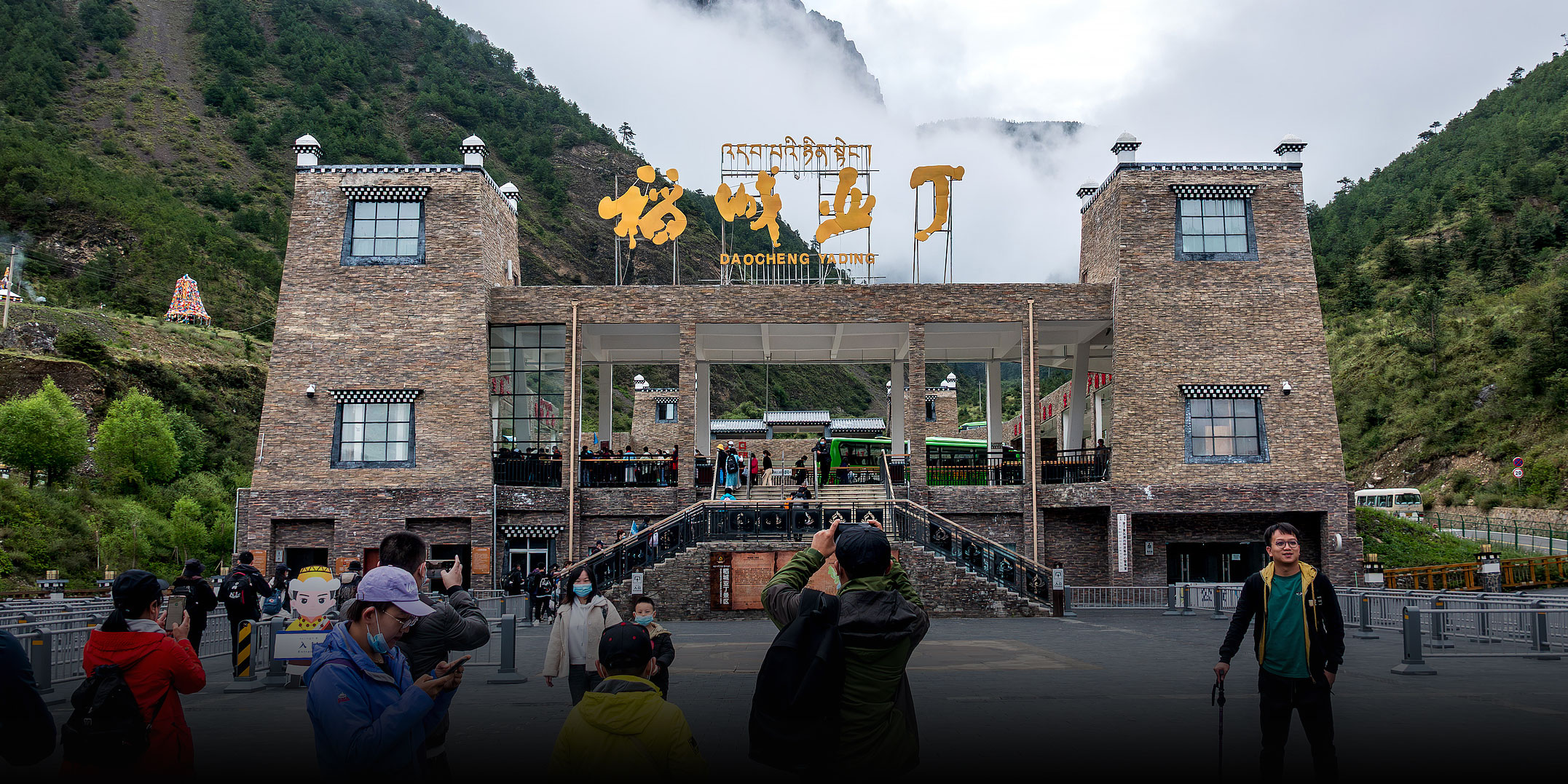
(Header image: Tourists take photos outside the entrance to the Yading National Nature Reserve in Sichuan province, Nov. 14, 2025. VCG)