The Resurgence of “Legitimate vs. Illegitimate” Narratives in Online Fiction
If you’ve ever read any “household intrigue” or “slice-of-life” online novels — or watched a costume drama adapted from one — you’ll likely be familiar with the following setup: children born to the principal wife are “legitimate,” while those born to concubines are “illegitimate.” Unlike the Western concept of legitimacy, which mostly revolves around legality, the Chinese terms di (meaning legitimate) and shu (meaning illegitimate) historically implied a child’s moral authority and social position in addition to their familial rank. Legitimate offspring are therefore usually seen as morally superior, while illegitimate children are often portrayed as scheming, jealous, or destined to endure hardship if they are to overcome their fate.
The “legitimate versus illegitimate” trope has become more than a device for creating conflict in online fiction. It has also become a popular term online to describe unequal relationships, and even a meme used when discussing workplace injustice, uneven allocation of family resources, or other forms of perceived discrimination. The distinction between legitimate and illegitimate status, which lost its institutional relevance after the collapse of the imperial system over a century ago, has now gained surprising vitality in contemporary popular culture. But why?
It’s important to clarify that the modern legitimate-versus-illegitimate dynamic in online fiction and popular culture differs from the historical patriarchal system. Originally, legitimacy was a crucial criterion for maintaining “order” in traditional Chinese family-clan systems, ensuring inheritance passed smoothly down generations. Today, online novels and popular TV dramas largely ignore that history. What remains are simplified labels separating characters into “legitimate” and “illegitimate” roles.
But why are both authors and readers so willing to embrace these labels? For authors, it’s about convenience. When a story centers around who is and isn’t “legitimate,” it instantly creates a world structured around inequality and built-in conflict. From there, the novel can then explore what it truly intends to tell: how individuals navigate such a structure. For readers, the appeal lies in their ease of understanding: the hierarchy immediately shows who occupies the superior position and who is in a subordinate one.
Online novels centered on this hierarchy generally fall into two categories.
The first is the “legitimate daughter” narrative. The protagonist is usually a legitimate daughter or principal wife neglected by the family, though some stories focus on the lover or spouse of a man who suffers disaster. These novels stress that noble birth and “pure” lineage give them an inherent moral legitimacy that cannot be infringed upon. The protagonist’s status at birth serves as the basis for the righteousness of all her actions. These stories typically feature another female character in competition with the protagonist, who is eventually expelled, and the protagonist is restored to her rightful place within the family.
The second is the “illegitimate daughter” narrative. The protagonist usually comes from a humble background, perhaps the daughter of a concubine, an unacknowledged child from an outside relationship, or an orphan. As a result, she must use every resource at her disposal — beauty, intelligence, fortunate opportunities, and even the mistakes of others — to survive within the cracks of a hierarchical system and eventually overturn the established order, thrilling readers as they follow her reversal of adversity.
Although these two narratives may seem contradictory, they share a key feature: the protagonist in both cases must confirm or reconfirm her superiority within the larger social structure, whether through birthright or personal ingenuity. Readers’ satisfaction often arises from stories that align with individual self-interest. Ultimately, online novels repeatedly stage the same underlying desire: making the world conform to one’s wishes.
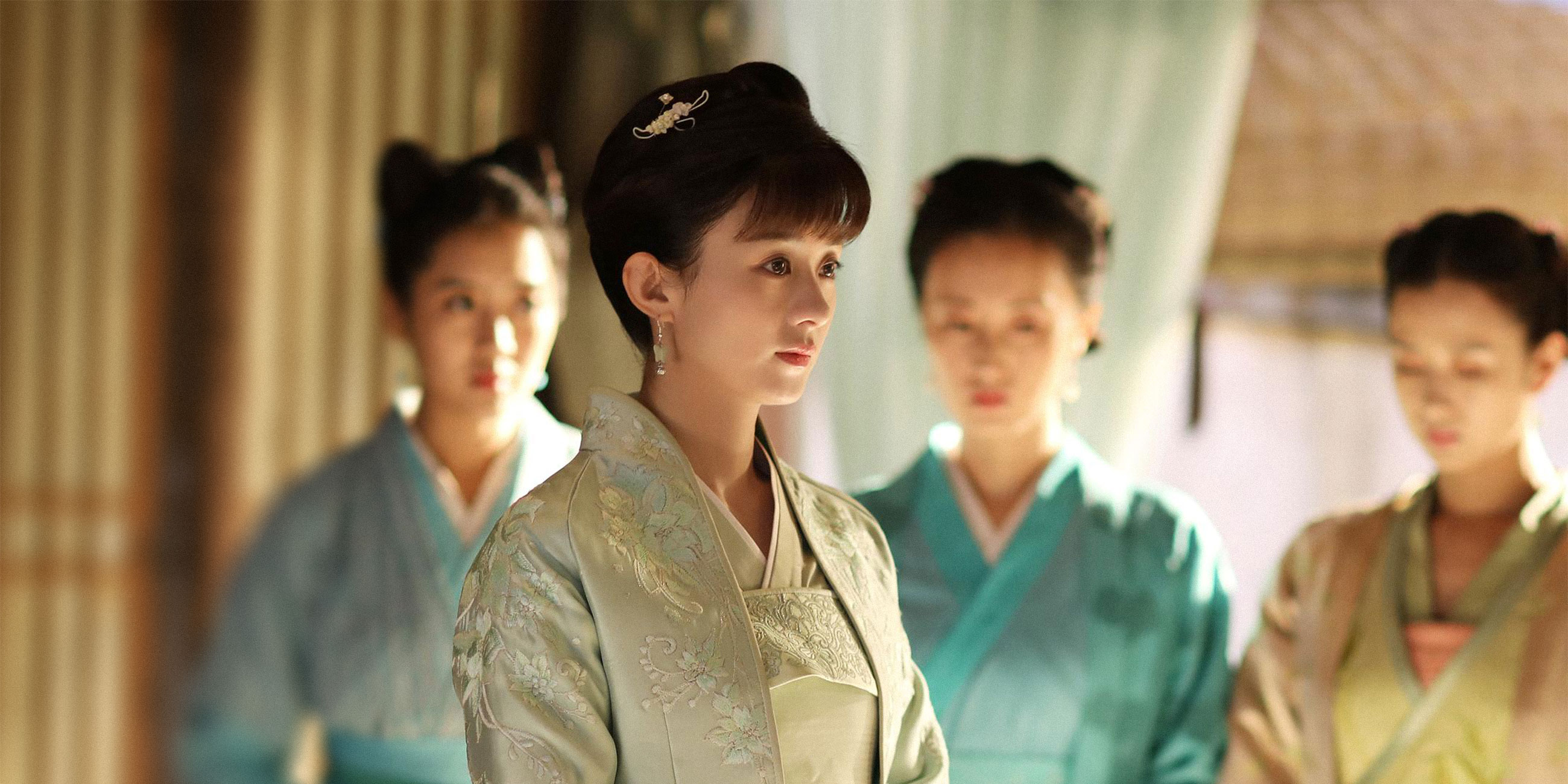
Take the online novel “The Story of Minglan” for example. The story follows a modern woman, Yao Yiyi, who travels back in time and inhabits the body of Sheng Minglan, an illegitimate daughter in the Sheng household. Confronted with a harsh stepmother, a biological mother who died young, and an inattentive father, Minglan doesn’t openly resist the family hierarchy. Instead, she carefully maneuvers within the narrow spaces permitted by etiquette and rules.
The author explained that she made the protagonist an illegitimate daughter because the rivalry between wives and concubines involves “wisdom, perseverance, courage, family background, personality, and of course, luck.” She added, “In ancient times, illegitimate daughters had broader access to different social environments than legitimate daughters … As such, they needed to exert their personal initiative more.” The novel reflects an opportunistic worldview: fate depends not on legitimacy but on the ability to seize opportunities and shape one’s destiny.
Interestingly, many fan-made works based on “The Story of Minglan” extend this logic. For instance, one fan-fiction novel imagines the protagonist transported into the body of Zhu Manniang, the villain from the original work. After learning medical skills, she aligns with Sheng Minglan, secures financial stability for her children, and acquires knowledge that she can continue to use.
Essentially, this kind of narrative reflects contemporary understandings of the tension between “order” and “chance.” On the one hand, people feel constrained by a structured order that determines who receives more opportunities and who must struggle to receive them. On the other hand, they also believe in the possibility of chance — one lucky break can change their position within this structure.
This tension between “order” and “chance” constitutes a universal psychological strain, while the world of the legitimate versus illegitimate in online fiction offers a safe space to explore it. In fictional stories, readers can simultaneously experience two truths at once: structural inequality exists and one can still change one’s fate through chance. This is precisely the appeal of this opportunistic worldview. In an era where the future is unpredictable and long-term guarantees have collapsed, seizing every opportunity that presents itself might be the most rational choice.
Yet these narratives have fundamental limitations. They rarely question the broader structure itself, instead encouraging readers to become more adept at navigating the system’s existing rules and hierarchies. Whether in “legitimate” or “illegitimate” daughter stories, the resolution seldom involves imagining alternatives to the prevailing order. As the protagonists seek to improve their position within the hierarchy, they gradually reinforce and internalize the values of the system through their actions.
This shows the boundaries of online novels as a response to social issues. Such stories can evoke feelings of injustice and offer emotional comfort through triumphs over adversity, but they struggle to provide a truly systematic or critical perspective. With long-term prospects unclear and institutional support uncertain, seizing available opportunities can appear to be the most reasonable — and “least bad” — way forward. However, “least bad” is not the same as “good” — and in fact reflects the gap between reality and values.
The popularity of “legitimate versus illegitimate” narratives doesn’t reflect nostalgia for the past but rather uses the guise of bygone times to articulate anxieties about the present. They allow us to rehearse survival strategies in narrow spaces without facing the risks of reality itself. This may be the most honest side of online fiction as a form of mass culture: it doesn’t provide answers but faithfully records the complexities of contemporary life.
Translator: David Ball.
(Header image: A still from the 2018 TV adaption of “The Story of Minglan.” From Douban)