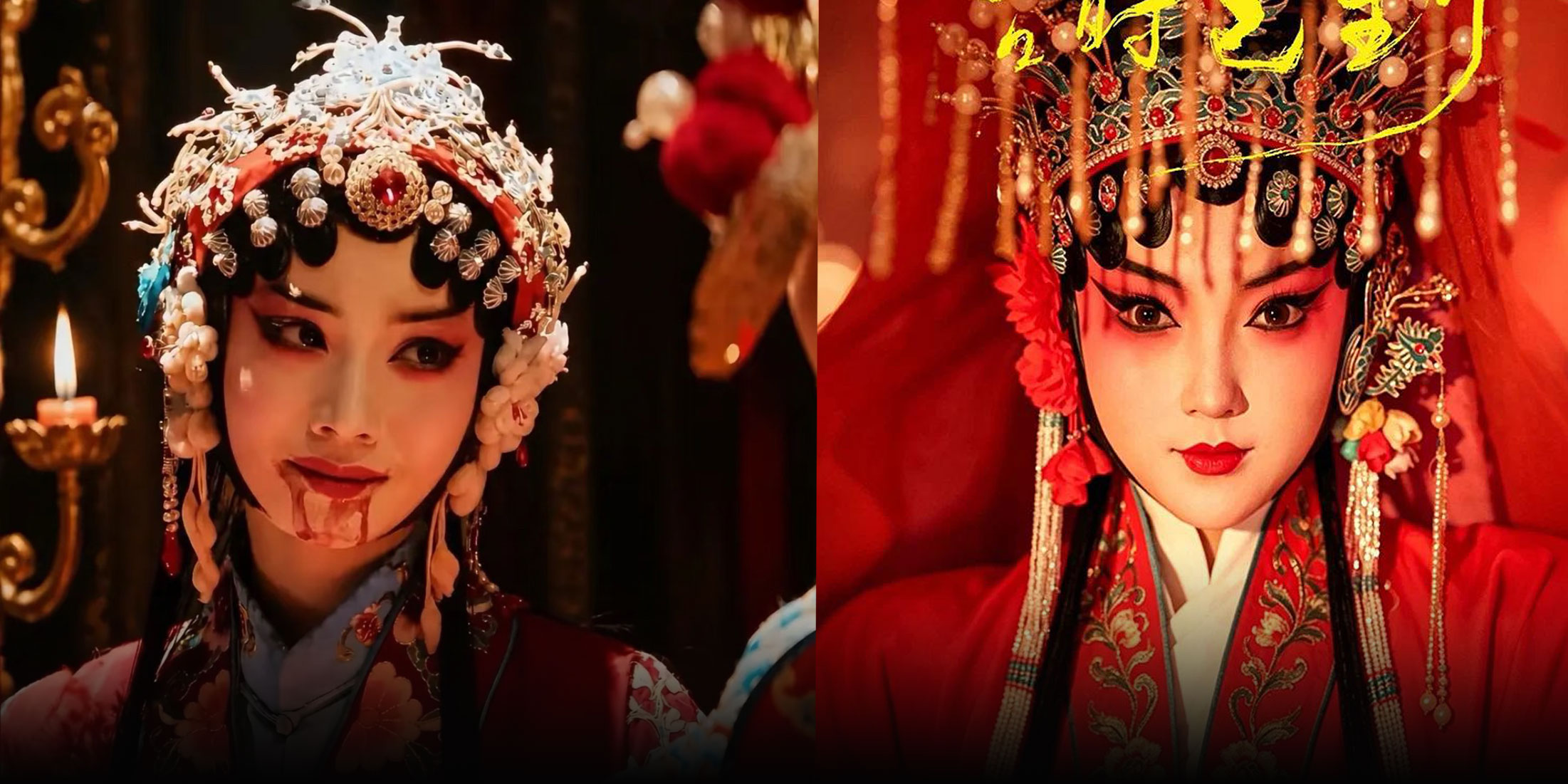
Handmade: Two Chinese Productions Go Viral for Skipping AI
This month, two AI-free productions made by amateur teams have gone viral on the Chinese internet, sparking debate as to whether AI-generated content can replace human-made stories.
The eight-episode short drama, “ENEMY,” has surpassed 800 million views, with its most viral episode receiving over 11.7 million likes on Douyin, China’s version of TikTok, while the film “Ji Shi Yi Dao,” meaning “the auspicious hour has arrived,” has received over 6.1 million likes. Both are available for free on Douyin, video platform Bilibili, and lifestyle app Xiaohongshu, also known as RedNote.
The rise of the two productions comes as China’s film and short drama industry rapidly expands its use of AI-generated content. Approximately 128,000 short dramas were released in the first quarter of this year, with AI-generated content accounting for 95% of the total, as reported by the China Netcasting Services Association. Short drama production companies across the country have been cutting staff or shifting toward AI-generated content.
Both productions center on Chinese opera and wuxianliu — or “infinite flow” — a genre featuring characters who must repeatedly traverse various parallel worlds to complete missions and survive deadly challenges. The genre is widely considered to have originated with the 2007 Chinese web novel “Infinite Horror.”
“ENEMY,” created by two short-video producers known as Jianbingguozai and Xiatianmeimei on Douyin, debuted last December and runs 38 minutes total.
The series went viral due to the popularity of its sixth episode, in which two Chinese opera performers pretend to stage a performance for Japanese troops during wartime to save 30 civilians, before poisoning the troops and dying in a fire themselves.
Similarly, the 90-minute “Ji Shi Yi Dao” was made by two prominent cosplay content producers known online as Yuanzi and Wuyang. It details the plight of several players who attempt to escape a world based on the classic Kunqu opera “The Peony Pavilion,” by choosing sides among the story’s characters.
According to their creators, both productions were made without AI-generated visual effects and on limited budgets, with cast members also taking on directing, screenwriting, editing, and other production work.
“ENEMY” director Jianbingguozai said that the team spent more than 100,000 yuan ($14,700) on travel costs alone. Meanwhile, “Ji Shi Yi Dao” cost around 300,000 yuan to produce and was funded entirely from the two creators’ personal savings, according to an interview with The Beijing News.
In the respective productions’ comments sections, many viewers praised the creators’ use of shou cuo — literally, “hand rubbing” — a term that has recently gained popularity on Chinese social media to describe works created without AI.
“Most of the AI short dramas I’ve seen feel incredibly thin in substance,” Li, a Shanghai-based viewer, told Sixth Tone. “The stories and the visuals all look kind of the same — like they were mass-produced.”
“But ‘ENEMY’ and ‘Ji Shi Yi Dao’ moved me with their sense of real human presence,” Li added. “Because they were handcrafted, I could feel the creators’ own ideas more directly. Like how the camera work sets up foreshadowing, or in the actors’ expressions.”
Yuanzi, one of the creators of “Ji Shi Yi Dao,” told domestic media that she does not oppose AI as a tool, but is concerned about AI-related copyright issues.
“If other people’s works are blended together and repackaged as an original work, I find that hard to accept,” she said. “AI was supposed to help people achieve their vision, but now it’s replacing art.”
“Seeing artists lose their jobs is a huge blow to creators,” Wuyang, co-creator of “Ji Shi Yi Dao,” added. “Art should be a place where different forms can exist. If it’s replaced this way, that’s very sad in the long run. That’s why we don’t really want to use AI.”
The China Netcasting Services Association report also revealed that during the 2026 Spring Festival season, live-action dramas amounted to only around one-fiftieth the number of AI dramas released but generated 25 times as many views.
Editor: Marianne Gunnarsson.
(Header image: Left: A still from “ENEMY”; right: A promotional image for “Ji Shi Yi Dao.” From Douban)