TMS May Ease Autism-Related Social Symptoms, Chinese Study Finds
A study by a team of Chinese scientists has found a novel therapy for autism spectrum disorder using a new type of transcranial magnetic stimulation that reduces treatment duration and is proven to improve social functioning in the short term.
The findings, published April 29 in international medical journal The BMJ, were conducted over four years by multiple medical teams led by Li Fei, chief physician of developmental pediatrics at Xinhua Hospital, in Shanghai.
Autism spectrum disorder (ASD) is a neurodevelopmental condition characterized by varying degrees of difficulty in social interaction and communication. Some individuals with ASD have high support needs and cannot live independently, while others are highly functional and require little to no support. According to diagnostic data from China’s National Health Commission, roughly seven out of 1,000 children in China have ASD, totaling over 14 million overall.
Existing intervention methods for ASD — mainly differentiated education supplemented by medication — are often costly and do not always help those with the condition to develop social skills. The team hopes that the new findings will supplement existing intervention methods.
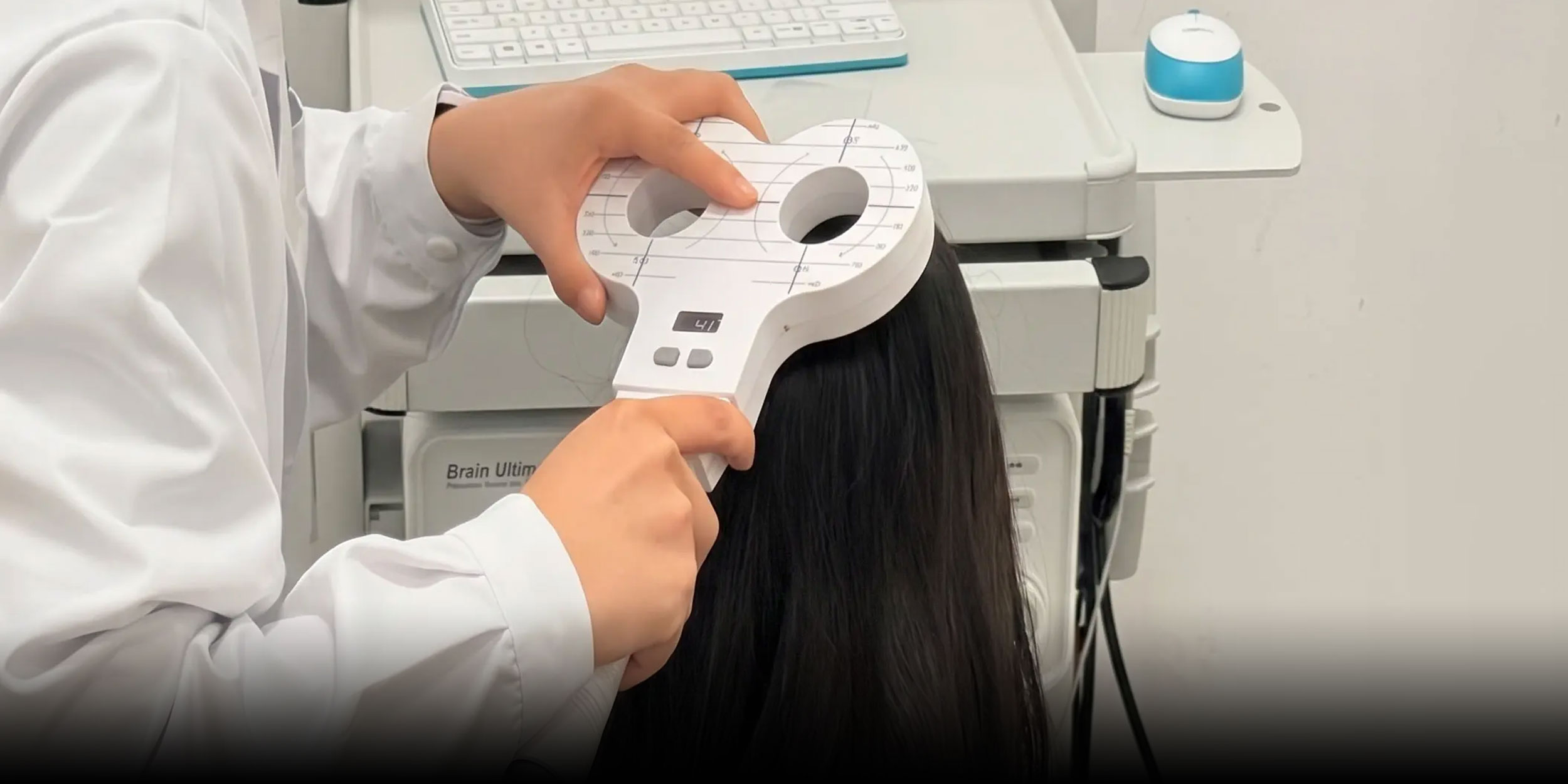
The clinical trial enrolled 200 children aged between 4 and 10, making it one of the largest randomized controlled neuromodulation studies in the global autism field to date. Patients underwent “accelerated continuous theta burst stimulation,” or a-cTBS, a form of transcranial magnetic stimulation (TMS) that modulates brain activity with magnetic pulses. Each treatment session lasted 2 to 3 minutes, with 10 sessions per day, spaced 1 hour apart. Treatment lasted five consecutive days.
The researchers targeted the brain’s left primary motor cortex — which not only regulates action but also plays a role in language processing and social-emotional functioning — which a previous study by the team had shown to improve social skills in children with ASD.
During follow-up visits a month later, the majority of patients showed noticeable improvement in core social communication symptoms — assessed by means of a social responsiveness scale. Some also demonstrated positive changes in language ability.
In an editorial published alongside the journal article, Benjamin Becker, professor of cognitive and affective neuroscience at the University of Hong Kong, wrote, “The age range of 4 to 10 years capitalizes on a developmental window of heightened neuroplasticity, when social and language circuits may be particularly amenable to change and early gains can critically shape later trajectories.”
Previous research using transcranial magnetic stimulation — specifically, rTMS, shown to be effective in treating some neuropsychiatric disorders, including treatment-resistant depression and obsessive-compulsive disorder — had excluded children with ASD in this age range, or children with co-occurring intellectual disabilities, in part because patients are required to remain still during treatment. However, a-cTBS reduces the time patients must remain still from 20 to 2 minutes.
“Traditional rTMS has long been used to treat neuropsychiatric disorders, but for children with autism — especially younger children who don’t cooperate (with treatment) and those with intellectual disabilities — designing a protocol that is safe, tolerable, practical, and clinically translatable has remained a longstanding concern,” Li, the research lead, told Sixth Tone. “A-cTBS can be understood as a shorter, more compact form of transcranial magnetic stimulation.”
But although a-cTBS offers a more child-friendly and accessible treatment for young children with ASD, parents may still be wary.
Ying Qing, director of the special education department at Zhejiang Rehabilitation Hospital in eastern China, told Sixth Tone that despite rTMS having been proven safe and used in major hospitals for more than three years, only one-third of parents actively choose to undergo treatment, while another third is ambivalent, and a final third strongly refuse.
“For families of children with ASD … most tend to be more cautious and conservative about (treatments), especially when the children are younger,” Ying told Sixth Tone.
Although Ying holds a positive attitude towards a-cTBS and is planning to introduce the new technology to her hospital, she said that “normally it takes three years for the community to accept a new technology.”
Editor: Marianne Gunnarsson.
(Header image: A doctor performs a-cTBS. From The Paper)