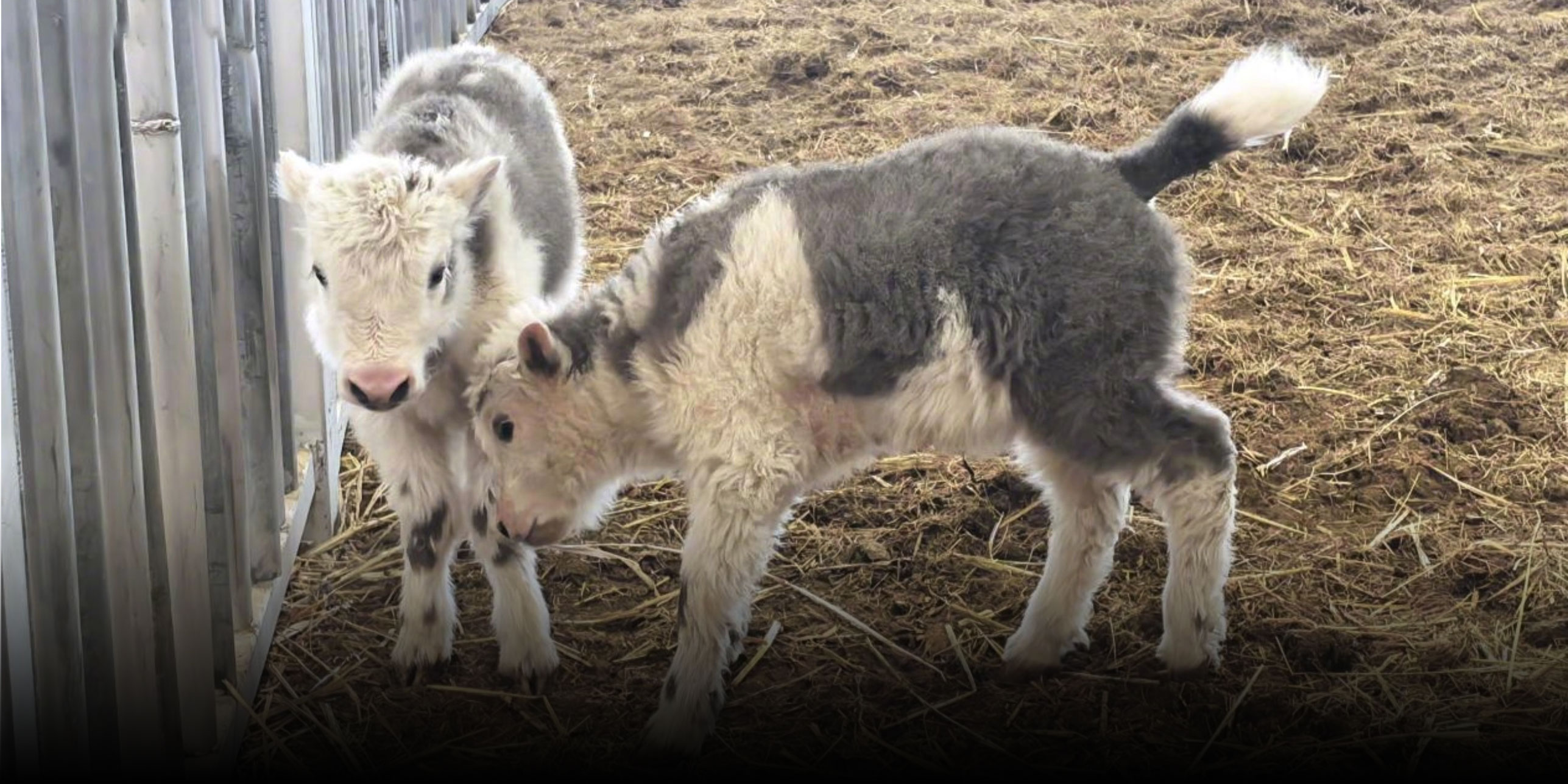
Nine Months After Cloning Its First Yak, China Has 10 More
Chinese scientists have successfully produced 10 cloned Tibetan yaks at once, marking a milestone from individual to group animal cloning. The breakthrough could help restore the endangered animal’s population.
The milestone, reported Monday by domestic media, comes from a joint project on combining cloning with whole-genome selection and breeding by the Damxung County government in the southwestern Xizang Autonomous Region, the Institute of Plateau Biology of Xizang, and Zhejiang University. The research began in 2023.
An endangered species under first-class national protection, the wild yak is endemic to China’s southwestern Qinghai-Tibet Plateau. Local herders depend on the animal for their livelihood, and yaks are integral to the region’s ecosystem. Currently, only about 300 golden wild yaks remain in Xizang, and over the past 30 years, herders and scientists have documented declines in yak body size, weight, reproduction rate, and immunity.
According to Fang Shengguo, leader of the research team and professor of biology at Zhejiang University, the team sequenced the entire genomes of 8,971 yaks across Xizang. From these, they created cloned embryos and established a cell line for Tibetan yaks.
Last July, the research team used their technology to successfully produce the world’s first cloned yak. The calf weighed 16.75 kilograms at birth and was 183.25 kilograms by 286 days, assessed by the team as “in excellent growth and development status.”
Fang explained that whole-genome selection identifies genetic traits for size, growth, resilience, and efficiency, helping select top breeding yaks. Cloning precisely replicates these genotypes, compressing breeding cycles from 20 years to under five and increasing the yak reproduction rate.
Between March 25 and April 5 of this year, 10 female yaks were impregnated with cloned embryos, all delivering naturally without assistance.
“It’s clear that the technology has progressed from individual success to batch-scale, stable application,” Fang told state media.
Unlike ordinary cattle, yaks have adapted to high‑altitude conditions, such as reduced oxygen, low pressure, and strong radiation, affecting cellular metabolism and making normal cloning difficult. To solve this, the research team developed new techniques such as egg cell maturation outside the body prior to implantation and embryo reconstruction to help yak cloning embryos grow steadily in the womb.
To date, the team has generated over 200 cloned Tibetan yak embryos. By the end of 2028, they aim to build a core herd of over 100 cloned yaks, develop a new high-altitude yak breed, and establish standard breeding protocols.
Editor: Marianne Gunnarsson.
(Header image: Cloned yaks born in March 2026 at a breeding and research base in Damxung County, Xizang Autonomous Region. From @央视新闻 on Weibo)