Chinese Brands Learn to Stop Worrying and Love Customer Feedback
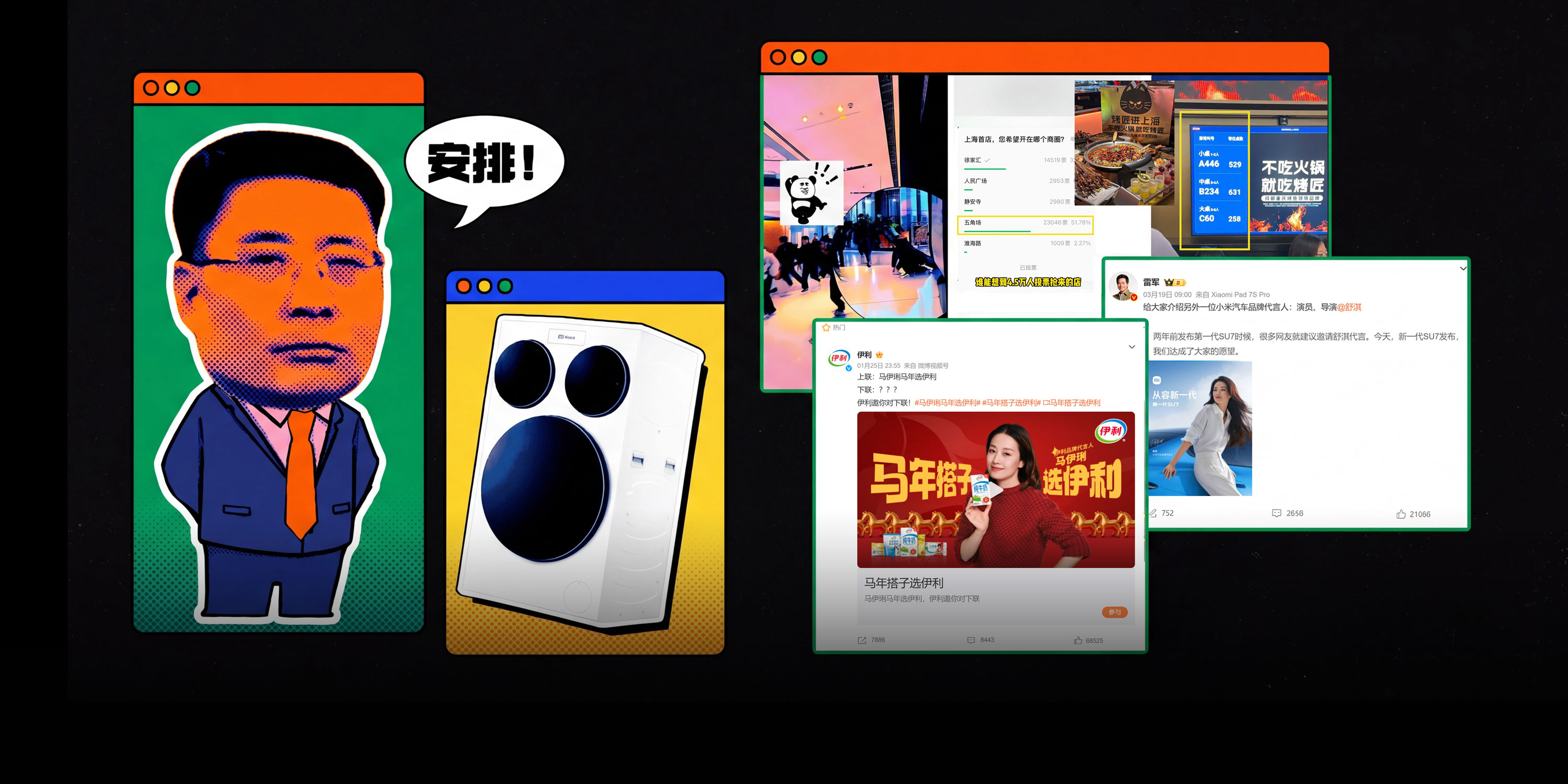
A grilled fish chain let customers decide where to open its first Shanghai store. A dairy company turned an online meme into a celebrity endorsement. A hand-drawn sketch for a three-drum washing machine became a real product.
In China, brands are increasingly developing strategies based on public feedback. The trend has a name — tingquan, or “listen-to-advice” marketing — and the idea is simple: comments, memes, and casual suggestions are now being factored into real business decisions.
One recent example involved Kaojiang, a popular restaurant chain that specializes in spicy grilled fish. Last November, they asked customers to vote on where their inaugural Shanghai store should open, expecting a little social media buzz. In the end, more than 45,000 people voted via the social app WeChat.
For many young people from southwestern China’s Sichuan province now living in Shanghai, the vote became more than a marketing campaign. “It felt like it mobilized the whole community,” Zhao Chenxi told Sixth Tone.
Like many Sichuan natives in Shanghai, she craves the bold, mouth-numbing spice of home amid the city’s milder, slightly sweet flavors. She recalled how friends reposted the voting link in group chats, urging classmates and colleagues to help “win” the store closest to their universities or workplaces.
By late December, Wujiaochang, a bustling commercial hub in northeastern Shanghai’s Yangpu District, had topped the poll. Two months later, Kaojiang’s first Shanghai store opened there.
The hype paid off. Diners regularly line up before the mall’s doors open, hoping to secure a reservation number. Wait times often stretch beyond three hours, with queue numbers climbing into the thousands each day.
Still, industry insiders are quick to note that online enthusiasm fades fast, and not every suggestion deserves to become a business decision. As China’s consumer market grows more crowded, brands are increasingly betting that involving customers in the process works better than simply telling them what to buy.
Meme to market
Prior to this year’s Spring Festival, marking the beginning of the Year of the Horse, a meme about Chinese dairy giant Yili began circulating on social media. In it, netizens clamored for actress Ma Yili, whose last name means “horse” and whose first name sounds similar to the company’s, to become its brand ambassador.
What started as a playful joke quickly turned into reality. Just two weeks after the meme was first posted online, Yili officially announced the actress as the brand’s newest ambassador and even acknowledged the netizens behind the meme.
The tie-up went viral, with one related hashtag amassing more than 790 million views on microblogging platform Weibo.
Then, in March, smartphone manufacturer Xiaomi invited actress Shu Qi to serve as brand ambassador, which was widely seen as a playful fulfillment of an online pun from two years earlier about how “SU7” — the company’s latest electric car model — sounds like the actress’s name.
Brand ambassadors have traditionally been chosen based on how well they fit the brand’s image and how effectively they could drive short-term sales, according to Zhuang Mengru, a handbag brand marketer based in the southern tech hub of Shenzhen.
“Now, it’s about being on the same page as consumers — speaking in their language and having real conversations,” she told Sixth Tone.
Companies are moving away from the old mindset of creating a product and hoping consumers buy it, toward a more user-centered approach.
“Consumers are telling brands what they actually want, and companies are responding by designing products around those needs,” Qu Yanjin, deputy general manager at marketing and media service provider WPP Media China, told Sixth Tone.
For younger consumers raised on interactive online platforms, the shift feels natural, she explained. They expect dialogue, and they are quick to criticize brands that appear distant or patronizing. And when companies visibly incorporate user feedback, it signals something more than flexibility: respect.
Co-builders
As more brands pivot toward listen-to-advice marketing, Kaojiang’s Shanghai debut serves as both a success story and a potential cautionary tale.
Xu Mingtao, a native of the eastern Jiangxi province now studying at Shanghai’s Fudan University, was one of the thousands who participated in the restaurant’s vote for its next location.
“I did it out of curiosity,” Xu told Sixth Tone. “I didn’t think they would actually let a public vote dictate their business strategy. When they followed through, it created a genuine sense of belonging.”
Yet, Xu remains skeptical about the model’s long-term sustainability. While online exposure can attract consumers, he believes the product must eventually stand on its own merits once the novelty of audience participation wears off.
But some believe the approach is grounded in solid methodology, setting restaurants up for long-term success. According to Qu, listen-to-advice marketing helps brands improve their products by taking consumer demand into account early on.
“What the brand calls ‘listening’ is essentially market research done a step earlier,” she said, noting that previously, restaurants would do their own research, decide store locations behind closed doors, wait for the market response once the store has opened, then adjust accordingly. Customers’ voices are now being integrated into the market research process.
Last year, a netizen reached out to home appliance giant Haier through social media, attaching a hand-drawn sketch of a proposed washing machine with three separate drums. The idea reflected a common hygiene habit in China — washing items such as underwear and socks separately.
Haier took the idea seriously, and subsequently identified more than 1,000 posts by young Chinese people voicing similar frustrations. Upon launching their three-drum washing machine, the company sold over 10,000 units in just 48 minutes.
Qu believes the rise of such listen-to-advice marketing reflects a defensive shift among brands. In recent years, marketing missteps have become increasingly common, and the cost of public backlash has grown significantly.
“By involving users in decision-making, brands turn potential critics into co-builders, establishing emotional trust while using early feedback to reduce controversies and lower the risk of future crises.”
Editor: Marianne Gunnarsson.
(Header image: Visuals from Xiaohongshu and Weibo, reedited by Sixth Tone)