The Quintessential Tea Missing From ‘Chinamaxxing’
You may have encountered the TikTok trend of “Chinamaxxing,” whereby Westerners try to be as Chinese as possible, carrying a thermos of hot water, wearing slippers indoors, and practicing tai chi. But to me, they are missing one key ingredient of authenticity: a cup of green tea, brewed with leaves harvested from the tea fields of Hangzhou at the first breath of spring.
I can’t pinpoint exactly when I took my first sip of Longjing, or Dragon Well, tea. Born in Hangzhou, an eastern Chinese metropolis now known for the tech innovations of Alibaba and DeepSeek — and more recently, martial arts robots — I grew up with this tea as a constant, quiet presence. When its buds begin to break across the hills surrounding West Lake, I know it is spring’s greeting.
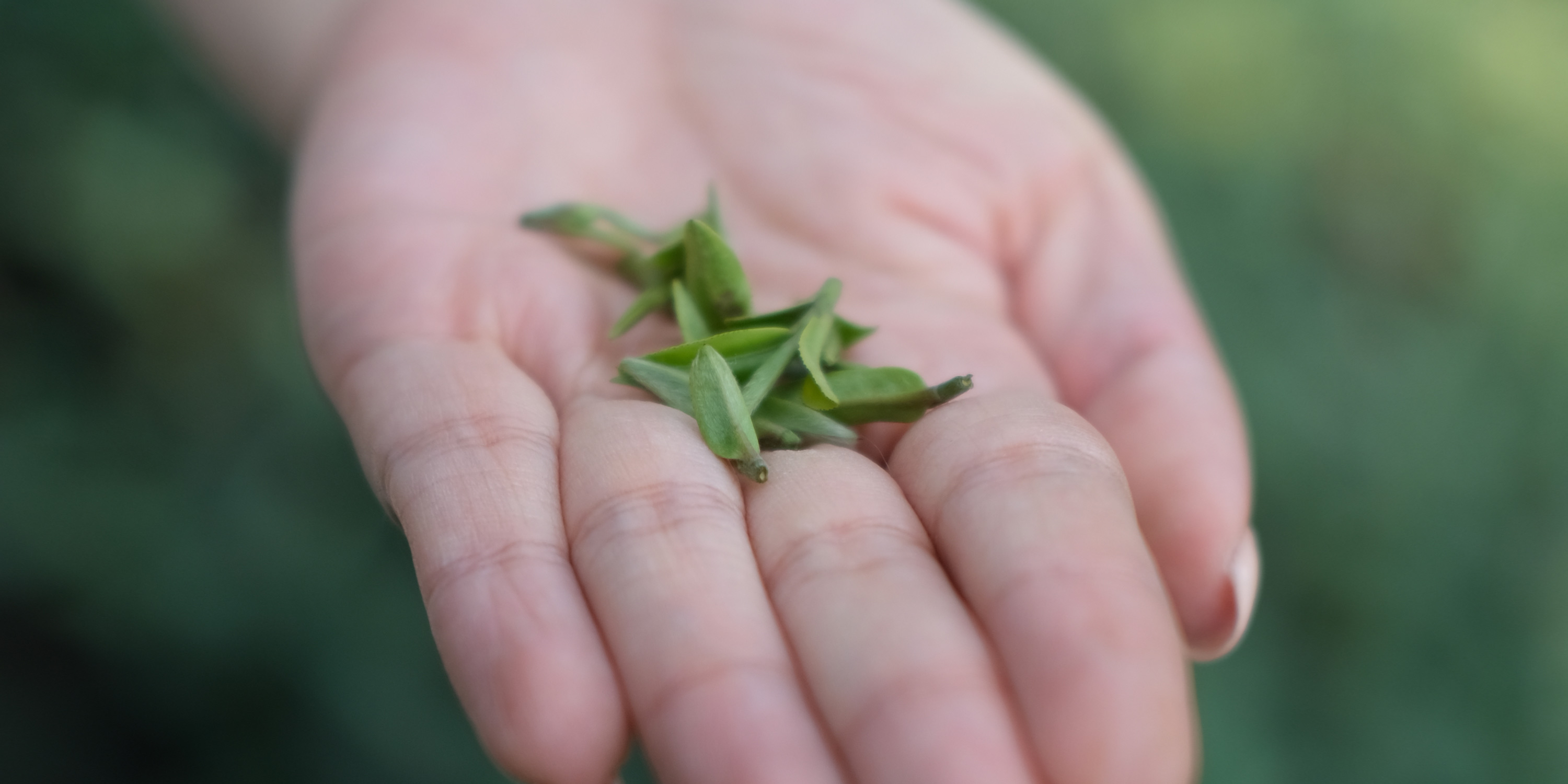
Its preparation is an exacting craft. Fresh Longjing leaves are hand-pressed during pan-firing into flat, spear-like shapes that have a tender green color. When brewed, the leaves perform an elegant, slow-motion dance before sinking, tinting the water a shade of jade that slowly turns to amber. For the true connoisseur, the visual theater is as vital as the fragrance.
While Longjing remains relatively obscure in the West compared to oxidized black teas like Darjeeling, it carries immense imperial and diplomatic gravity in China. Its lineage stretches back over a millennium, rising in the Song dynasty (960–1279) and peaking during the Qing (1644–1911). It is a staple of statecraft: Longjing was served to Henry Kissinger during his clandestine 1971 visit and presented to world leaders at Hangzhou’s 2016 G20 summit.
What explains the lack of Western recognition? One key factor is time. Unlike black teas, which are fermented for longevity, unfermented green teas like Longjing have a fleeting peak — a window of months, if not weeks. For Hangzhou natives, the tea’s value is defined by the calendar: Longjing harvested before the Qingming Festival, in early April, is the most coveted, often commanding staggering prices at auction. For centuries, the belief has persisted that these young shoots, hand-fired within a frantic seasonal window, capture the qi, or energy, of an earth waking from slumber. To drink it is to align the body with the cosmos — a liquid manifestation of the ancient philosophy that humanity and “heaven” are a single, coherent entity.
Then, there is the matter of the soil. Local tea masters insist that “authentic” Longjing is restricted to five prestigious hills in Hangzhou’s tea mountains: Shi, Long, Yun, Hu, and Mei. These are the centuries-old tea gardens originally planted to supply the imperial court with tribute. Here, the moist air traveling from the Pacific Ocean meets white sandy soil low in alkalinity, a combination that strips away astringency and amplifies a distinctive “nutty fragrance” — a scent insiders describe as reminiscent of toasted rice.
Even the aspect of the slope shapes the character. Tea from sun-drenched hills like Wengjiashan carries a pale, golden hue; those from the shaded valleys of Meijiawu are a brilliant green.
As a food writer traveling the globe, I often find myself contemplating this geographical singularity. Is this not the very definition of terroir? Shouldn’t we perhaps treat Longjing with the same reverence we afford white truffles or Grand Cru Burgundy? In a global market flooded with machine-processed teas of ambiguous origins, the only way to experience the soul of the tea is to return to the source: a Hangzhou tearoom, sipping a cup of Longjing brewed with freshly hand-roasted leaves and water from the Longjing spring. While glass allows one to watch the “dance,” I prefer ceramic, which develops the fragrance to its fullest expression.
To truly grasp local appreciation for tea, however, one must move beyond drinking. In Hangzhou, we speak of “eating tea” (chi cha). The phrase dates back to the Tang dynasty (618–907), when tea leaves were ground into powder and simmered with mint and ginger. Today, the tradition of treating Longjing as an ingredient lives on, although in a different form: on the plate. Consider Longjing shrimp, a signature dish of Hangzhou cuisine: in April, hand-peeled river shrimp are stir-fried with newly picked leaves and seasoned with a hint of rice vinegar. The shrimp are springy and sweet, while the tea leaves add a herbaceous touch. Every bite is the essence of time and soil in southern China.
Like spring itself, Longjing is a fleeting luxury, demanding the right moment and the right place. “Eating” Longjing is a subtle yet rewarding art to appreciate terroir, to carry on our seasonal conversations with nature, and to fully — “maxximally” — understand the Chinese philosophy of becoming through eating.
Portrait artist: Wang Zhenhao.
(Header image: A close-up of Longjing leaves. Courtesy of the author)