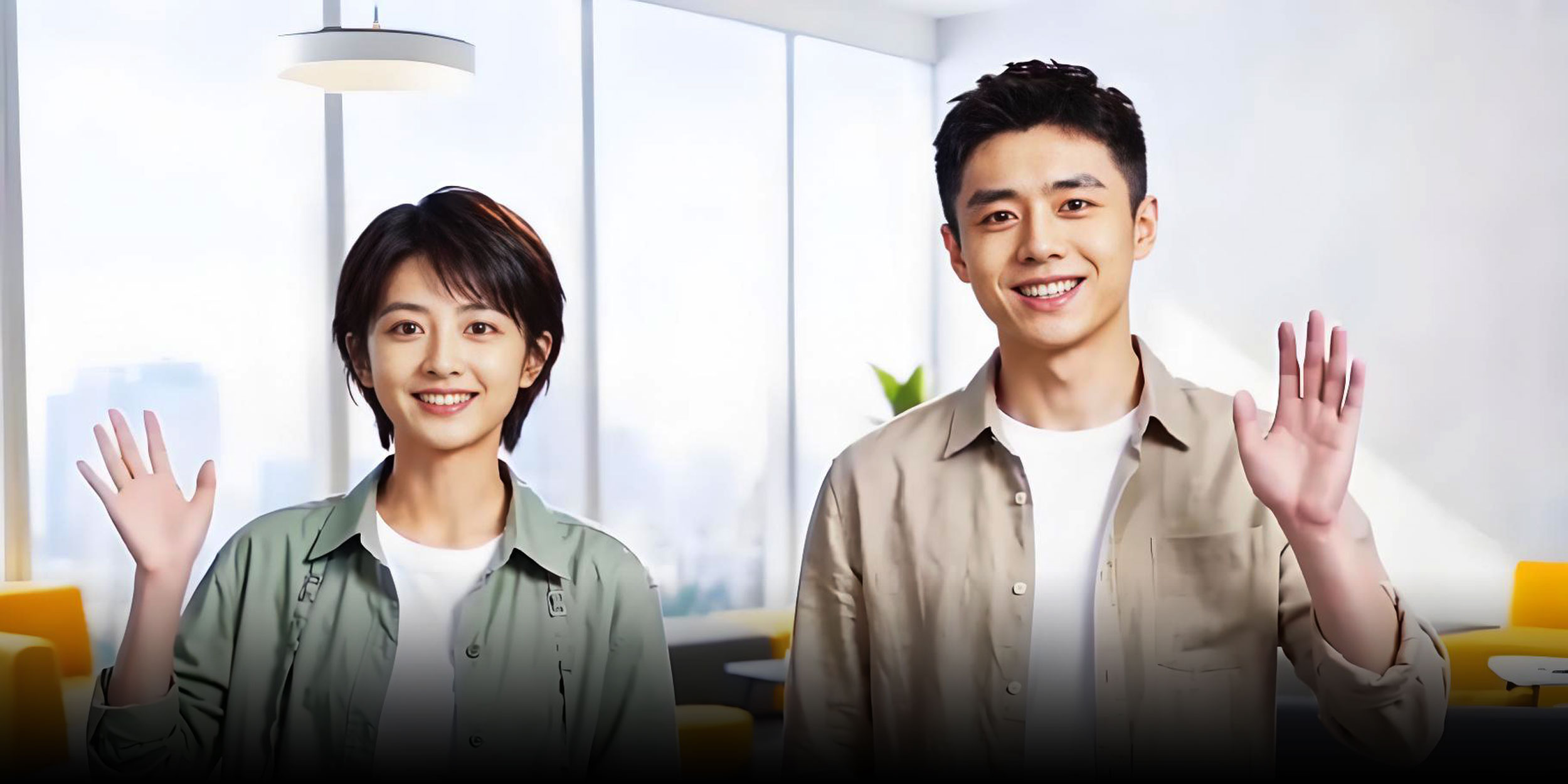
Controversy Erupts Over Chinese AI Actors in Upcoming Short Drama
A famous Chinese TV and short drama studio has announced that two AI actors will star in its upcoming short drama, sparking debate over portrait rights, data use, and the future of human performers.
Shanghai-based production company Youhug Media unveiled the AI actors — named Qin Lingyue and Lin Xiyan — on Wednesday on microblogging platform Weibo. The pair will star in “The Qinling Bronze Occult Chronicles,” a 60-episode drama in which the characters time travel back to China’s Bronze Age (roughly 2000–771 BC), with each episode lasting 2 to 3 minutes.
The virtual performers have since launched accounts on Douyin, the Chinese version of TikTok, and lifestyle platform Xiaohongshu, also known as RedNote, where updates about the series and their fictional daily lives will be shared.
Short dramas featuring AI actors represented almost 40% of the top 100 animated short dramas in January this year, up from under 10% a year ago, according to data from digital content marketing platform DataEye. Last year, the total market value of China’s micro-drama and animated short drama sector reached 100 billion yuan ($14.5 billion), nearly twice the country’s box office revenue.
The announcement soon triggered online backlash over the pair’s resemblance to real actors — Qin Lingyue and Lin Xiyan drew comparisons to the actor Zhai Zilu and actresses Zhao Jinmai and Zhang Zifeng, respectively — with users expressing concerns about the potential impact of AI on TV and film industry workers.
“Behind the unemployment of a single celebrity lies a whole group of ordinary workers who could lose their jobs — extras, cinematographers, lighting crew, catering staff, post-production teams, makeup artists, stagehands, and so on,” read one highly upvoted comment on Weibo.
In response to the controversy, an anonymous Youhug Media official told local media that the two AI actors’ images were generated “without copying or using the facial features of any real individual.”
Multiple AI-generated short dramas recently sparked widespread controversy for using AI to create a male lead resembling the actor Xiao Zhan. Following public scrutiny, some were taken down, while other studios tweaked the AI actors’ facial features.
AI actors that closely resemble real celebrities could face legal risks for infringing on portrait rights, Chen Yanhong, vice president of Beijing DeHeng Law Offices, told local media. Even in the case of AI-generated characters, she said, if the public can identify a specific individual from the character’s image, it can still constitute a violation of China’s Civil Code.
The move also drew criticism from well-known Chinese actors.
“The tears of an AI character are drawn, but my tears flow from my own body,” Feng Yuanzheng, an actor and chairman of the Beijing People’s Art Theatre, told local media. He said that, in contrast to AI, “what actors ultimately rely on is culture and the accumulated weight of life experience.”
Editor: Marianne Gunnarsson.
(Header image: The AI-generated actors Qin Lingyue (right) and Lin Xiyan. From Weibo)