In China’s Tech Industry, Success Is All About ‘Cognition’
In 2023, Qiang, a 30-year-old project manager at a Chinese tech firm, emphasized to me the concept of “cognition.” Upset by the alleged short-sightedness of his company, he recalled his original ambition of becoming an entrepreneur like Zhang Xiaolong, the “father of WeChat” — China’s ubiquitous messaging and payment app. “Look,” he said, “how high other people’s cognition is. Back when QQ was dominant, he was already convinced that WeChat would succeed.”
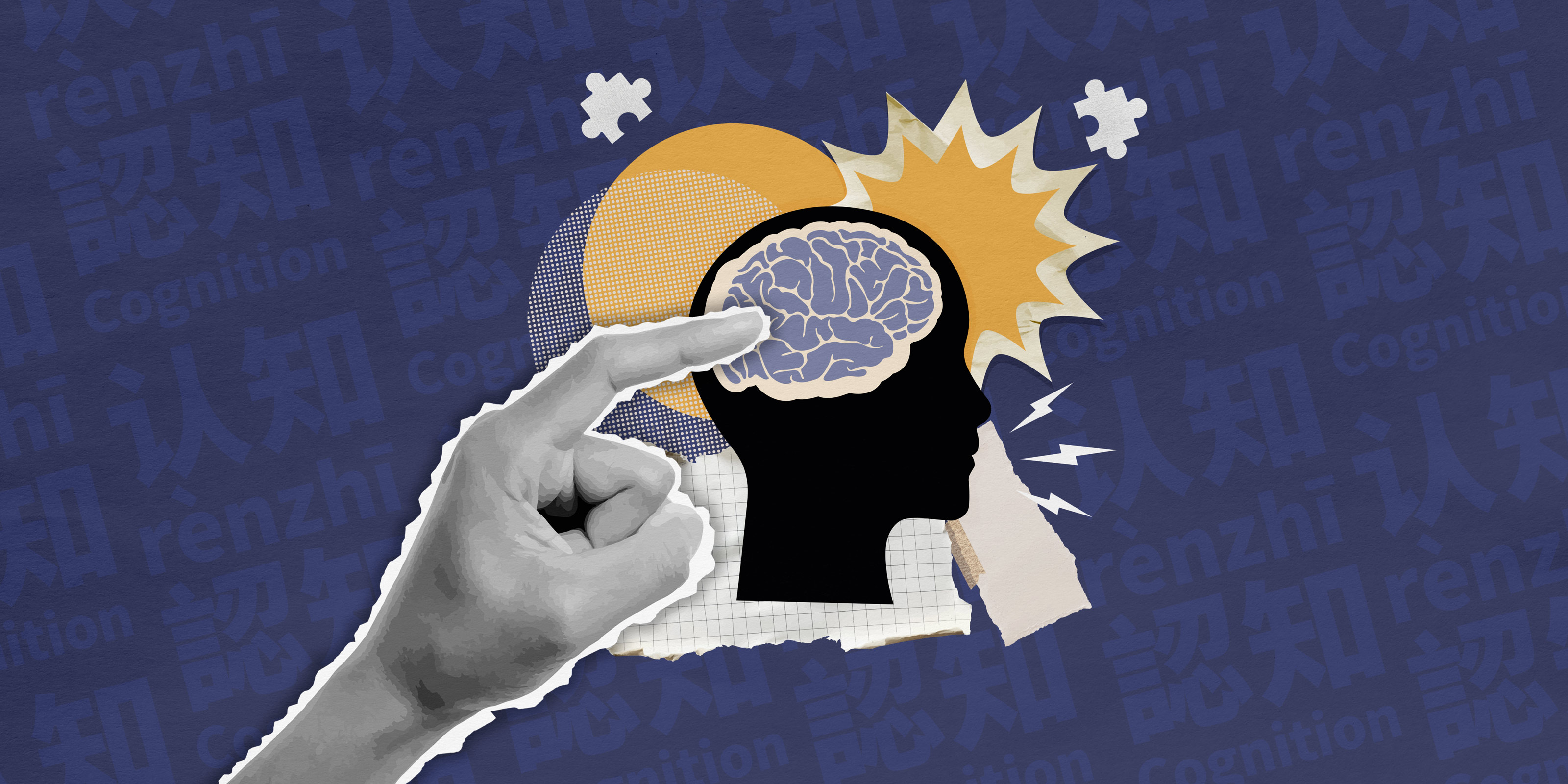
The word cognition, or renzhi in Chinese, would recur in my conversations with Chinese tech workers during my 2023 fieldwork. Originally a psychological term about the mental processes through which people perceive, process, and use information to guide action, the word has been given an esoteric aura in Chinese, used to make sense of career choices, financial decisions, and different life trajectories.
The current cognition narrative popular in Chinese tech circles divides people into two groups: the “prophets” with “high cognition level” who “see earlier and farther than others” and make the “right choices” at critical moments, exemplified by entrepreneurs such as Warren Buffett, Elon Musk, and Zhang Yiming, founder of tech giant and TikTok owner ByteDance; and those who fail to do so — taking on a heavy mortgage when property prices are about to fall, or choosing a career in a hopeless industry — becoming the victim of their own “lower cognition level.”
There’s no agreed-upon definition of cognition — much like other ill-defined buzzwords that once dominated the tech industry’s discourse, such as “big data” or “paradigm shift.” It does, however, point to the consensus that a brilliant individual mind is critical for success. Its popularity across the tech sector was largely catalyzed by the books and speeches of self-help gurus, most notably Luo Zhenyu, the founder of online learning app Dedao and a prolific TED Talk-style speaker. According to Luo, unlike intelligence quotient, which is often considered an innate gift, one’s cognition level can be raised — in his words, “upgraded” — through deliberate efforts such as reading and following what the “sages” say.
Fans of the cognition discourse were typically born in the 1980s and 1990s, when China was transforming from a planned to a market economy. Having witnessed their parents’ generation experience the same historical era but arriving at radically different destinies, they resort to the cognition discourse as an explanation for the divergence in household fortunes. One interlocutor lamented that “My parents’ cognition back then was not good enough, so my family remained so-so.”
Growing up, this group successfully navigated the highly competitive college entrance exams, attended prestigious universities, and landed lucrative jobs at major tech companies. As such, meritocratic logic was baked into their mind from an early age.
Lu, a 28-year-old project manager at a well-known technology company, recalled to me a lesson he had learnt from a high school math teacher, who told him that “The best students should learn to imagine themselves as the ones who set the questions, not just those who answer them.” It was a life-changing moment, according to Lu, which he believed helped him stand out academically and survive multiple rounds of layoffs at his company. “He taught me how to see the essence of problems from a higher dimension,” Lu said.
Many of my interlocutors emphasize seeing problems from a “higher dimension.” They mean thinking beyond the perspective of an employee to understand the real power dynamics driving their companies — or even the entire world. To that end, many reported reading extensively after work, taking notes late into the night, or following policy shifts, technological developments, and global economic trends with near-obsessive attention. As one research subject told me, “What happens in the U.S. or Europe could affect my decisions next quarter. I have to stay sensitive.”
The significance of cognition is even more pertinent amid mounting uncertainties across the tech industry and the wider global economy, according to my interlocutors. Rapidly changing organizational goals, closer scrutiny of online platforms, and news of layoffs have all contributed to a sense of volatility. Stories of people who made major life decisions just before regulatory shifts, the rise of AI, or geopolitical headwinds rendered their positions redundant keep everyone on their toes. Many tech workers described their careers as a series of high-risk bets, rather than a linear path, which have to be managed with prophet-level cognition. As one data engineer put it bluntly, “You never know which policy, or which executive reshuffle, will overturn everything.”
Against this backdrop, cognition is recognized not as a guarantee of success, but as an antidote to making “fatal mistakes,” such as choosing a job that offers little room for self-development — a decision that may ultimately undermine an employee’s competitiveness in a coldhearted world. “The environment is chaotic,” a product manager in his early 30s explained to me in the office pantry while stirring a cup of instant coffee. “But if your cognition is high enough, you won’t make wrong decisions at critical points. You might not win big, but at least you won’t lose everything.”
In this, the responsibility of managing uncertainties and risks is shifted from employers, labor structures, and policymakers to individuals who make professional and financial decisions in their everyday lives. When talking about the unfortunate experiences of their peers, many interlocutors attributed such misfortune to a failure of cognition rather than the volatility of the industry. A backend engineer, speaking about a colleague devastated by layoffs, blamed their lack of risk awareness about both labor and property markets: “He was too eager to buy a property. At its root, it was a cognition problem. He couldn’t see the broader trend, so he took on a heavy burden at that moment.” Indeed, taking on large mortgages or entering a marriage amid company or industrywide reshuffles is often marked as examples of “poor judgment” and “lacking cognition.”
While the misfortunes of colleagues may invoke empathy and solidarity to some degree, such effects are sometimes undermined by the cognition discourse, which divides rather than unites people. As I read one of the self-help bestsellers recommended by my interlocutors, one passage struck me: “The fundamental difference between people lies in cognition. Cognition determines choices, and choices determine destiny. No one can escape the boundaries of their own cognition.” More alarmingly, such distinctions often subtly overlap with stereotypes about someone’s gender and the region and kind of family they grew up in.
When survivors of the workplace rat race understand individual “failures” as self-inflicted, the experiences of the “losers” can feed a sense of complacency about their “superior” cognition. As a data analyst who survived a round of layoffs told me: “Seeing others run into trouble is actually not a bad thing. As long as I keep recalibrating my judgments, I won’t fall into that tier.”
This complacency may conflict with reality, however. The gap between effort and reward — even within the tech industry, where personnel reshuffles are the norm — often crystallizes into deeply personal, sometimes embodied experiences of pain. Many interlocutors reported serious psychological and physical problems, including anxiety, depression, hair loss, and insomnia, as they strive to stay competitive.
Even so, most choose to remain in the tech industry. In their view, it is one of the few domains that still holds long-term significance — and thus allows them to continuously improve their cognition. As one employee of an e-commerce platform known for ruthless working conditions said:
“I know this job is painful, but many people ignore the other side. My cognition and abilities are expanding at an incredible speed. You have to actively endure suffering with agency. That’s why I chose [my company]. It hurts, but it forces you to grow.”
All names are pseudonyms to protect the participants’ anonymity.
(Header image: Visuals from Meepiangroup/VectorStock/VCG, reedited by Sixth Tone)