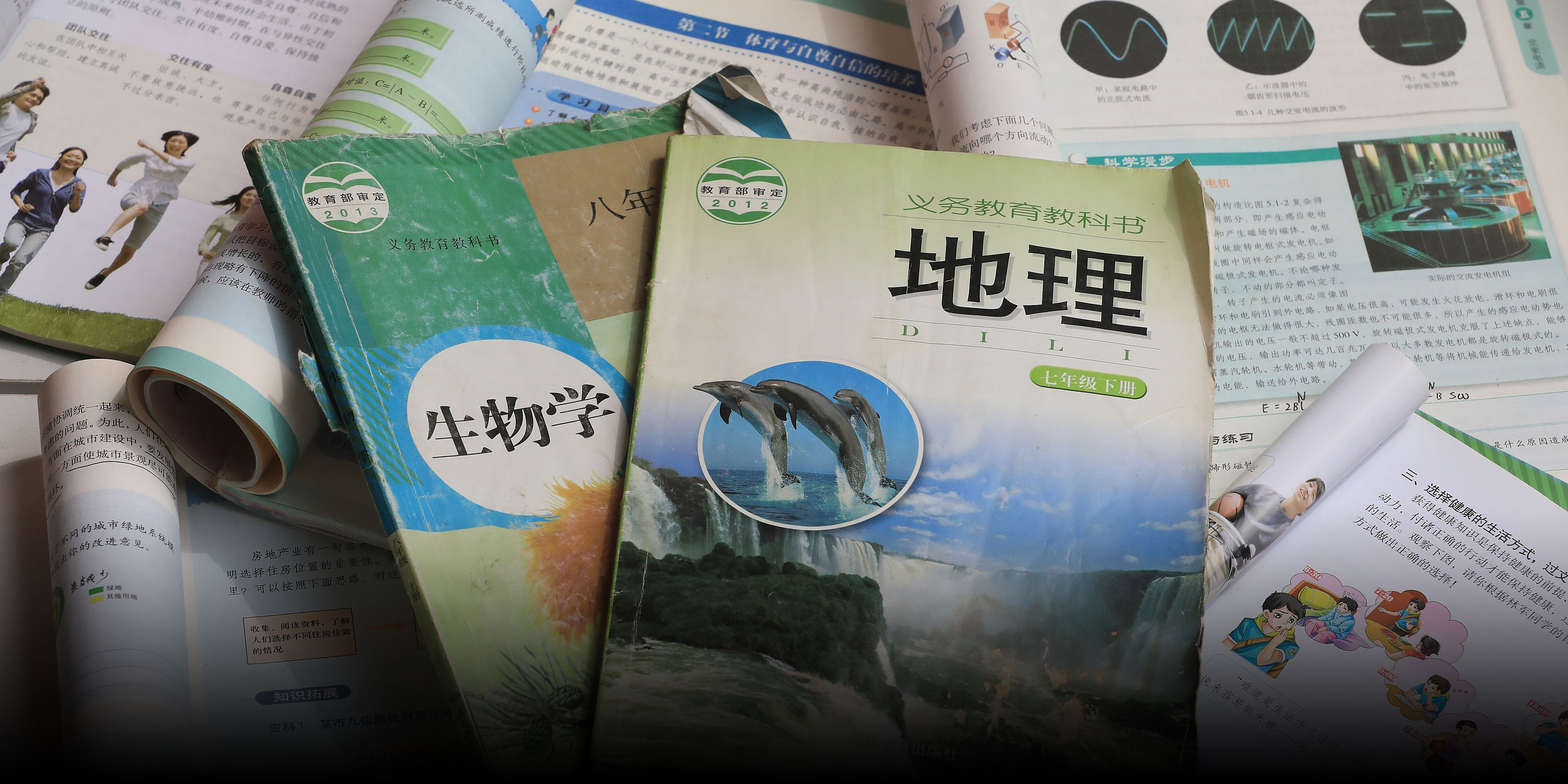
Chinese Regions Ease Weight of Biology and Geography on Zhongkao
Several regions in China will remove biology and geography from their high school entrance exams’ total scores to ease the academic burden on students, sparking debate over the move’s potential impact on students’ development and future academic pressure.
The policy, announced by multiple cities and provinces — including the northeastern Jilin province, Huangshan in the eastern Anhui province, Ji’an in the eastern Jiangxi province, and Xianyang in the northwestern Shaanxi province — at various times between November and March, will take effect next summer.
The high school entrance exam, or zhongkao, is one of the most competitive exams in China, with high-school enrollment rates hovering just above 60% in 2024.
Scores are weighted differently across subjects, and local authorities may adjust local requirements based on regional differences in academic pressure and educational resources.
The provincial education bureau in Jilin — which announced its policy on Tuesday — posted on its official WeChat account that the measure is intended to “optimize the allocation of educational resources, and break the ‘rat race’ in education.”
Similar reforms have already been piloted elsewhere. Last March, Changsha, the capital of China’s central Hunan province, announced it would remove biology and geography from the zhongkao scoring system beginning this year, reducing the number of counted subjects from 10 to eight. Beijing and the northwestern city of Xi’an have also cut the number of scored subjects on the zhongkao to six and seven, respectively.
As of Wednesday, related discussions had attracted more than 50 million views on the microblogging platform Weibo. While many acknowledge that the policy could relieve pressure on junior high school students, others have voiced concerns about its impact on students’ general knowledge.
“Biology and geography are essentially general education subjects. They should still be studied seriously, as they help us understand many aspects of daily life,” one highly upvoted comment read.
But some parents have voiced support for the policy. “It reduces reliance on rote memorization and avoids ineffective ‘drilling’ and excessive competition, allowing more time and energy for a child’s overall development,” a parent in Changsha told domestic media.
Zhou Xiaoqing, head of the Basic Education Division of the Changsha Education Bureau, said that the reform is not intended to diminish the importance of specific subjects but to promote a change in teaching methods. “By systematically cultivating key competencies, subject literacy, and critical thinking, the reform aims to lay a solid foundation for students’ lifelong development,” she said.
At the same time, many parents also worry that the easing pressure at the junior high level might shift the burden to the university entrance examination, or gaokao, which may still assess the subjects.
Chu Zhaohui, a researcher at the China National Academy of Educational Sciences, told domestic media that the selective function of the zhongkao should be gradually weakened. As China continues to expand high school enrollment capacity, he said, the exam should focus instead on evaluating the overall quality of compulsory education.
Editor: Marianne Gunnarsson.
(Header image: Chinese middle school Biology and Geography textbooks. VCG)