China’s First ‘Barbecue University’ Opens for Enrollment
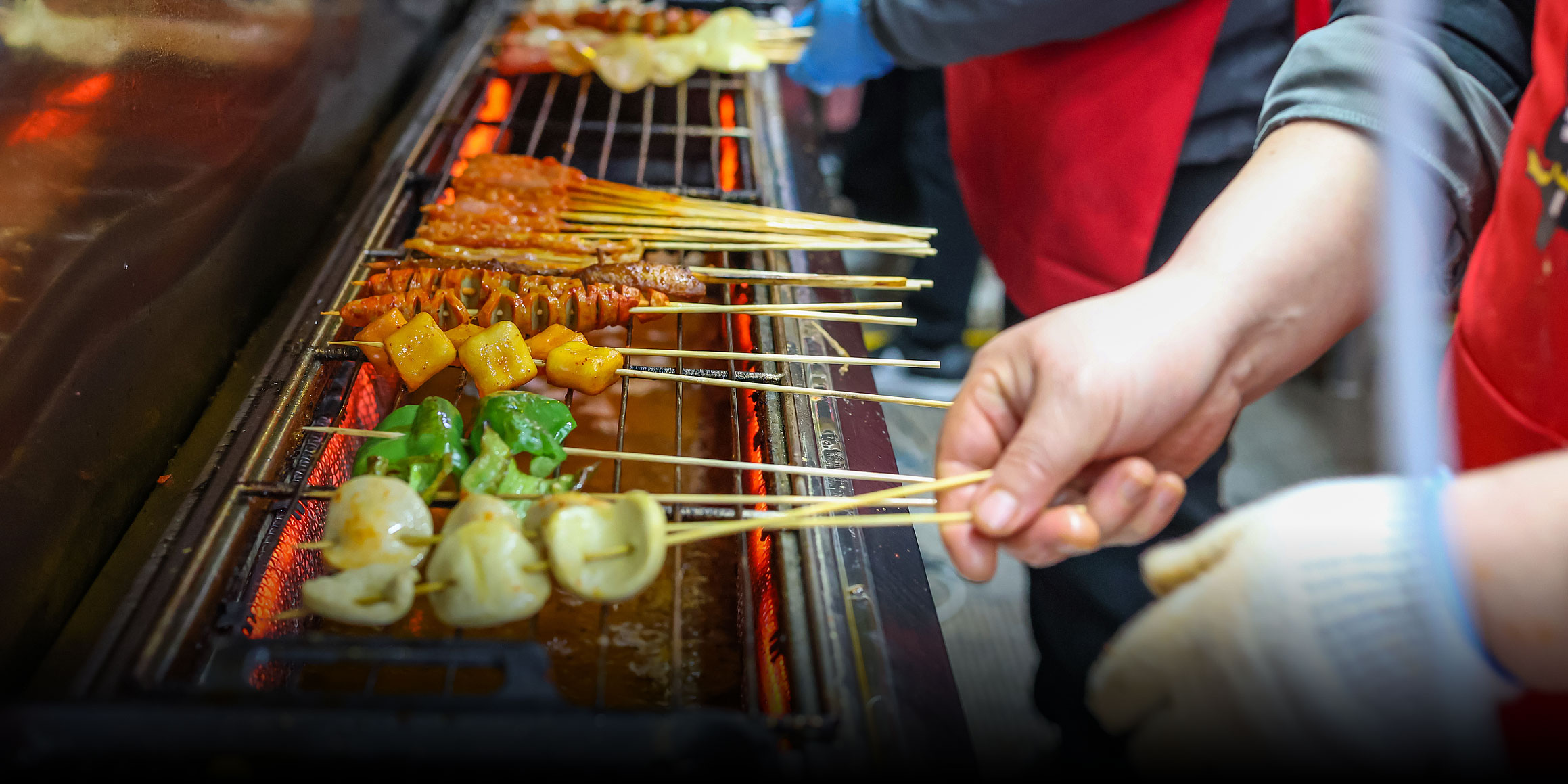
China has opened enrollment at its first university dedicated to barbecue, or shaokao, a ubiquitous street food nationwide, complete with degree offerings, course textbooks, and a talent pathway to jobs at famous local barbecue restaurants.
The university — Yueyang Barbecue College in the central Hunan province — began accepting student applications on Mar. 9. Jointly founded by the Yueyang city government, Yueyang Open University, and the city’s barbecue association, the college was inaugurated last July.
Driven by high competition for roles that require academic degrees, China has in recent years ramped up its vocational education. Industry- and food-specific colleges have been founded around the country, including the “Bathing Academy” in the northeast Heilongjiang province, the “Crayfish Academy” in the central Hubei province, and the “Burning Noodles Academy” in the southwest Sichuan province.
That trend now includes Chinese barbecue. In an interview with domestic media, Hu Jun, dean of Yueyang Barbecue College called the school’s coursework “practice-oriented” and said that students will be taught by experienced local barbecue chefs.
The college will assign students three textbooks written based on observations of local barbecue chefs. A formal literacy class, introduced by Hu, was also implemented in 2025 to train experienced chefs into qualified tutors prior to official student enrollment.
Study will primarily focus on two major barbecue techniques: charcoal and iron-plate grilling. It will also cover business-related topics, from ingredient selection and marinating to grilling, serving, production, and restaurant operations, including site selection and cost control.
The college offers a one-month intensive barbecue course for 5,800 yuan ($840), as well as a degree option. The latter includes a flexible program provided by the Open University of China, with graduates receiving both a state-recognized associate or bachelor’s degree and a professional cooking certificate. Students must be over 18 at time of enrollment.
Top graduates will also have the chance to gain employment at some of Yueyang’s best-known barbecue restaurants through the college’s feeder system. According to Hu, for students with entrepreneurial intentions, the college can provide franchise discounts, night market stall simulations, site selection, and decoration.
Yueyang boasts more than 2,000 barbecue spots and over 50,000 barbecue industry workers, generating over 2 billion yuan annually. The city traces its barbecue history back to the 1970s, when shaokao from the northwestern Xinjiang Uyghur Autonomous Region was introduced to the city, and then adapted to local Hunan tastes. Since that time, Yueyang barbecue has become a provincial delicacy.
Public and government attention in Yueyang has increasingly focused on the once-precarious street job. The Yueyang Barbecue Association was established last March, followed by the Chinese government’s announcement in May that it would officially recognize “barbecue chef” as an occupation. In July, the local government began promoting “Yueyang barbecue” as an iconic local product and is currently seeking to trademark the culinary practice. The city is also proposing to establish a barbecue museum, complete with a barbecue-themed song.
Editor: Marianne Gunnarsson.
(Header image: VCG)